Product Details


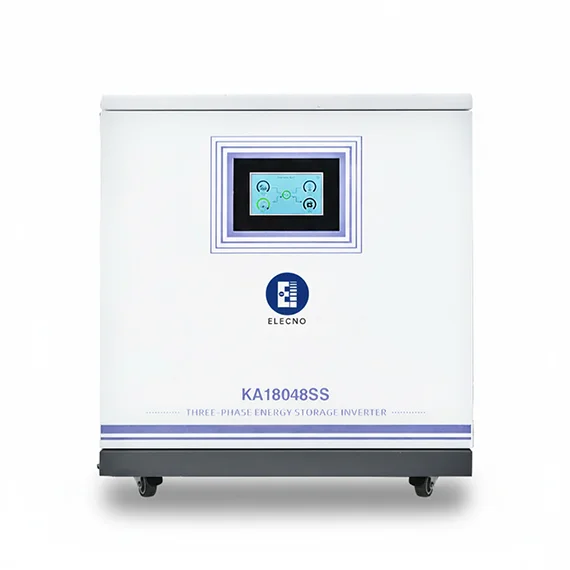
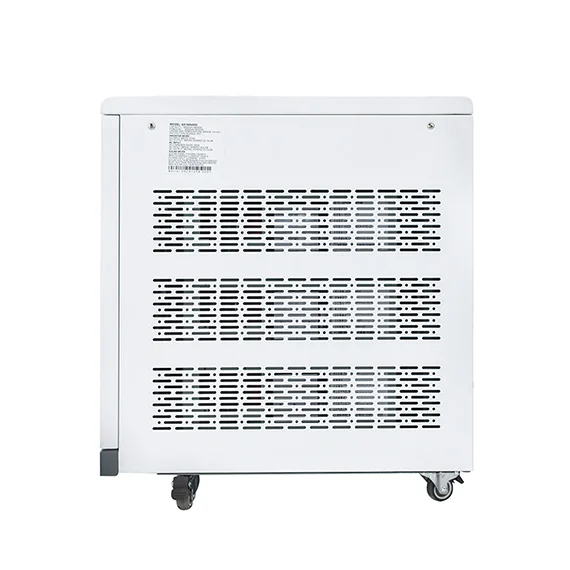
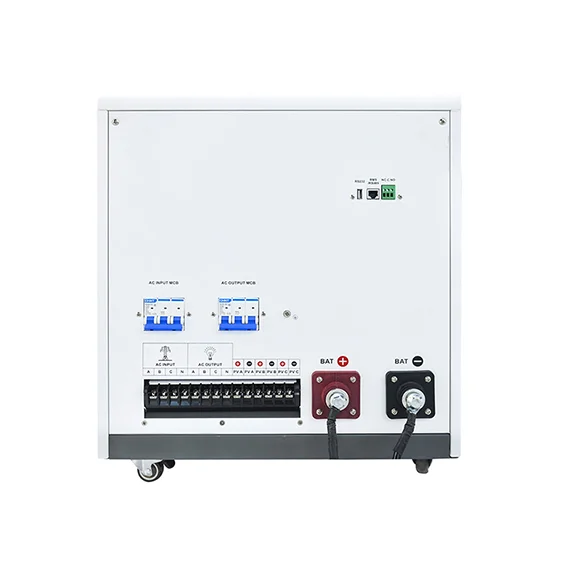
The 18kW High Frequency Three-phase Solar Inverter seamlessly connects with both solar panels and a high-voltage battery system. During the day, it efficiently converts solar energy to power your household or commercial loads while charging the battery for later use. At night, it draws energy from the battery to keep your system running without relying on the grid — helping you achieve true energy independence.
The KA18048SS 18kW high-frequency three-phase solar inverter combines a 48Vdc battery input, three MPPT inputs and grid-connected operation. Project fit depends on continuous and surge loads, phase balance, battery current, PV string voltage, communication protocol, local grid rules and commissioning evidence.
| KA18048SS item | Listed specification |
|---|---|
| AC input format | Three-phase + N + PE |
| Rated AC input | 3 x 380/400VAC |
| Listed AC input range | 155-483VAC +/-3V normal mode; 295-483VAC +/-3V UPS mode |
| Input frequency | 50/60Hz adaptive |
| Rated output | 18,000W |
| Output voltage and frequency | 380VAC +/-5%; 50/60Hz +/-0.1% |
| Waveform | Pure sine wave |
| Switching time | 10ms computer equipment; 20ms household appliances (settable, as listed) |
| Peak power | 30,000W listed; confirm duration and load conditions |
| Overload capacity | Battery mode: 21s at 105%-150%; 11s at 150%-200%; 400ms above 200% load |
| Grid-connected output | 380VAC; 337-437V listed feed-in range; verify local grid-code settings |
| Feed-in frequency range | 49-51 +/-1Hz or 59-61 +/-1Hz, as listed |
| Nominal output current | 3 x 26.9A |
| Power factor | Greater than 0.99 listed |
| Maximum DC/AC efficiency | Up to 98% listed; confirm test conditions |
| Battery rated voltage | 48Vdc |
| Charge voltage settings | 56.4Vdc constant; 54Vdc float, both listed as settable |
| PV charging method | Three-way MPPT |
| Maximum PV input power | 3 x 7,500W listed |
| MPPT voltage range | 60-500Vdc; listed optimum Vmp range 300-400Vdc |
| Maximum PV voltage/current | 500Vdc; 3 x 27A listed |
| Maximum PV charging current | 360A listed |
| Maximum mains charging current | 300A listed |
| Maximum total charging current | 360A listed |
| Display | LCD operating-mode, load, input and output data |
| Communication | RS232; expansion slot lists BMS, Wi-Fi and dry-contact cards |
| Operating environment | -10 to 50 degrees C; 20%-95% RH, non-condensing |
| Altitude | Up to 1,000m without listed derating; up to 4,000m with derating |
| Listed noise | 50dB or lower |
| Dimensions and reference weight | 465 x 500 x 500mm; 50.5kg |
| Standards listed in source table | EN/IEC 60335-1, EN/IEC 60335-2-29 and IEC 62109-1; request market-specific certificates |
Specification note: values above are transcribed from the KA18048SS column on this page. Request the order-specific datasheet, nameplate, test records, protocol list and certificates before design approval.
The KA18048SS table lists 18,000W rated output, 30,000W peak power and up to 98% maximum DC/AC conversion efficiency. Treat the peak value and overload timings as model-specific limits: confirm motor starting current, phase balance, operating mode, ambient temperature and the manufacturer's test conditions.
Three MPPT inputs can separate PV strings with different orientations, but each string still has to remain inside the listed voltage and current limits in the coldest and hottest design conditions. Grid-parallel operation also requires market-specific protection, export-control hardware and utility acceptance.
An 18kW load on a nominal 48V battery bus represents about 375A before inverter losses and voltage drop. The final battery-side current can be higher, so confirm parallel battery quantity, busbar and cable ratings, disconnect and fuse protection, BMS continuous current, peak duration and low-voltage behavior.
The table lists an expansion-slot BMS communication card, not universal battery compatibility. Obtain the exact CAN or RS485 protocol, supported battery models, firmware versions, parameter map and commissioning evidence before ordering.
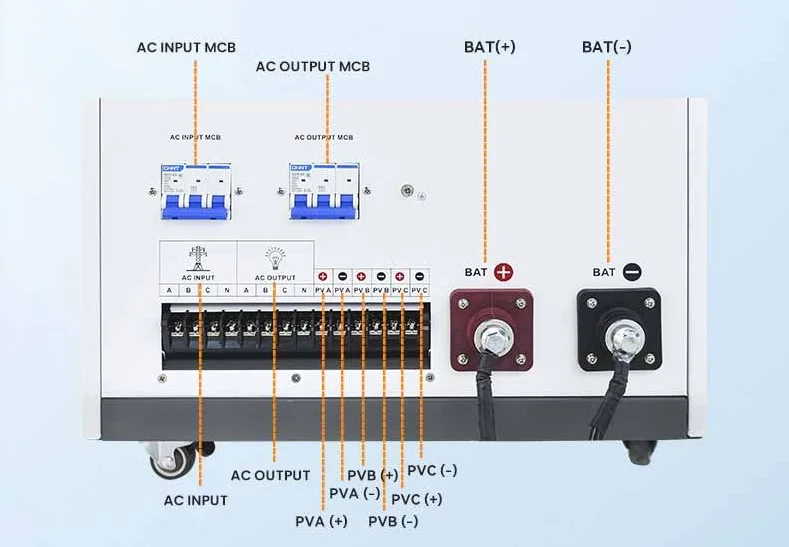
The front-terminal layout may simplify service access, but installation still requires qualified design and commissioning. Verify conductor sizing, torque, phase sequence, neutral and protective earth, ventilation, clearance, enclosure access, protective devices and local electrical rules.
The LCD is listed for operating-mode, load, input and output data. Record firmware, protection settings, charge limits, alarms, transfer tests, phase currents and export-control results at handover.
| Design check | Why it matters | Evidence to request |
|---|---|---|
| Continuous and surge load | 18kW rated output does not by itself prove motor-start or transformer-load compatibility. | Interval load data, phase currents, inrush values and required overload duration. |
| 48V battery current | Rated output implies very high DC current before losses and voltage drop. | BMS limits, parallel design, busbar, cable, fuse and disconnect calculations. |
| PV string design | Cold Voc, hot Vmp and current must remain inside each MPPT input limit. | Module datasheet, string calculation, array layout and protection schedule. |
| Grid and backup mode | Voltage, frequency, export control and transfer behavior vary by market and project. | Grid-code certificates, single-line diagram, settings sheet and commissioning results. |
Start with the 18kW inverter battery and PV checklist, then use the hybrid inverter commissioning checklist for handover evidence.
Compare the solar inverter range, review the power storage inverter checklist, or send the load, PV and battery data for configuration review.
For a system-level review of the 48V battery platform, BMS card, three MPPT inputs, backup behavior and evidence to request, use the storage-ready inverter buyer checklist before approving the KA18048SS configuration.
Yes. The source table lists 18,000W rated output for KA18048SS. Confirm the nameplate and order-specific datasheet before approval.
Only if its voltage window, BMS current, cabling and protection support the required DC current. At nominal voltage, 18,000W divided by 48V is about 375A before losses.
No. Compatibility depends on the exact card, CAN or RS485 protocol, battery model, firmware and parameter mapping.
No. It is a listed maximum DC/AC value. Actual efficiency depends on load, DC voltage, temperature and operating mode.
For additional specifications, please get in touch with us. We are committed to providing comprehensive service
