
What Is a Storage-Ready Inverter? Battery, BMS, PV and Backup Checklist
Short answer: a storage ready inverter, often written as storage-ready inverter, should do more than accept a battery cable. It should have a documented battery-voltage and current window, a proven BMS communication path, suitable PV input limits when solar charging is included, defined grid and export-control behavior, a tested backup output, and a commissioning record that shows the complete system works with the selected battery.
The phrase is not a universal technical certificate. Different suppliers may use it for hybrid, off-grid, three-phase or retrofit products with very different capabilities. Buyers should therefore translate the claim into evidence before comparing price. Start with the solar storage inverter range, then request the exact datasheet, compatibility list, wiring information and test scope for the model being quoted.
What Does Storage-Ready Inverter Mean?
For a buyer, storage-ready should mean that the inverter can be integrated into a battery energy system with a clear operating boundary. That boundary includes the battery-side voltage and current, BMS messages, solar charging limits, grid connection, protected loads, monitoring and fault handling. A port labeled BAT or CAN is not enough if the supplier cannot show how the selected battery is configured and tested.
The term is also broader than battery-compatible. Battery compatibility asks whether one inverter and one battery can operate safely together. Storage readiness asks whether the full project can be designed, installed, commissioned and supported: battery, PV, grid, backup circuits, CT or meter, protection, firmware, remote monitoring and warranty responsibility.
Seven Checks Behind a Storage-Ready Claim
| Check | Evidence to request | Risk if it is missing |
|---|---|---|
| Battery platform | Nominal and operating voltage, chemistry, series arrangement and approved models. | The inverter may not start, charge correctly or stay inside the battery limits. |
| Battery current | Continuous and peak charge/discharge current for inverter and battery BMS. | The BMS may trip or the battery may be unable to support the promised AC output. |
| BMS communication | CAN or RS485 protocol, cable pinout, inverter menu setting and firmware version. | SOC, alarms and current limits may be missing or incorrect. |
| PV input | MPPT voltage range, maximum open-circuit voltage, input current and string plan. | PV strings may be unsafe, clipped or unable to recharge the battery as expected. |
| Grid and export | Grid mode, CT or meter model, export setting, phase sequence and local approval scope. | The system may export unintentionally or fail utility acceptance. |
| Backup output | Continuous output, surge rating, transfer behavior, neutral arrangement and load test. | Critical loads may drop out or overload the backup port. |
| Commissioning evidence | Settings record, alarm test, charge/discharge test, screenshots and handover checklist. | After-sales teams cannot separate a product fault from a configuration problem. |
Battery Voltage and Current Must Be Sized Together
A nominal battery label does not show whether the battery can support the inverter's real power. A 48V inverter operating near 18kW can require very high battery-side current before losses and reserve margins are considered. The designer must compare inverter demand with the permitted continuous current of every battery module, the number of parallel modules, cable and busbar ratings, protection devices and the BMS limit.
Check the complete battery operating-voltage range, not only 48V or 51.2V in a product title. Charging voltage, low-voltage cut-off, recovery behavior and cell protection settings must remain compatible throughout the usable state-of-charge window. The solar battery storage inverter checklist provides a separate worksheet for voltage, PV input and backup loads.
BMS Communication Must Be Proven With the Exact Models
CAN and RS485 describe communication interfaces, not one universal battery language. Two products can have the same connector and still use different pinouts, baud rates, message definitions or control logic. Ask the supplier for the exact inverter model, battery model, firmware combination, cable drawing and menu selection that were tested together.
Commissioning should confirm more than a normal SOC display. Record charge and discharge current limits, high- and low-SOC behavior, temperature or alarm messages, restart behavior after a fault and the response when communication is interrupted. Use the inverter and battery matching mistakes guide to identify common assumptions before the equipment is shipped.
PV Input and Grid Rules Are Separate Design Checks
If the inverter includes solar charging, prepare a string calculation from module open-circuit voltage, temperature correction, MPPT range, maximum input current and the number of trackers. A high PV watt figure does not prove that the proposed strings fit every MPPT. The array must also be able to recharge the selected battery within the expected solar window.
Grid operation needs its own review. Confirm single-phase or three-phase connection, nominal voltage, frequency, phase sequence, CT direction, meter compatibility, export limit and the destination market's approval requirements. A product may be technically capable of grid connection while still lacking the exact certificate or utility setting required for a particular country.
Backup Output Is Not the Same as Normal AC Output
Ask which terminals remain energized when the grid fails and what power is available there. Some designs support selected essential loads, while others may be configured for a wider backup panel. Continuous power, overload duration, motor-start capability, transfer time, neutral bonding and low-SOC shutdown should all be tested with representative loads.
Build the backup list from measured or documented watts and starting surges. Pumps, compressors, air conditioners and transformers can demand much more during startup than during steady operation. The inverter rating, battery current, protection and cable design must support the same event; passing one part of the system is not enough.
KA18048SS Example: Read the Listed Values as a System
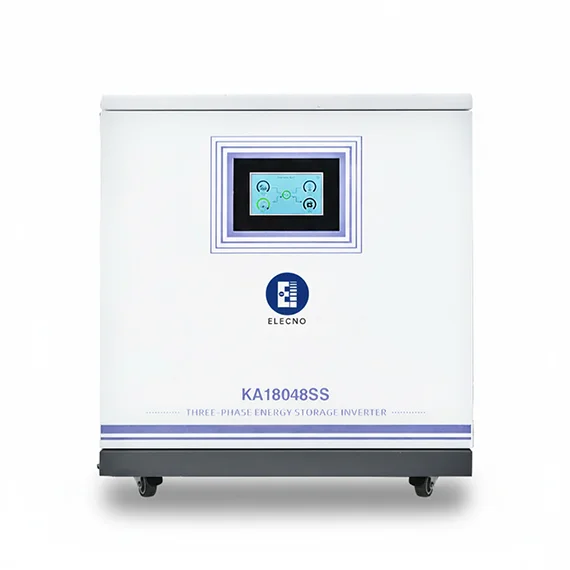
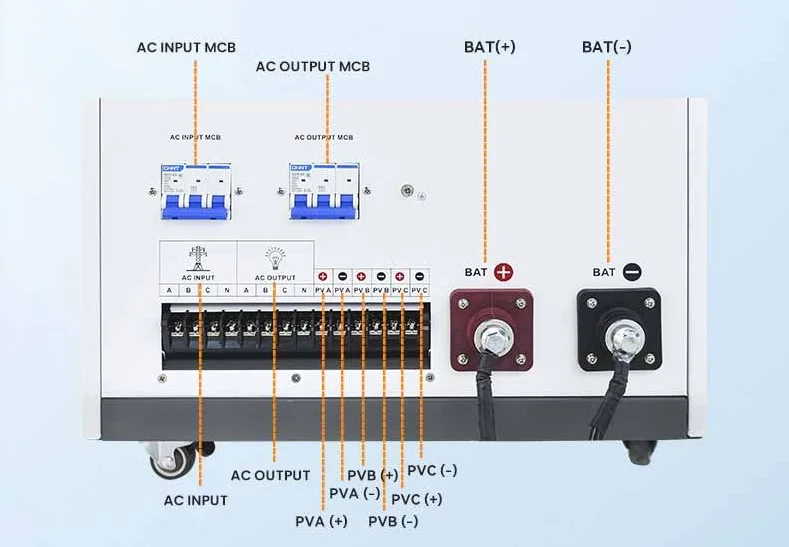
The KA18048SS 18kW three-phase solar inverter shows why storage readiness must be reviewed as a group of values. Its current product table lists 18,000W rated output, a 48Vdc battery platform, three MPPT inputs, a 60-500Vdc MPPT range, 500Vdc maximum PV input, a lithium-battery BMS communication-card option and selectable transfer timing. These values are a useful project example, not a promise that every 48V battery or PV string is approved.
| Listed KA18048SS item | Current product value | Buyer follow-up |
|---|---|---|
| AC output | 18,000W, three-phase 380VAC output listed | Match phase voltage, continuous loads, imbalance and motor starts. |
| Battery | 48Vdc rated; 56.4V constant charge and 54V float listed | Request approved battery models, operating window and total current design. |
| PV | Three MPPT; 3 x 7,500W maximum PV input listed | Check every string against voltage, current and temperature limits. |
| MPPT range | 60-500Vdc listed; 300-400Vdc optimum Vmp range | Submit module data and string layout for review. |
| Communication | Expansion slot for lithium BMS communication card listed | Confirm card, protocol, cable, firmware and tested battery. |
| Transfer | 10ms computer mode and 20ms appliance mode listed | Test the real protected loads and restart behavior. |
Documents and Tests to Request Before Payment
- Order-specific inverter datasheet and wiring diagram.
- Approved battery list with model, firmware, protocol and cable pinout.
- Battery current calculation showing module quantity and protection.
- PV string calculation with temperature-corrected open-circuit voltage.
- Grid and export-control diagram showing CT or meter location.
- Backup-load schedule with continuous watts and starting surges.
- Commissioning form covering settings, alarms, charge, discharge and transfer tests.
- Warranty terms that identify responsibility for inverter, battery and system integration.
The U.S. Department of Energy overview of solar energy and storage basics explains why generation and storage should be planned as one system. For supplier comparison, also use the power storage inverter checklist and the hybrid inverter commissioning checklist.
Information to Send for a Storage Inverter Quote
Send the installation country, grid phase and voltage, essential-load table, largest motor or compressor, desired backup time, PV module model and string plan, battery model or preferred voltage platform, expected operating modes, export requirement, monitoring needs, quantity and delivery schedule. If a battery has already been selected, include its datasheet and communication manual rather than only the brand name.
Use the solar battery RFQ checklist to organize the project boundary, or send the inverter, battery, PV and load documents for configuration review.
Storage-Ready Inverter FAQ
Is storage-ready inverter a single certification?
No. Storage-ready is a useful purchasing description, but buyers still need model-specific evidence for battery voltage and current, BMS communication, PV input, backup behavior, grid settings, safety documents and commissioning tests.
Can any 48V lithium battery work with a 48V storage inverter?
No. Nominal voltage is only one check. Confirm the complete operating-voltage window, maximum charge and discharge current, CAN or RS485 protocol, cable pinout, firmware and the approved battery list.
Do CAN and RS485 ports prove battery compatibility?
No. The physical interface does not prove that the inverter and battery use the same protocol. Test state of charge, current limits, alarms, charge control and low-SOC behavior with the exact models and firmware.
Is every hybrid solar inverter storage-ready?
Not automatically. A hybrid inverter may have battery terminals, but the buyer must still verify the supported battery platform, communication behavior, PV limits, backup output, export control and local approval requirements.
What should I send for a storage inverter quotation?
Send the site country, grid phase and voltage, load list, largest starting load, backup hours, PV string data, battery model or voltage platform, required operating mode, export rule, certification needs and commissioning scope.
Final Approval Rule
Approve a storage-ready inverter only when the battery platform, BMS protocol, PV design, grid or export mode, backup loads and commissioning tests are documented for the exact system. Treat the label as the beginning of technical review, not the end of it.
Related SolarStorageHub Resources
If you are turning this article into a buying decision, compare the relevant product families and send your inverter model, target capacity, installation country, and quantity plan for confirmation.