
Solar Battery RFQ Checklist: What to Send Before Requesting a Quote
Buyer note: A clear RFQ saves time for both the buyer and the supplier. Solar battery storage projects often slow down because the first inquiry only says “send price for 5kWh battery” or “need BESS quote.” That is not enough to choose the right LiFePO4 battery, inverter, C&I ESS cabinet, solar panel, shipping method, warranty terms, or certification scope.
This checklist is for distributors, EPC teams, installers, OEM/ODM buyers, and project owners preparing a serious quotation request. Use it with the Battery Storage Product Selection Guide, the Solar Battery Warranty, Certification, Shipping and OEM Buyer Guide, Home Energy Storage, C&I ESS, Solar Inverter, Solar Panel, and the Contact page.
Quick RFQ checklist
| RFQ item | What to send | Why it changes the quote |
|---|---|---|
| Application | Home backup, C&I ESS, portable power, solar charging, peak shaving, or OEM/private label. | The product path, enclosure, inverter, and support documents are different. |
| Load profile | Essential loads, peak watts, motor loads, backup hours, and daily cycling expectation. | Battery capacity alone does not define runtime or inverter size. |
| Inverter model | Brand, model, voltage range, CAN/RS485 protocol, charge current, and discharge current. | Battery-inverter matching is one of the most common commissioning risks. |
| Installation site | Indoor/outdoor, temperature range, available space, wall/floor mounting, and service access. | Site conditions affect enclosure, cooling, cable route, and warranty assumptions. |
| Destination market | Country, voltage standard, language, certificate target, and freight route. | Documentation and shipping requirements depend on the market. |
| Order plan | Sample quantity, pilot order, batch order, private-label schedule, and lead-time target. | Production, packaging, and OEM work need a realistic timeline. |
Step 1: describe the project application
Start with the job the battery system must do. A home backup project may only need essential loads during outages. A small commercial site may need stable three-phase backup. A C&I ESS cabinet may support demand management, solar self-consumption, or backup for selected circuits. A portable power station may need appliance matching and solar charging rather than fixed installation.
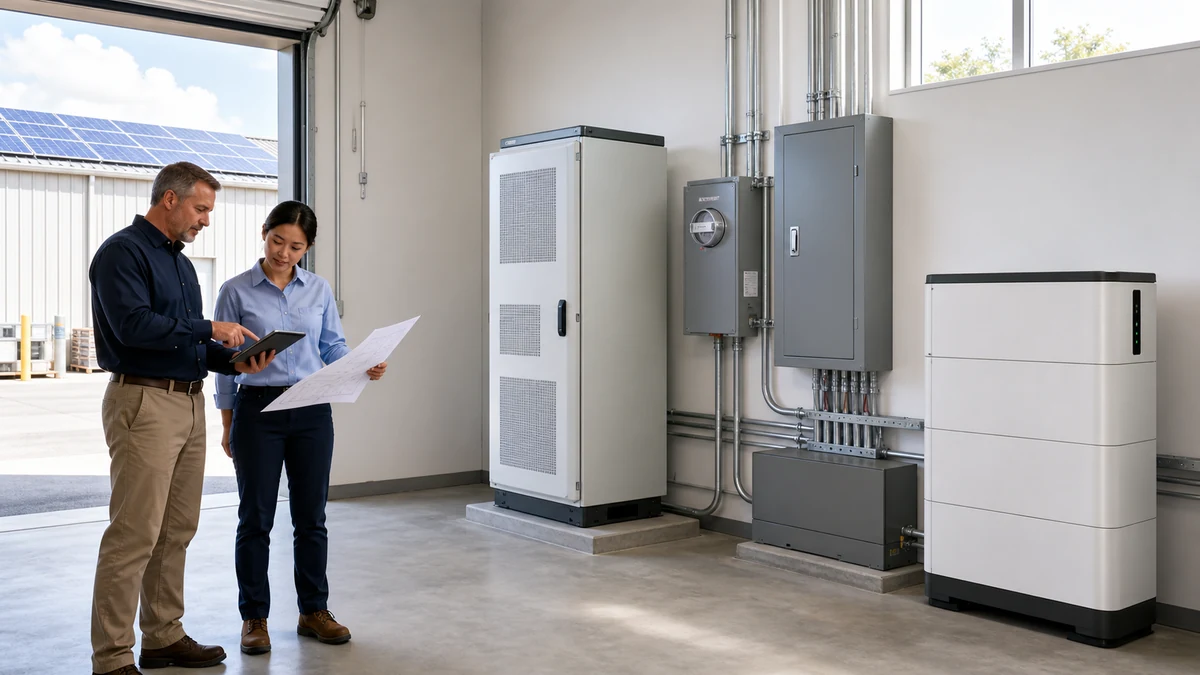
If you are not sure which product path fits, compare the 5kWh stackable LiFePO4 battery, 30kWh floor-mounted LiFePO4 battery, outdoor battery storage cabinet, and containerized BESS. The right product is usually decided by load, installation site, inverter behavior, and documentation needs.
Step 2: send load and runtime details
A useful quote needs more than nominal kWh. Send a simple load table: appliance or equipment name, running watts, starting watts if relevant, expected hours per day, and whether each load is critical. For C&I projects, add the load curve if available. For home backup, separate essential loads from comfort loads.
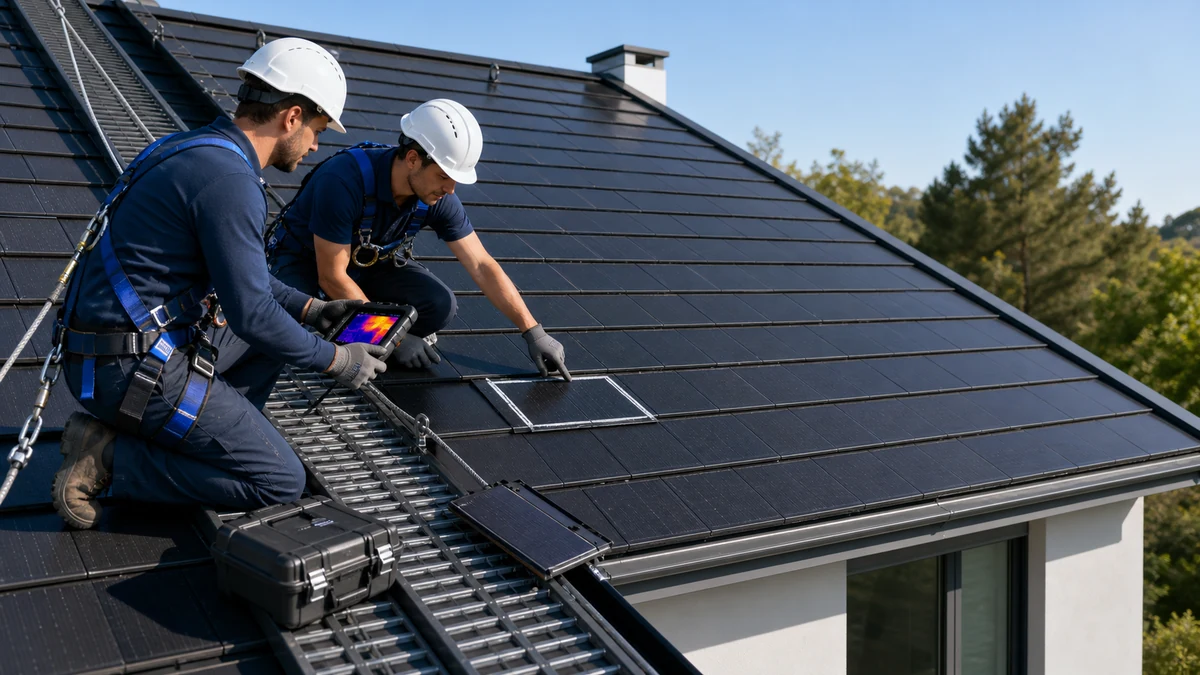
When solar charging is part of the project, add solar array size, panel orientation, shading notes, and local solar conditions. Independent tools such as NREL PVWatts can help estimate solar production before promising recharge time.
Step 3: confirm inverter and communication details
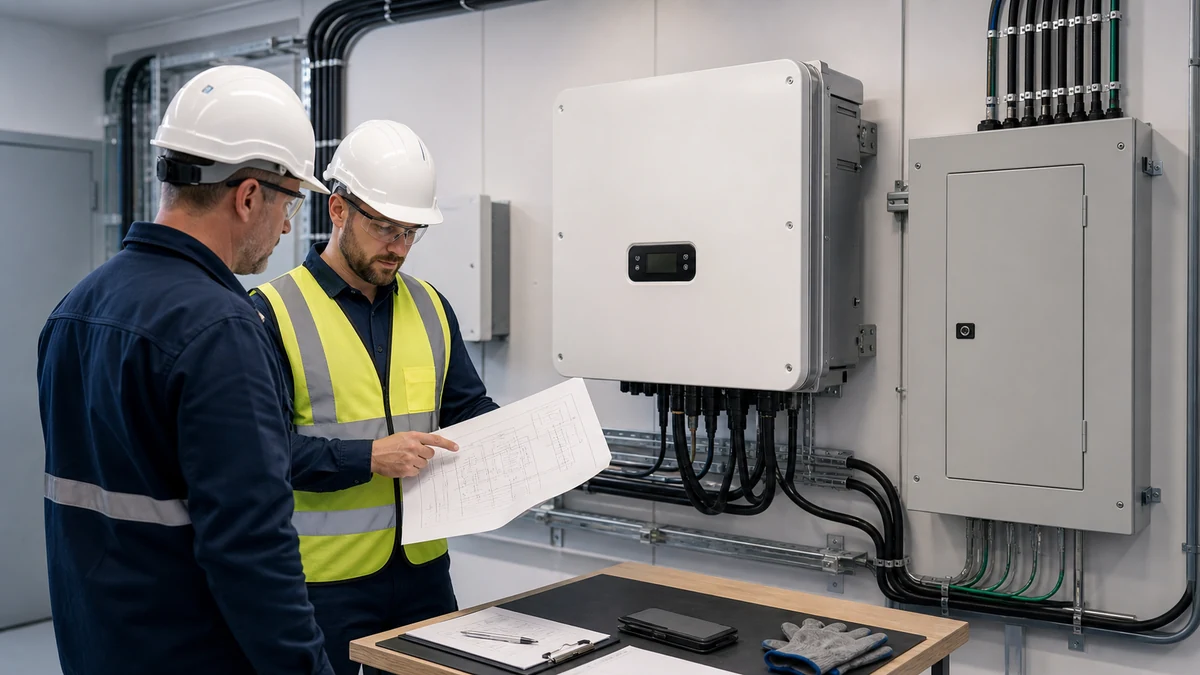
Many battery projects fail late because the inverter was treated as a minor detail. Send the inverter brand and model as early as possible. If the inverter has an approved battery list, send that too. Confirm whether the system uses CAN, RS485, dry contact, or voltage-based control. Also send charge voltage, discharge limit, current limit, and whether parallel batteries are planned.
For deeper checks, read the CAN vs RS485 solar battery inverter compatibility checklist and the hybrid inverter compatibility checklist.
Step 4: list documentation requirements
Tell the supplier which documents you need before the quote is finalized. A buyer preparing a small residential battery order may need datasheets, manuals, battery safety documents, warranty terms, and shipping documents. A C&I ESS buyer may also need drawings, commissioning guidance, site-survey questions, certificates, test report references, and maintenance planning.
Useful external references include IEC 62619:2022 for industrial lithium battery safety and UL Solutions energy storage system testing and certification for ESS safety evaluation. These references help buyers ask clearer questions, but the exact requirement still depends on the market and project.
Step 5: prepare shipping and OEM details
For export orders, send the destination country, preferred shipping method, address type, port if known, and whether the forwarder has lithium battery requirements. Ask for MSDS, UN38.3 where applicable, packing list, product photos, gross weight, carton or crate dimensions, and serial-number tracking.
For OEM/ODM projects, include logo requirements, color preferences, label language, manual language, carton artwork, warranty-card wording, app or display branding needs, and pilot-order timing. If the final configuration changes, ask whether existing certificates still apply.
Email template for a better battery storage RFQ
You can use the following structure when contacting SolarStorageHub:
- Project type: home storage / C&I ESS / portable power / OEM private label.
- Target product path: battery, inverter, solar panel, cabinet, containerized BESS, or portable power station.
- Load profile: essential loads, peak watts, backup hours, daily cycling target.
- Inverter details: brand, model, voltage, communication protocol, current limits.
- Installation site: indoor/outdoor, temperature, space, wall/floor/cabinet placement.
- Destination market: country, certificate target, language, shipping route.
- Order plan: sample, pilot, batch order, OEM/ODM schedule.
- Documents needed: datasheet, manual, warranty terms, certificates, shipping documents, commissioning guide.
Send these details through the Contact page. A specific RFQ makes it easier to recommend the right battery storage product, avoid mismatched inverter settings, and prepare documents before production or shipment.
For the fixed starting point, use the Battery Storage Buyer Resources Hub.
For supplier capability, OEM/ODM process, quality checks, documentation, and after-sales coordination, review the SolarStorageHub Company Capability and Service Support Guide.
Related warranty evidence guide: For RFQ preparation, the evidence guide helps buyers ask suppliers for warranty evidence requirements before placing a sample or batch order. Read LiFePO4 Battery Warranty Claim Evidence: Commissioning Records, BMS Logs and Installation Photos.
Related sample order guide: For RFQ preparation, the sample order checklist helps buyers turn supplier promises into measurable test items before approving a batch order. Read LiFePO4 Battery Sample Order Checklist: What Distributors Should Test Before a Batch Purchase.
Related buyer guide: For RFQ preparation, this quote checklist adds the C&I ESS site, load and document details suppliers need before pricing. Read C&I ESS Quote Checklist: Site Data, Load Profile and Warranty Evidence Before Pricing.
Related solar panel matching guide: For RFQ preparation, this guide helps buyers connect PV output, inverter limits, battery charge current and load timing before finalizing a solar battery quote. Read Solar Panel and Battery Storage Matching: PV Recharge, Inverter Limits and Buyer Checks.
Related buyer guide: Solar panel buyers should add module specification, test evidence and packaging requirements to the RFQ before requesting final pricing. Read Solar Panel Pre-Shipment Inspection Checklist: EL Test, Flash Data and Container Loading.
Related buyer guide: A clear RFQ should include output demand, recharge method, certification need and quantity. Read 5kWh Modular Portable Power Station Checklist: Output and Solar Recharge.
Related buyer guide: A complete RFQ helps suppliers confirm capacity, inverter mode, PV input and documentation scope. Read Custom Solar Energy Storage Solutions Checklist: Battery, Inverter and PV.
FAQ
What is the most important detail in a solar battery RFQ?
The load profile and inverter model are usually the most important. Capacity, communication, current limits, and backup runtime all depend on them.
Can I ask for a quote without knowing the inverter model?
You can ask for an initial recommendation, but the final quote should confirm inverter voltage range, communication protocol, charge current, discharge current, and firmware support.
What should a distributor send for OEM battery storage pricing?
Send target capacity, order quantity, private-label requirements, destination market, certificate needs, packaging requirements, and pilot-order timeline.
Do shipping documents affect the price?
They can. Battery classification, packing method, destination country, freight route, and documentation requirements can affect shipping options and total landed cost.
Should I request certificates before or after ordering?
Request certificate scope before ordering. Confirm that documents match the exact model, capacity, chemistry, enclosure, and destination market.
Where should I send project details?
Use the Contact page and include the RFQ checklist details. The more specific the first message is, the cleaner the quotation can be.
Related SolarStorageHub Resources
If you are turning this article into a buying decision, compare the relevant product families and send your inverter model, target capacity, installation country, and quantity plan for confirmation.