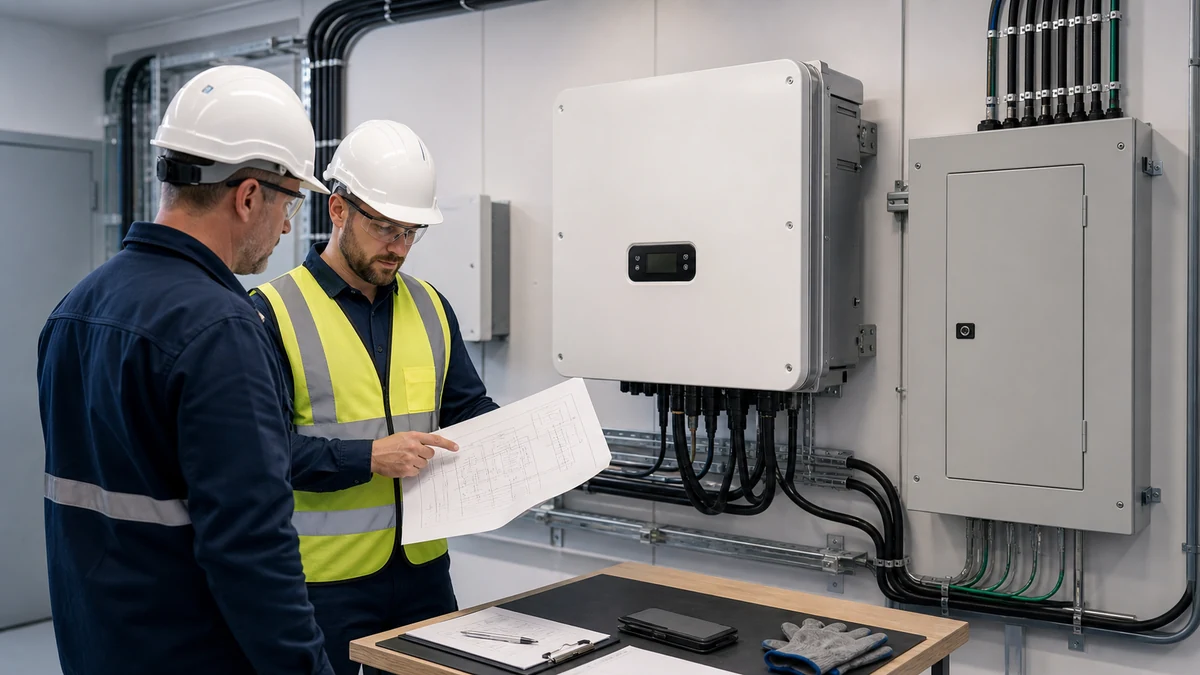

Battery Storage Product Selection Guide: LiFePO4 Batteries, Inverters and C&I ESS
Buyer note: This guide is for distributors, EPC teams, installers, and project buyers who need a practical path from application needs to SolarStorageHub product pages. It connects LiFePO4 batteries, C&I ESS cabinets, solar inverters, solar panels, portable power, and technical buyer checklists.
Start with the project use case, then check the product category, inverter compatibility, installation limits, certification scope, shipping documents, and warranty terms. For project-specific support, send your load profile, inverter model, installation location, and destination market through the Contact page.
Quick product selection table
| Product path | Best-fit use case | Buyer check |
|---|---|---|
| 5kWh Stackable LiFePO4 Battery | Modular home backup | Check inverter matching, installation limits, warranty terms, and documentation before ordering. |
| 5kWh Battery with On/Off-Grid Inverter | Small backup bundle | Check inverter matching, installation limits, warranty terms, and documentation before ordering. |
| 48V 100Ah Wall-Mounted Lithium Battery | Wall-mounted residential storage | Check inverter matching, installation limits, warranty terms, and documentation before ordering. |
| 30kWh Floor-Mounted LiFePO4 Battery | Large home or light commercial backup | Check inverter matching, installation limits, warranty terms, and documentation before ordering. |
| 5kWh/10kWh/15kWh Floor-Mounted Battery | Expandable floor-mounted home storage | Check inverter matching, installation limits, warranty terms, and documentation before ordering. |
| 18kW Three-Phase Solar Inverter | Factory and C&I inverter matching | Check inverter matching, installation limits, warranty terms, and documentation before ordering. |
| All-in-One Outdoor Battery Storage Cabinet | Outdoor C&I ESS cabinet | Check inverter matching, installation limits, warranty terms, and documentation before ordering. |
| 20ft/40ft Containerized BESS | Large C&I energy storage projects | Check inverter matching, installation limits, warranty terms, and documentation before ordering. |
| 3kWh/5kWh Portable Power Stations | Portable backup and outdoor power | Check inverter matching, installation limits, warranty terms, and documentation before ordering. |
| 300W Portable Solar Energy Storage Unit | Low-power mobile energy storage | Check inverter matching, installation limits, warranty terms, and documentation before ordering. |
| 600W Foldable Solar Panel | Portable solar charging | Check inverter matching, installation limits, warranty terms, and documentation before ordering. |
| 60W Solar Roof Tiles | Integrated solar roofing | Check inverter matching, installation limits, warranty terms, and documentation before ordering. |
Product paths by application
- 5kWh Stackable LiFePO4 Battery - Modular home backup
- 5kWh Battery with On/Off-Grid Inverter - Small backup bundle
- 48V 100Ah Wall-Mounted Lithium Battery - Wall-mounted residential storage
- 30kWh Floor-Mounted LiFePO4 Battery - Large home or light commercial backup
- 5kWh/10kWh/15kWh Floor-Mounted Battery - Expandable floor-mounted home storage
- 18kW Three-Phase Solar Inverter - Factory and C&I inverter matching
- All-in-One Outdoor Battery Storage Cabinet - Outdoor C&I ESS cabinet
- 20ft/40ft Containerized BESS - Large C&I energy storage projects
- 3kWh/5kWh Portable Power Stations - Portable backup and outdoor power
- 300W Portable Solar Energy Storage Unit - Low-power mobile energy storage
- 600W Foldable Solar Panel - Portable solar charging
- 60W Solar Roof Tiles - Integrated solar roofing
How to choose the right storage path
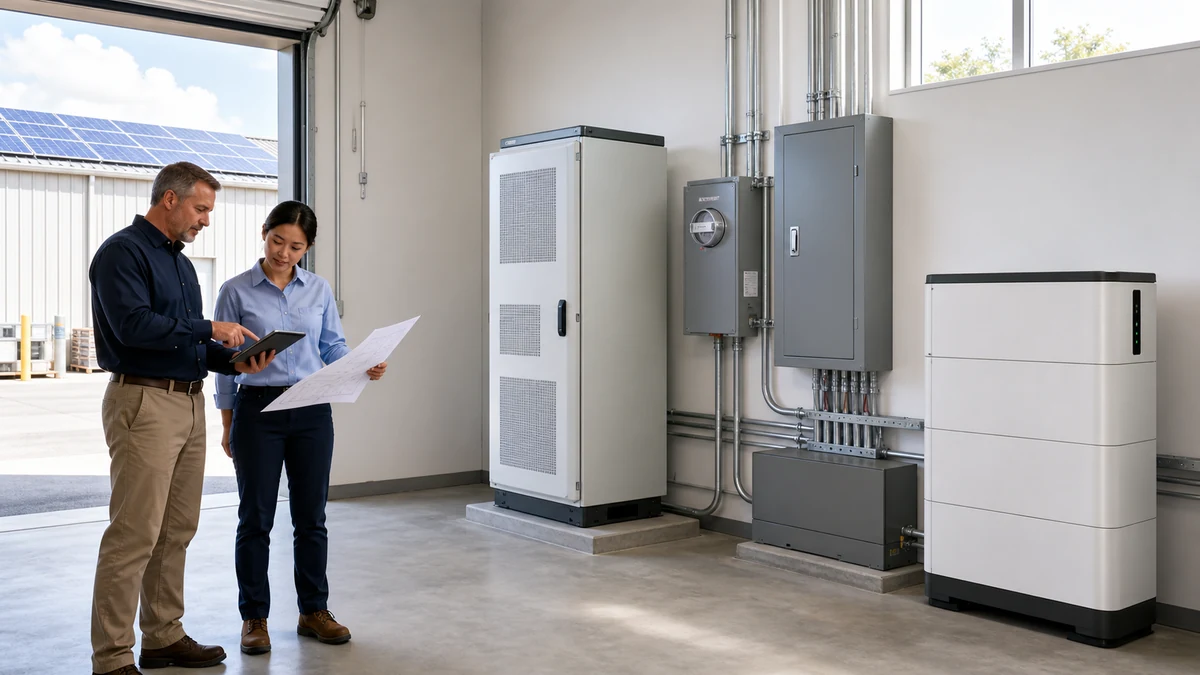
For residential backup, begin with Home Energy Storage and compare battery capacity against essential loads. A 5kWh battery may support routers, lights, and small electronics, while a 30kWh floor-mounted LiFePO4 battery can support larger home or light commercial backup when the inverter and load profile match.
For commercial and industrial projects, start with C&I ESS. Outdoor cabinets and containerized BESS projects need site surveys, thermal review, grid connection checks, commissioning plans, and safety documentation before shipment. The C&I ESS site survey checklist and commissioning checklist are useful before quotation.
For inverter-sensitive projects, review Solar Inverter options and read the CAN vs RS485 compatibility checklist. Communication protocol, voltage range, charge/discharge current, and firmware support can decide whether commissioning is smooth or delayed.
For solar charging and portable applications, compare Solar Panel options, the 600W foldable solar panel, and portable power station limits. External tools such as the NREL PVWatts Calculator can help estimate solar production before promising recharge time.
For procurement risk checks, pair this table with the Solar Battery Warranty, Certification, Shipping and OEM Buyer Guide.
Procurement checklist before ordering
- Confirm the project use case: backup, self-consumption, peak shaving, mobile power, or C&I ESS.
- Collect inverter model, voltage range, BMS protocol, and charge/discharge current limits.
- Review installation location, cable route, ventilation, service access, and expansion space.
- Request certificates, manuals, shipping documents, warranty terms, and commissioning guidance for the exact model.
- Use the Battery Storage Buyer Resources archive and related articles for deeper checks.
For a cleaner quotation request, prepare project details with the Solar Battery RFQ Checklist.
For the fixed starting point, use the Battery Storage Buyer Resources Hub.
For supplier capability, OEM/ODM process, quality checks, documentation, and after-sales coordination, review the SolarStorageHub Company Capability and Service Support Guide.
Related compatibility guide: For product selection, the inverter compatibility guide is the next step after choosing the battery and inverter path. Read LiFePO4 Battery Inverter Compatibility: CAN, RS485 and BMS Settings for Solar Storage Buyers.
Related buyer guide: Portable power stations should be compared with LiFePO4 batteries, inverters and larger ESS options. Read 5kWh Modular Portable Power Station Checklist: Output and Solar Recharge.
Related buyer guide: Product selection should compare LiFePO4 batteries, inverters, PV panels and C&I ESS formats. Read Custom Solar Energy Storage Solutions Checklist: Battery, Inverter and PV.
FAQ
Which product should a home storage buyer start with?
Start with essential loads and backup hours. Small homes may begin with 5kWh to 15kWh battery paths, while larger homes or light commercial sites may need a 30kWh floor-mounted LiFePO4 battery.
When should buyers choose C&I ESS instead of home storage?
Choose C&I ESS when the project has larger loads, outdoor cabinet requirements, three-phase inverter needs, commissioning scope, grid connection review, or commercial warranty expectations.
Why is inverter compatibility so important?
Battery capacity alone does not guarantee a working system. Voltage range, CAN or RS485 communication, BMS settings, discharge current, and firmware support must match the inverter.
Can portable solar panels charge all power stations?
No. The panel voltage, current, connector, controller limit, and real sunlight conditions must match the portable power station.
What documents should distributors request before shipment?
Ask for datasheets, manuals, certification documents, MSDS, UN38.3 where relevant, packing information, warranty terms, and installation or commissioning guidance.
How can SolarStorageHub help with product matching?
Send your load list, inverter model, project location, backup target, and destination market through the Contact page. SolarStorageHub can help narrow the product path before quotation.
Related SolarStorageHub Resources
If you are turning this article into a buying decision, compare the relevant product families and send your inverter model, target capacity, installation country, and quantity plan for confirmation.