
Custom Solar Energy Storage Solutions Checklist: Battery, Inverter and PV
Custom solar energy storage solutions should start with a project file, not a generic product list. A reliable storage quote needs battery capacity, usable energy, inverter mode, PV input, grid connection, backup requirement, installation environment, documents, shipping scope and warranty evidence. If these details are missing, the buyer may receive a price that looks clear but does not match the real site.
This checklist is written for distributors, EPC teams, installers, OEM buyers and project owners who need a solar storage package rather than a single component. It connects the major decision points across Home Energy Storage, C&I ESS, Solar Inverter, Solar Panel and the Battery Storage Buyer Resources hub.
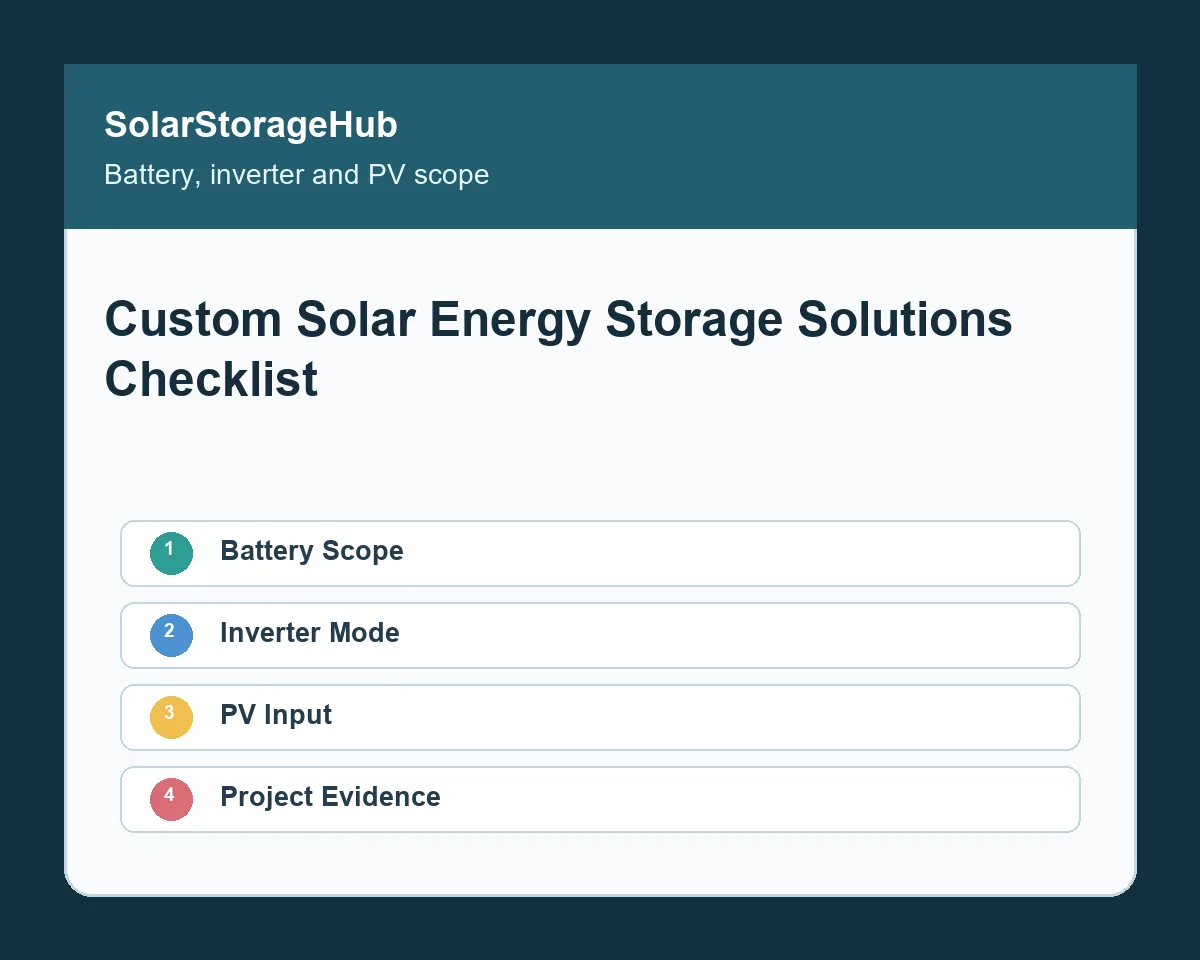
Define the storage job before selecting products
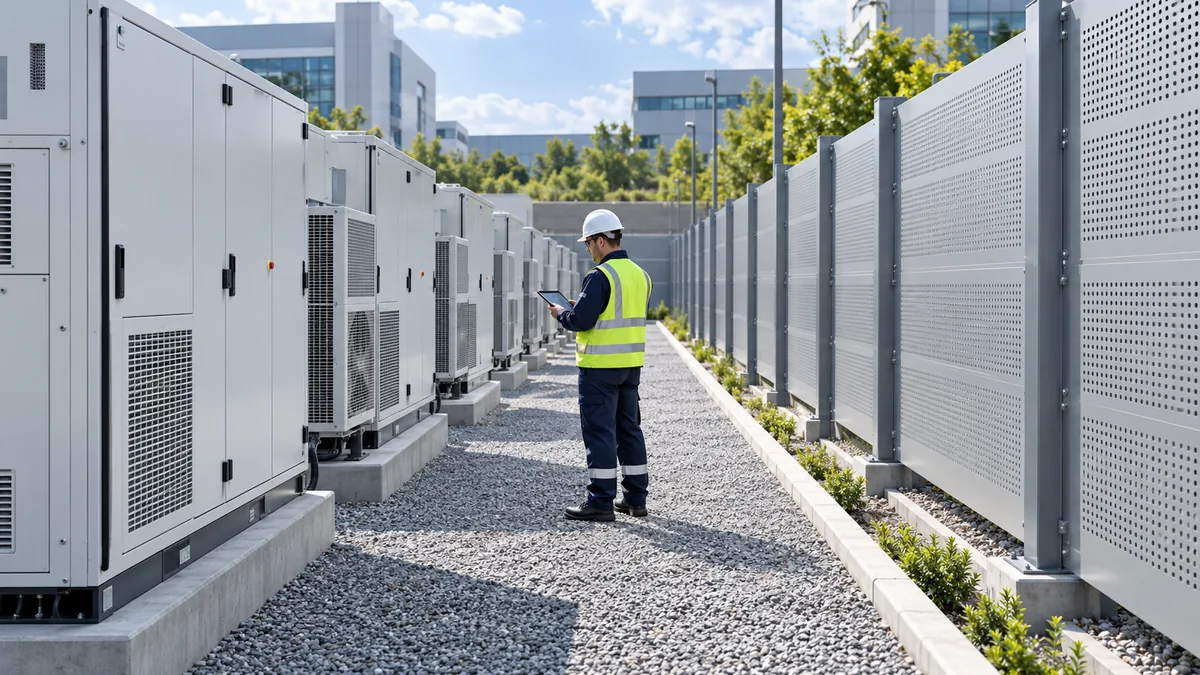
A custom solar storage solution can support self-consumption, backup, off-grid operation, peak shaving, EV charging, telecom support, microgrid control or distributor stock. Each job changes the battery size, inverter mode, PV arrangement and required documents. A home backup package may need transfer behavior and critical-load planning. A C&I project may need PCS sizing, site survey data, transformer limits and fire-safety documents. A distributor package may need repeatable models, private-label packaging and after-sales records.
The first request should be simple but complete: application, country, target kWh, target kW, PV capacity, grid voltage, inverter preference, installation location, load profile, backup requirement, quantity and delivery timeline. If the buyer already has a product in mind, the supplier should still check whether the product matches the job. Customization is useful only when it narrows risk; it should not hide missing site data.
Battery capacity should be tied to real loads
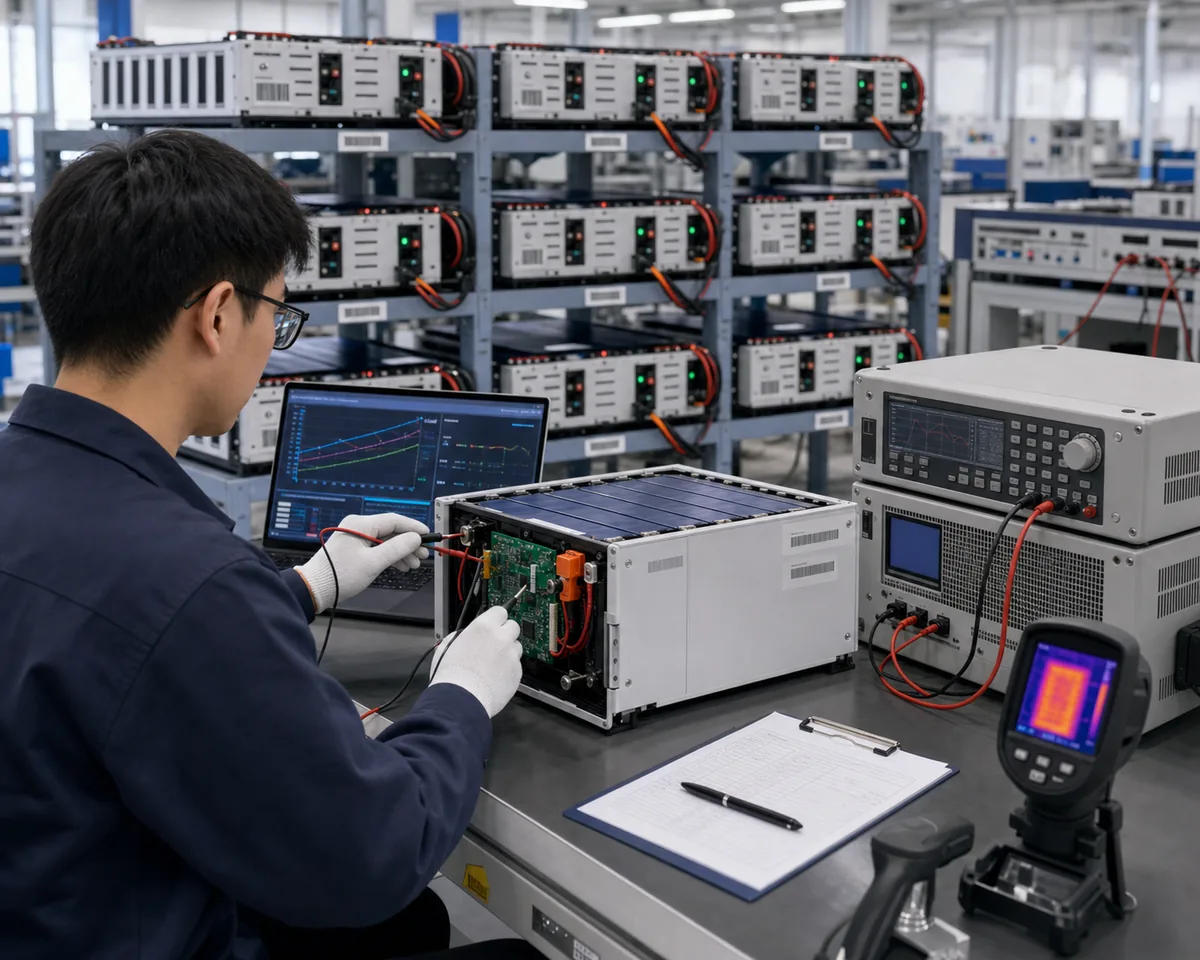
Battery size is often discussed as a headline number: 5kWh, 10kWh, 15kWh, 30kWh or a cabinet-scale system. A better specification includes usable energy, depth of discharge, charge current, discharge current, BMS communication, operating temperature and warranty conditions. For backup applications, the buyer should provide a load list with running watts, starting watts and target runtime. For solar self-consumption, the buyer should provide daily load shape and expected PV generation.
SolarStorageHub usually checks battery capacity against inverter output, PV recharge, installation space and warranty evidence before quoting. A battery that looks large enough can still disappoint if the inverter output is too low, if PV recharge is unrealistic, or if the BMS protocol does not match the inverter. For larger commercial projects, the same logic applies at cabinet or container scale.
Custom solar storage quotation checklist
| Check item | What to request | Why it matters |
|---|---|---|
| Application | Backup, self-consumption, off-grid, peak shaving or EV charging support. | Defines battery size, inverter mode and control logic. |
| Battery scope | Usable kWh, voltage platform, BMS protocol, current limits and warranty. | Prevents capacity and communication mismatch. |
| Inverter mode | Grid-tied, hybrid, off-grid, export-limited or three-phase mode. | Controls wiring, commissioning and site behavior. |
| PV input | PV capacity, string voltage, MPPT range and expected solar hours. | Shows whether the battery can recharge as expected. |
| Site data | Grid voltage, phase, load profile, space, access and temperature. | Reduces redesign after quotation. |
| Documents | Datasheets, manuals, wiring diagrams, certificates and test records. | Supports import, installation and owner review. |
| Service evidence | Commissioning form, monitoring screenshots, BMS logs and warranty terms. | Protects the buyer after delivery. |
Inverter mode can change the entire system
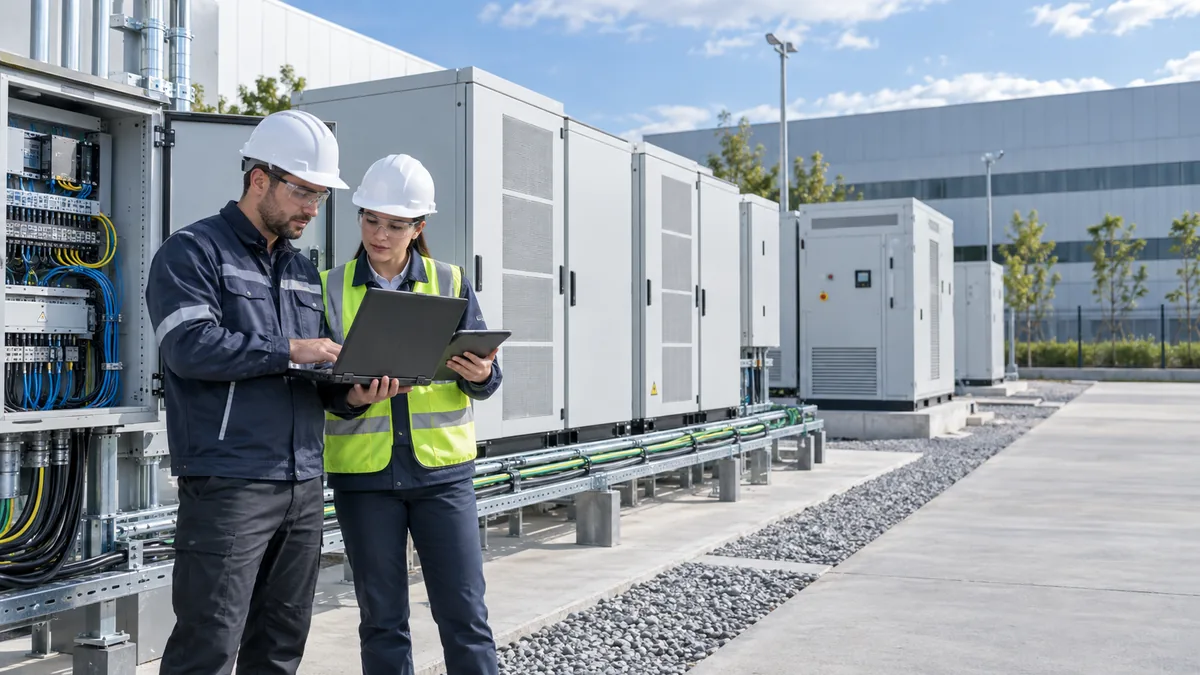
The inverter is the operating center of many custom systems. It determines how PV charges the battery, how loads receive power, how export is controlled, how backup transfer works and how the system communicates with monitoring software. Ask for battery voltage range, CAN or RS485 protocol, PV input limits, grid voltage, export-control method, backup output and generator compatibility if needed.
The U.S. Department of Energy explains that inverters manage power conversion and grid interaction in solar energy systems. Reference: Energy.gov inverter basics. For a custom storage package, the inverter should be checked with the exact battery and PV plan, not as an isolated item. The power storage inverter checklist is a useful companion before final selection.
PV assumptions should be realistic
Solar input is often overestimated. The buyer should confirm panel wattage, Voc, Vmp, MPPT voltage, string count, cable distance, shading and expected sun hours. If the PV plan is too small, the battery may not recover between cycles. If the PV voltage is too high, the inverter or controller may shut down. If the PV current is above the input limit, the system may clip power during good sun.
Custom solutions should connect the PV plan with battery size and load behavior. A portable system, a home battery and a C&I cabinet all have different recharge expectations. When the buyer is unsure, request a conservative energy estimate and review the panel data with the inverter input limits before promising runtime or payback.
Custom does not mean undocumented
Custom projects need better documentation, not less. Request a system diagram, model list, datasheets, installation manual, wiring diagram, label photos, packaging details, commissioning checklist and warranty statement. If the order involves OEM or ODM branding, confirm label content, manual language, carton marks, serial number format and spare part support before production.
For C&I projects, add site survey, PCS sizing, fire-safety documents, remote monitoring fields and handover evidence. For home storage, add inverter compatibility, backup load list, installation photos and customer handover notes. SolarStorageHub can review the package before quotation; send target application, capacity, inverter brand, PV plan, country, documents required and quantity through the Contact page.
When custom solar storage is worth it
A custom package is worth considering when the buyer needs private labeling, repeat distributor stock, a specific inverter match, special documents, a mixed PV-and-storage package, C&I project support or a site-specific cabinet/container design. It helps when a standard product almost fits but needs verified configuration, accessories or documentation.
Customization is not always necessary. If a standard home battery or outdoor cabinet already matches the site, the faster path may be a standard quote with clear documents. The buyer should choose the simplest package that satisfies capacity, safety, installation, warranty and after-sales needs.
Related buyer guide: Custom solar storage systems require battery, inverter and PV scope to be checked together. Read Home Battery Inverter Compatibility Checklist: Backup Load and PV Input.
FAQ
What information is needed for a custom solar storage quote?
Send application, country, target kWh, target kW, PV capacity, grid voltage, inverter preference, load profile, backup need, documents and quantity.
Is custom storage only for large projects?
No. Customization can apply to home batteries, portable packages, distributor stock, C&I cabinets and containerized systems.
Why is inverter mode important?
Inverter mode controls grid interaction, PV charging, export limitation, backup output and communication with the battery.
Can any solar panel charge any storage battery?
No. PV voltage, current, MPPT range and inverter or controller limits must match the battery charging plan.
What documents should buyers request?
Request datasheets, manuals, wiring diagrams, labels, test records, shipping documents, commissioning forms and warranty terms.
How does SolarStorageHub reduce quotation risk?
The team checks battery capacity, inverter matching, PV input, site data, documentation and warranty evidence before formal quotation.
When should I contact SolarStorageHub?
Before order confirmation, especially when the project needs OEM branding, inverter matching, C&I site review or repeat supply planning.
Related SolarStorageHub Resources
If you are turning this article into a buying decision, compare the relevant product families and send your inverter model, target capacity, installation country, and quantity plan for confirmation.