
Outdoor ESS Cabinet Manufacturer Checklist: Cost, Cooling and Evidence
An outdoor ESS cabinet manufacturer should be evaluated by more than cabinet capacity and price. Buyers need to know whether the supplier can document battery modules, PCS scope, AC cooling, IP rating, fire-safety design, FAT records, shipping preparation, commissioning support and warranty evidence. These details decide whether a cabinet quote can survive installation and project handover.
This checklist is written for distributors, EPC teams, commercial project owners and OEM buyers comparing outdoor battery storage cabinets. It supports the C&I ESS category, Solar Inverter decisions, Home Energy Storage comparisons, Solar Panel project planning and the Battery Storage Buyer Resources hub.
Compare the cost boundary before comparing price
Outdoor ESS cabinet cost can vary because suppliers include different equipment in the quote. One quote may include battery modules, BMS, PCS, EMS, HVAC, fire detection, suppression, cabinet enclosure, remote monitoring and commissioning support. Another quote may include only the battery cabinet and leave PCS or transformer scope outside. A low unit price can hide missing components.
Ask every manufacturer for a cost boundary table. Separate battery kWh, PCS kW, cabinet enclosure, cooling, fire system, EMS, switchgear, transformer, cables, shipping, installation guidance and commissioning support. Then compare the same scope across suppliers. For existing cabinet opportunities, the outdoor cabinet energy storage system cost checklist is the main companion guide.
Cooling and IP rating are site decisions
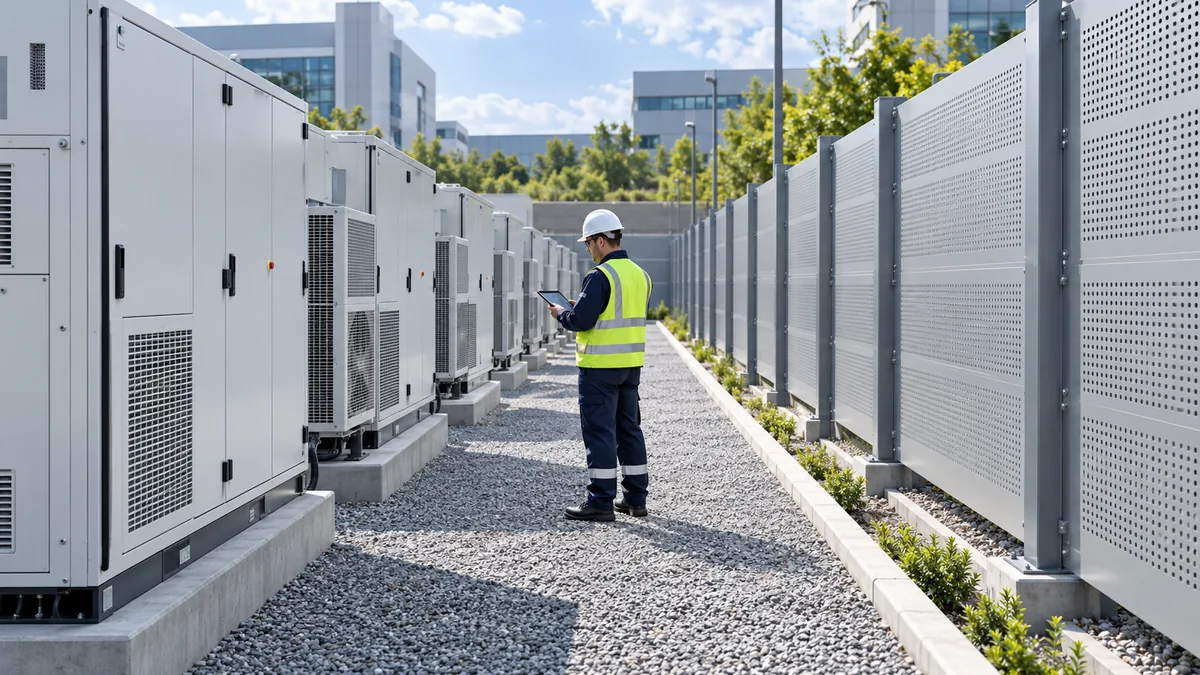
An outdoor cabinet is exposed to heat, rain, dust, sunlight, humidity and sometimes salt mist. The manufacturer should explain AC cooling capacity, airflow route, filter access, condensation handling, door sealing, cable entry, IP rating and alarm rules. A cabinet that performs well in a mild environment may need changes for a hot, dusty or coastal site. Cooling should be selected from site conditions and duty cycle, not added as a generic accessory.
The U.S. Department of Energy describes energy storage as a resource for grid flexibility and reliability, but field reliability depends on correct design, installation and maintenance evidence. Reference: Energy.gov energy storage. In outdoor cabinet projects, thermal control and enclosure protection are part of that reliability.
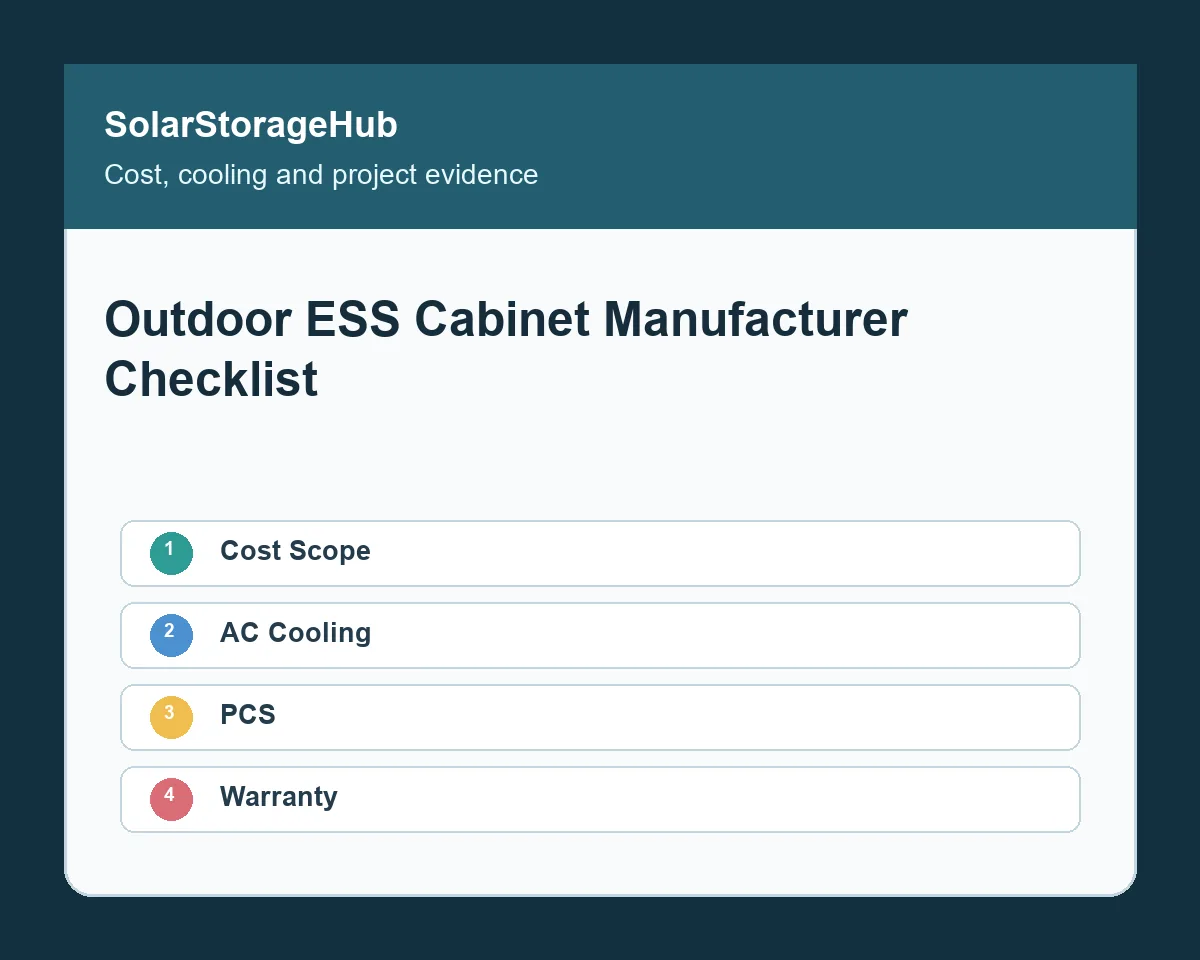
Outdoor ESS cabinet manufacturer checklist
| Check item | What to request | Why it matters |
|---|---|---|
| Cost scope | Battery, PCS, EMS, HVAC, fire system, shipping and commissioning boundary. | Makes supplier quotations comparable. |
| Cooling design | AC capacity, airflow path, filters, sensors and alarm rules. | Protects battery life and reduces thermal derating. |
| IP rating | Cabinet rating, sealing method, cable entry and door gasket details. | Controls dust and water risk outdoors. |
| PCS scope | Rated kW, overload behavior, AC voltage and transformer interface. | Confirms whether the cabinet can support the site load. |
| FAT records | Charge-discharge test, communication test, alarm test and settings backup. | Shows whether the cabinet was tested before shipment. |
| Fire documents | Detection, suppression, emergency stop and emergency response information. | Supports site approval and owner safety review. |
| Warranty evidence | Serial numbers, commissioning form, BMS logs and maintenance terms. | Reduces dispute risk after installation. |
Ask for FAT records tied to the cabinet batch
Factory acceptance testing should be tied to the cabinet batch or project model. Useful FAT evidence includes battery communication, PCS communication, EMS commands, charge-discharge behavior, HVAC alarms, fire-system status, emergency stop, insulation check, SOC display and remote monitoring fields. If a supplier cannot provide a clear FAT record, the buyer may have to troubleshoot basic settings on site.
Settings should be backed up before shipment. PCS mode, BMS limits, charge current, discharge current, export-control assumptions and monitoring account setup should be recorded. For supplier evidence, compare this checklist with the C&I ESS factory audit checklist. For PCS scope, compare with the C&I ESS PCS sizing checklist.
Fire and service documents should be reviewed early
Outdoor cabinet projects may need safety review before installation. Ask for detection and suppression description, emergency stop location, alarm logic, installation manual, maintenance plan and available test evidence. The project owner should know what happens when a thermal, smoke, door, HVAC or BMS alarm occurs. If remote monitoring is included, request the data list and alarm notification method.
Service documents should include spare parts, filter maintenance, inspection schedule, warranty exclusions and recommended commissioning records. These records help after delivery because field problems often depend on installation conditions, not only factory build quality. Compare safety details with the C&I BESS fire safety checklist and the outdoor AC energy storage cabinet checklist.
Manufacturer support matters after the quote
A capable outdoor ESS cabinet manufacturer should help before and after production. Before production, the team should review load profile, grid voltage, installation country, temperature, foundation, cable route and required documents. During production, the team should keep traceable records. After delivery, the team should support commissioning, monitoring setup, fault review and spare parts.
SolarStorageHub reviews outdoor cabinet capacity, PCS scope, cooling design, site data, FAT evidence, shipping assumptions and warranty records before quotation. For project review, send application, target kW and kWh, load profile, grid voltage, PV capacity, installation country, expected delivery date and document requirements through the Contact page.
When an outdoor ESS cabinet is the right choice
An outdoor ESS cabinet is useful when the project needs a compact commercial storage system without a full container footprint. It can support factories, commercial buildings, EV charging sites, farms, telecom support, peak shaving and solar-plus-storage applications. It is often easier to place near existing electrical infrastructure than a larger container.
It is not always the correct format. If the project needs much larger capacity, a BESS container may be better. If the site is small or residential, a home battery may be simpler. If the site has extreme temperature, dust, salt mist or strict approval rules, cabinet design and documentation must be checked carefully before order confirmation.
Related buyer guide: Manufacturer evidence should connect cooling design, FAT records and warranty conditions. Read Outdoor AC Energy Storage Cabinet: Temperature and Maintenance Checklist.
Related buyer guide: Outdoor cabinet buyers should compare supplier evidence, cooling scope and cost boundaries before ordering. Read C&I ESS Supplier Qualification Checklist: FAT, PCS Scope and Warranty.
Related buyer guide: Outdoor ESS cabinet quotes should include cooling evidence and manufacturing details. Read C&I Battery Cabinet vs Container BESS: Sizing, HVAC and Site Layout Checklist.
Related outdoor ESS product: Compare supplier evidence with the listed configuration and quote boundary for the all-in-one outdoor battery energy storage cabinet, including PCS power, cooling, safety package, EMS and commissioning support.
When comparing an outdoor cabinet supplier, verify the wider factory-controlled scope with the C&I ESS manufacturing checklist, including rack assembly, BMS integration, FAT evidence, OEM support and warranty responsibility.
FAQ
What should I ask an outdoor ESS cabinet manufacturer first?
Ask for application fit, cost boundary, battery kWh, PCS kW, cooling design, IP rating, fire documents, FAT records and warranty terms.
Why do outdoor cabinet prices vary so much?
Quotes often include different scope. PCS, EMS, HVAC, fire system, shipping and commissioning support may or may not be included.
Is AC cooling always required?
Not always, but hot climates, demanding cycles and outdoor placement often require active cooling to protect battery life and reduce derating.
What FAT evidence should buyers request?
Request charge-discharge test, communication test, alarm test, HVAC check, emergency stop test, settings backup and monitoring screenshots.
What fire documents matter for outdoor cabinets?
Request detection and suppression description, emergency stop details, alarm logic, installation manual and maintenance guidance.
How can buyers compare manufacturers fairly?
Compare the same battery, PCS, HVAC, EMS, fire system, shipping, documents and commissioning scope across all quotations.
When should SolarStorageHub review the cabinet project?
Before final quotation, especially when the cabinet must match a specific site, PV system, transformer, approval process or delivery schedule.
Related SolarStorageHub Resources
If you are turning this article into a buying decision, compare the relevant product families and send your inverter model, target capacity, installation country, and quantity plan for confirmation.