
Outdoor AC Energy Storage Cabinet Checklist: Cooling, IP Rating and PCS
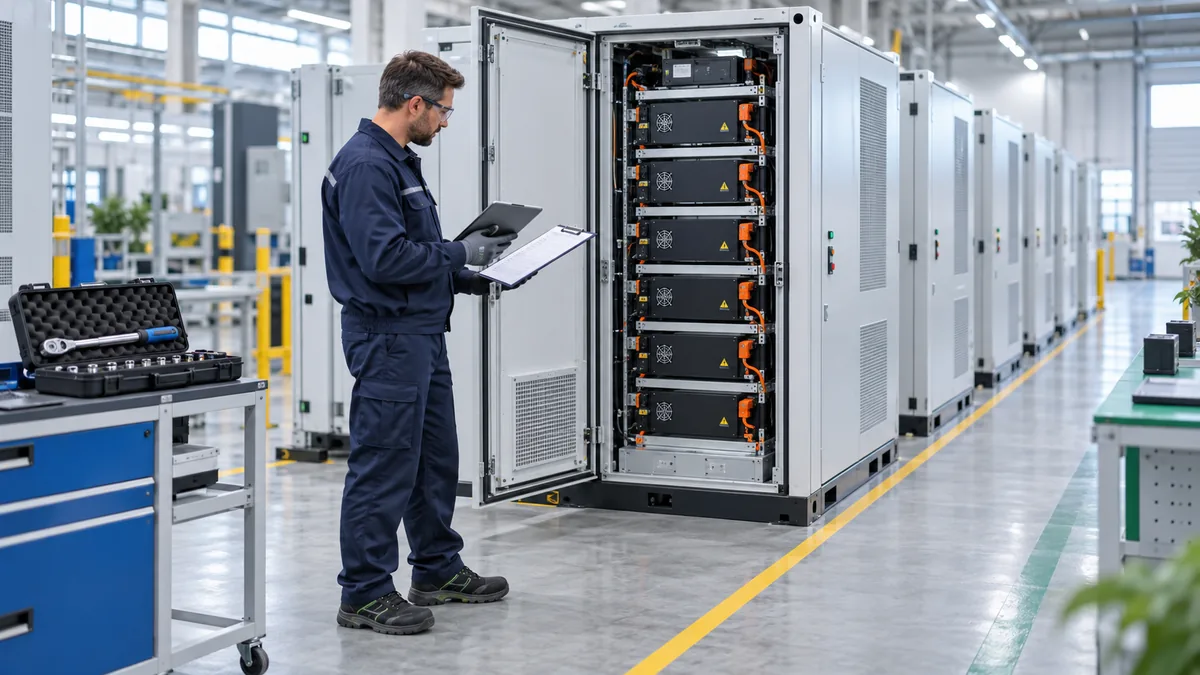
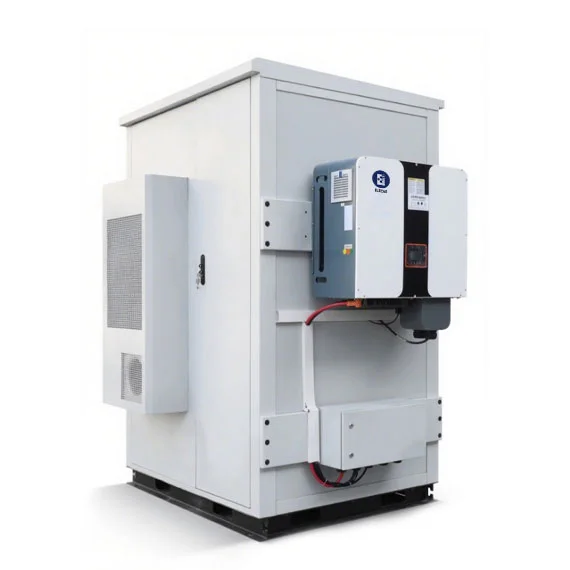
An outdoor AC energy storage cabinet combines battery modules, BMS and active air conditioning inside a weather-protected enclosure; depending on the quotation, it may also integrate PCS, EMS and fire-safety systems. Buyers should confirm cooling capacity, site temperature, IP rating, cable entry, PCS scope, fire documents and service access before comparing price.
This checklist is written for distributors, EPC teams, project owners and OEM buyers comparing outdoor cabinet ESS options. It supports the C&I ESS category, the Solar Inverter category, the Home Energy Storage category and the Battery Storage Buyer Resources hub. Use it before asking for final price, because outdoor cabinet cost depends heavily on cooling, PCS scope and site requirements.
Confirm the cabinet job before comparing price
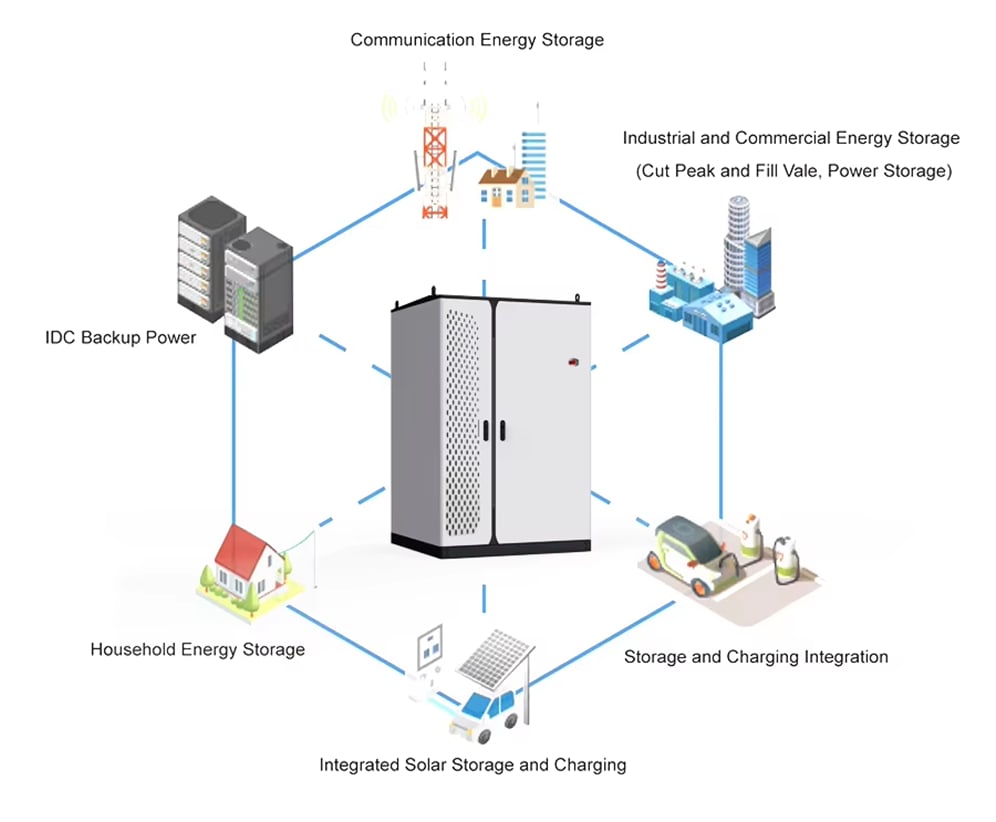
Outdoor cabinet ESS projects can serve peak shaving, backup, PV self-consumption, microgrid support, EV charging support or small industrial load management. Each job changes the cabinet specification. A peak-shaving project may need high cycle performance and dispatch control. A backup project may need transfer logic and critical-load prioritization. A PV project may need solar input coordination, export control and clear communication with the inverter or EMS.
Before requesting a quote, send the application, target kW, target kWh, grid voltage, grid phase, daily cycles, ambient temperature, altitude, installation country, communication requirement and expected commissioning date. If the project involves PV, also send the PV capacity and inverter arrangement. If it involves an existing transformer or switchgear, include photos or a one-line diagram. These details help the supplier check whether an all-in-one outdoor cabinet, a separate battery cabinet plus PCS, or a containerized system is the better fit.
Cooling is a design input, not a decoration
AC cooling is often used when the cabinet must operate outdoors in hot climates or with demanding charge-discharge cycles. The buyer should ask how the air conditioner is sized, where the air enters and exits, how condensation is handled, and whether the cabinet has temperature sensors at battery-module level. A cabinet that only reports ambient temperature may miss cell-level heat differences, especially when the system is working near its maximum current.
Cooling also affects maintenance. Request filter access details, recommended cleaning interval, spare part list, alarm rules and remote monitoring fields. If the cabinet will be installed in a dusty, coastal, high-humidity or high-temperature environment, ask whether the cooling plan and enclosure material are suitable. The U.S. Department of Energy describes energy storage as a key part of grid reliability and flexibility, but field performance depends on correct project design, not only battery capacity. Reference: Energy.gov energy storage.
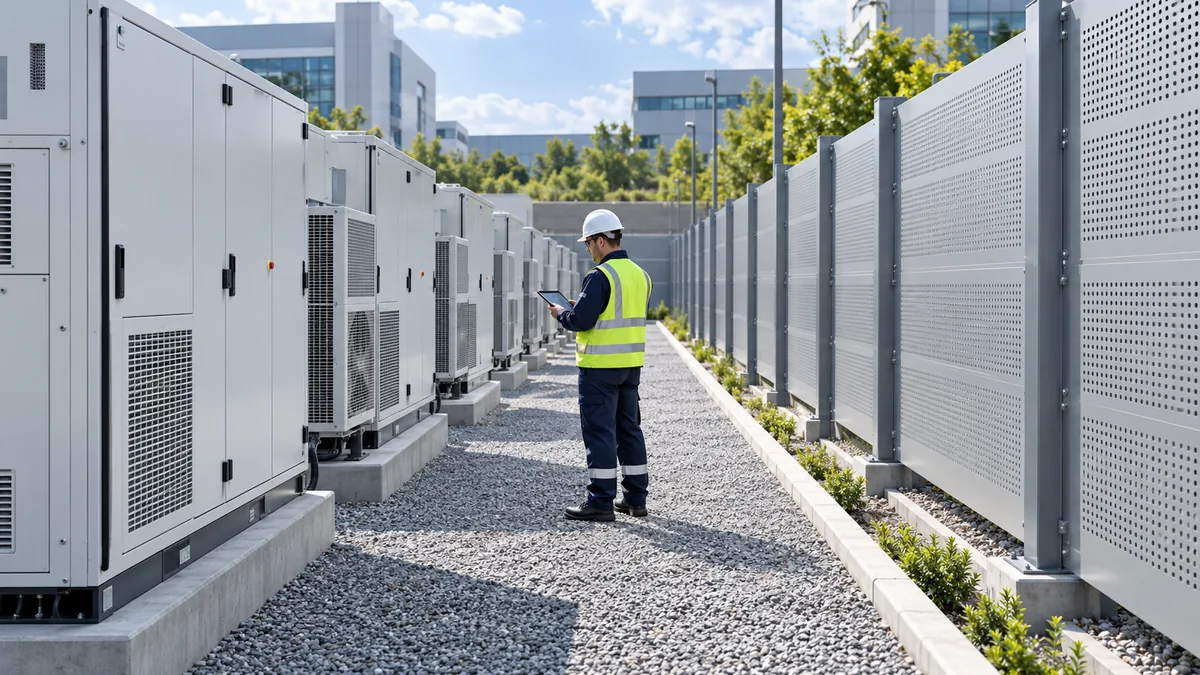
Air conditioners, fans and PCS cooling are also the main sound sources of an outdoor cabinet. When the site is near offices, homes or a property boundary, review cooling noise before fixing the layout. The BESS noise assessment checklist covers supplier sound data, operating scenarios, boundary measurements and mitigation options such as barriers or night-time limits.
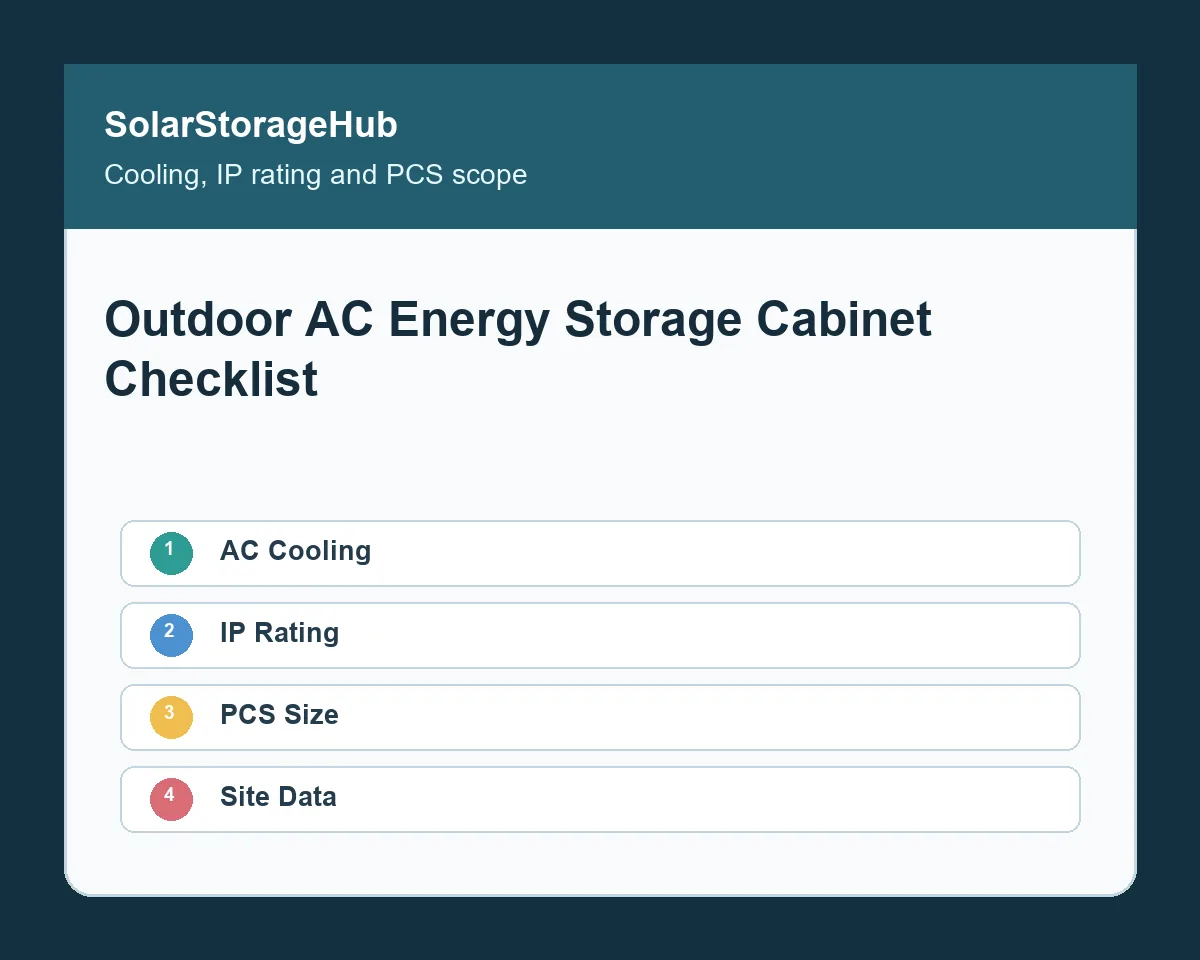
Outdoor AC energy storage cabinet checklist
| Check item | What to request | Why it matters |
|---|---|---|
| Application | Peak shaving, backup, PV storage, microgrid or EV charging support. | Defines the kW/kWh ratio, control logic and expected cycle profile. |
| AC cooling | Cooling capacity, airflow design, filter access and alarm rules. | Protects battery life and avoids thermal derating in outdoor operation. |
| IP rating | Cabinet IP rating, sealing detail, door gasket and cable entry method. | Controls water and dust risk at the actual installation site. |
| PCS sizing | Rated kW, overload behavior, reactive power and grid voltage. | Shows whether the cabinet can support the site load and grid connection. |
| Fire documents | Detection, suppression, emergency stop and test evidence. | Helps project teams prepare safety review and installation approval. |
| Site data | Foundation, clearance, cable route, lifting method and access road. | Prevents expensive changes after the cabinet reaches the site. |
| Cost boundary | Battery, PCS, EMS, HVAC, fire system, shipping and commissioning scope. | Makes quotations comparable across different suppliers. |
Check IP rating and cable entry with the real site
Outdoor cabinets are exposed to rain, dust, heat, sunlight, wind and sometimes salt mist. Buyers should request the IP rating, cabinet material, coating method, sealing structure, door lock detail, cable gland design and recommended foundation height. An IP rating on a datasheet is useful, but it does not replace a site review. The cabinet must still be installed with correct cable entry, proper drainage, enough clearance and suitable foundation work.
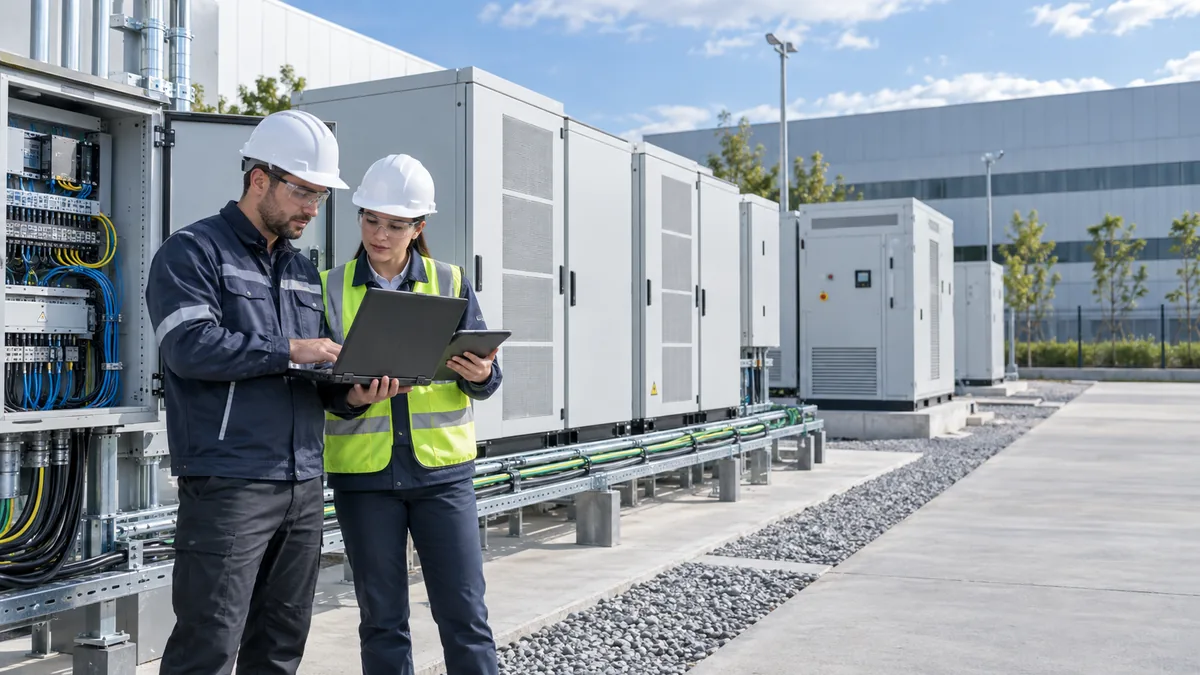
Cable entry is especially important. If cables enter from the bottom, confirm foundation openings and water protection. If cables enter from the side, confirm bend radius and protection from impact. If the cabinet includes DC battery modules, PCS, EMS and HVAC in one enclosure, the internal separation and service access should be clear. Ask for photos or drawings that show how technicians can inspect power cables, communication cables, HVAC filters and emergency controls without disassembling unrelated parts.
PCS scope changes the real project cost
Many outdoor cabinet quotations are difficult to compare because one quote includes the PCS and EMS while another only includes the battery cabinet. Buyers should ask for a scope table that separates battery modules, BMS, PCS, EMS, HVAC, fire detection, fire suppression, cabinet enclosure, transformer, switchgear, shipping, remote monitoring and commissioning support. This is the fastest way to avoid false price comparisons.
The PCS should be checked against site kW, battery kWh, transformer limits, overload behavior, reactive power needs and grid-code requirements. For more detail, compare the C&I ESS PCS sizing checklist and the outdoor cabinet energy storage system cost checklist. If PV is part of the site, also review the Solar Panel category and the PV inverter arrangement before deciding the cabinet power rating.
Ask for documents that prove field readiness
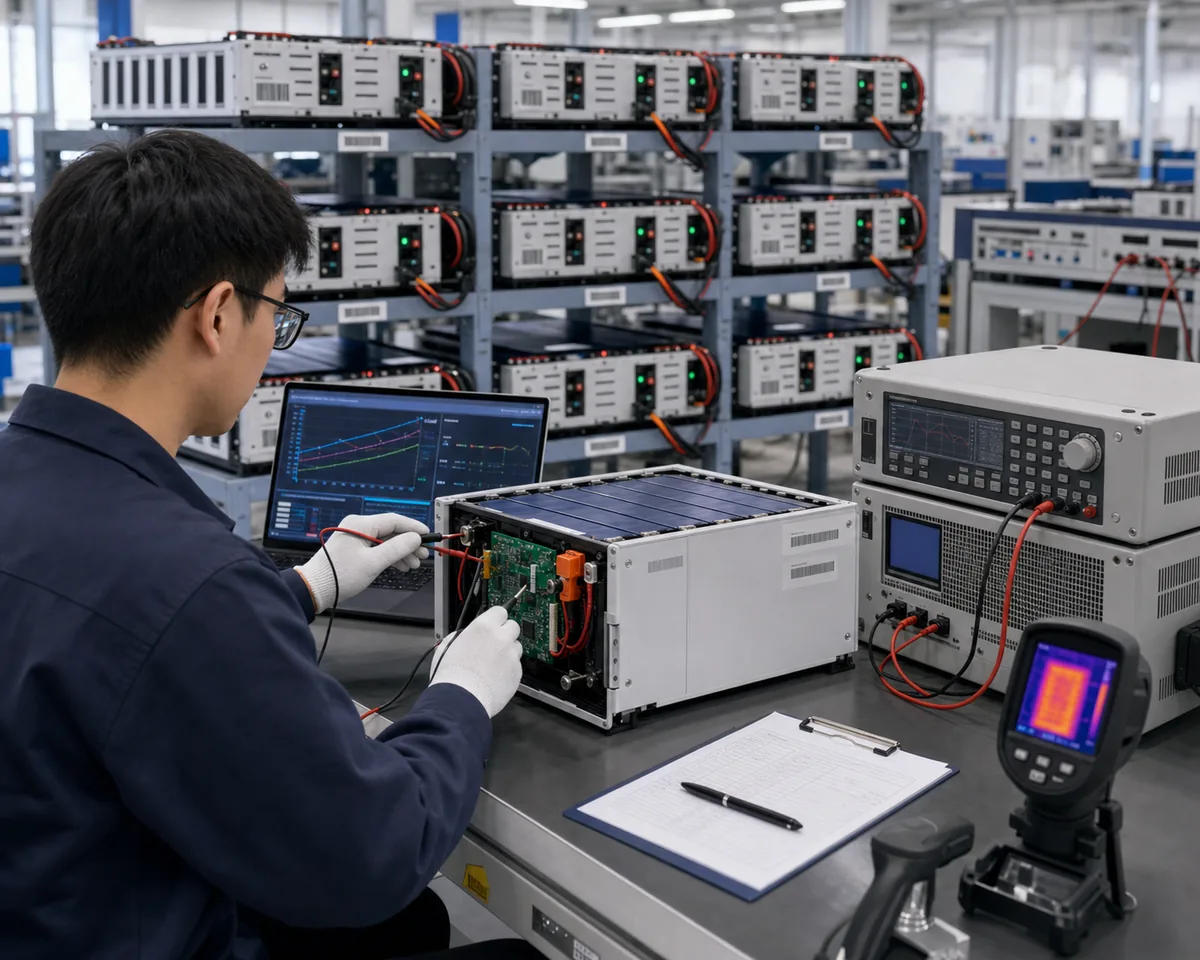
A strong outdoor cabinet proposal should include more than a price and capacity. Request a datasheet, system layout, single-line diagram, HVAC specification, IP rating statement, fire-safety description, installation manual, commissioning checklist, warranty condition, spare part list and remote monitoring field list. If the buyer is preparing a public or commercial project, the team may also need drawings, compliance documents and installation evidence before site approval.
SolarStorageHub reviews cabinet capacity, PCS scope, cooling method, site data, shipping assumptions and warranty evidence before quotation. For a new project, send the expected system size, site location, load profile, PV capacity, grid details and preferred delivery schedule through the Contact page. If the requirement is still early, start with the C&I ESS page to compare cabinet, container and project-support options.
When an outdoor AC cabinet is the right format
An outdoor AC energy storage cabinet is useful when the project needs a compact, weather-protected and serviceable system without a full container footprint. It can work well for small factories, commercial buildings, EV charging sites, telecom support, farms and distributed solar-plus-storage projects. It is especially helpful when indoor equipment space is limited or when the owner wants a packaged ESS that can be placed near existing electrical infrastructure.
It is not always the correct format. If the project needs very large capacity, containerized BESS may be easier to scale. If the site has extreme heat, high dust, salt mist or strict fire review, the cooling and enclosure design must be checked carefully. If the site load is uncertain, a cabinet price alone is not enough. The buyer should first collect load data, utility bills, site photos and grid connection details, then confirm whether the cabinet can meet the actual project duty.
FAQ
What is an outdoor AC energy storage cabinet?
It is an outdoor battery storage cabinet that uses air conditioning or active cooling to control battery and equipment temperature during operation.
Why does AC cooling matter?
Cooling helps control battery temperature, reduce derating, protect cycle life and keep the system stable in hot or demanding operating conditions.
What IP rating should I request?
The correct rating depends on the site. Ask for the cabinet IP rating, sealing details, cable entry method and installation requirements for rain and dust exposure.
Does the cabinet include the PCS?
Some cabinets include PCS, EMS, HVAC and fire protection, while others are battery-only. Always request a scope table before comparing prices.
What site data is needed before quotation?
Send application, load profile, target kW and kWh, grid voltage, PV capacity, ambient temperature, foundation plan, cable route and installation country.
What fire-safety documents should be requested?
Request detection and suppression description, emergency stop details, alarm logic, installation manual, maintenance guidance and available test evidence.
When should SolarStorageHub review the project?
Before final pricing, especially when the cabinet must match an existing transformer, PV system, critical load, outdoor site condition or local approval process.
Related SolarStorageHub Resources
If you are turning this article into a buying decision, compare the relevant product families and send your inverter model, target capacity, installation country, and quantity plan for confirmation.