
Outdoor AC Energy Storage Cabinet: Temperature and Maintenance Checklist
An outdoor AC energy storage cabinet needs maintenance planning before it is installed, not after the first alarm. The cabinet may include battery modules, BMS, PCS, EMS, air conditioning, fire detection, fire suppression, breakers, sensors and remote monitoring. If temperature, condensation, filters, alarms and service records are not managed, a cabinet that looked well specified can lose capacity, derate, or create avoidable warranty disputes.
This checklist is written for distributors, EPC teams, facility owners and OEM buyers who operate outdoor cabinet ESS projects in commercial and industrial environments. It supports C&I ESS, Solar Inverter matching, Home Energy Storage comparisons, Solar Panel projects and the Battery Storage Buyer Resources hub.
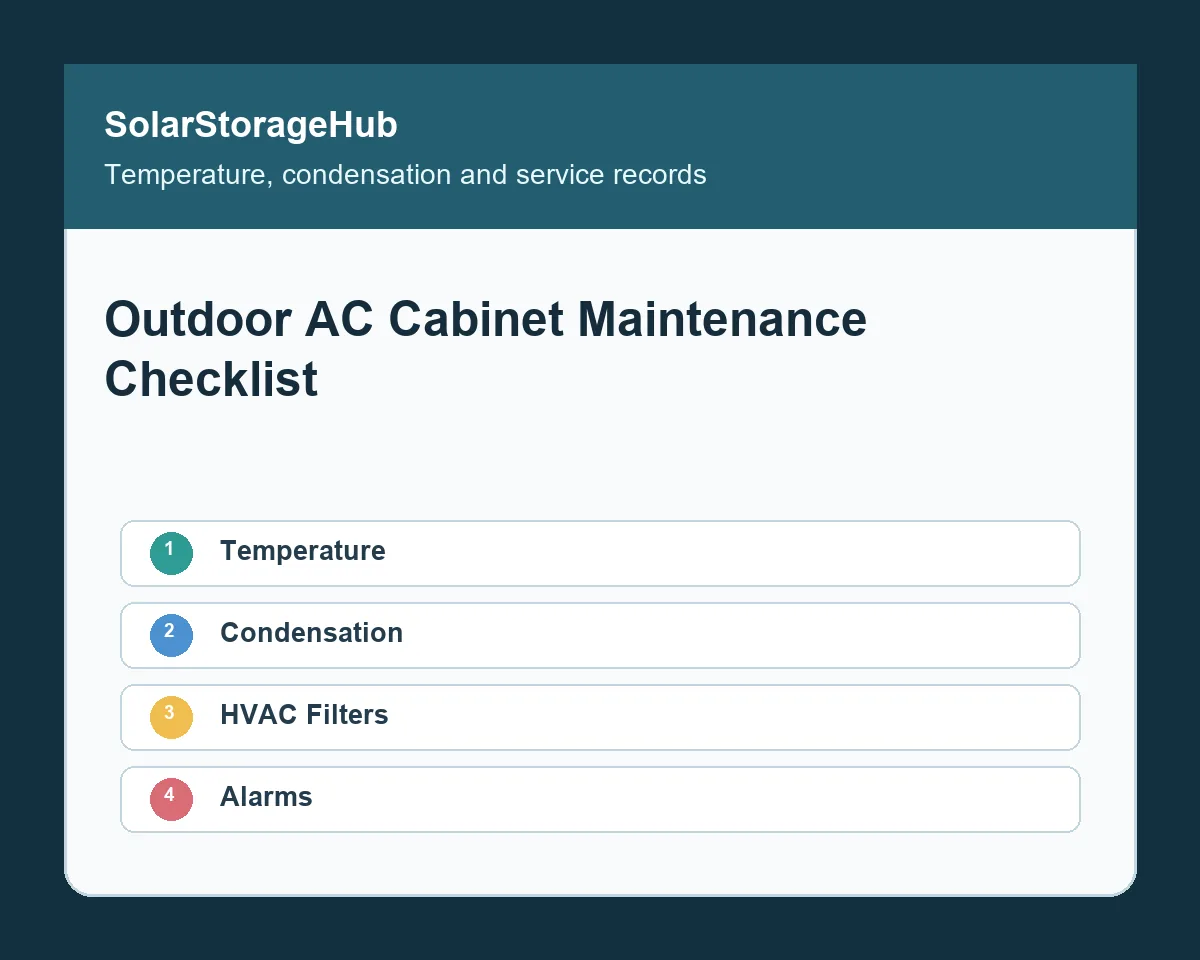
Temperature records should be part of the project file
Outdoor cabinets are exposed to daily heat, sunlight, rain, dust, humidity and sometimes salt mist. The air conditioner is only useful if the system monitors and records temperatures in a way that helps service teams understand real operation. Ask for ambient temperature, cabinet internal temperature, battery module temperature, PCS temperature, HVAC running status and alarm threshold records. A single room-temperature reading is not enough for a cabinet that may operate under changing load and weather conditions.
The buyer should also ask how the cabinet responds to high temperature. Does it derate charge and discharge current, trigger a warning, shut down the PCS, or send a remote alarm? Does the owner receive an alarm before the cabinet reaches a protection point? These details affect battery life and project availability. The U.S. Department of Energy notes that energy storage supports grid reliability and flexibility, but field reliability depends on design and operation evidence. Reference: Energy.gov energy storage.
Condensation risk should be reviewed with sealing and cable entry
Condensation is easy to ignore until it damages equipment or creates unexplained alarms. Outdoor cabinets can face humidity changes, rain exposure, nighttime cooling and internal heat from power electronics. Ask how the cabinet manages condensation, drainage, door sealing, cable entry and air conditioner condensate. If cables enter from the bottom, confirm that foundation design and cable glands do not allow water to enter the cabinet.
Buyers should request photos or drawings of cable entry, door gasket, drainage path, air conditioner condensate outlet and service access. If the project is in a coastal, rainy, dusty or high-humidity environment, ask whether cabinet material, coating, sealing and filters are suitable. These questions should be answered before shipment, because field modification is usually more expensive than correct design.
Outdoor AC cabinet maintenance checklist
| Check item | What to request | Why it matters |
|---|---|---|
| Temperature data | Ambient, cabinet, battery module, PCS and HVAC status records. | Shows whether cooling performance matches real operation. |
| HVAC filters | Filter position, cleaning interval, spare part code and alarm logic. | Prevents airflow loss and overheating in dusty sites. |
| Condensation control | Drainage method, cable entry detail and condensate outlet photos. | Reduces water risk inside outdoor equipment. |
| Alarm records | BMS alarms, HVAC alarms, door alarms, fire alarms and PCS alarms. | Creates evidence for service decisions and warranty review. |
| PCS service | PCS temperature, fault logs, settings backup and communication status. | Connects cabinet power behavior with maintenance records. |
| Fire system | Detection status, suppression check and emergency stop test. | Supports safety review and owner handover. |
| Warranty file | Inspection forms, photos, BMS logs and maintenance schedule. | Protects the buyer if later service claims depend on evidence. |
Filters, airflow and alarms need a visible service routine
Air conditioning performance can drop when filters are blocked or airflow is restricted. Ask the manufacturer where filters are located, whether the owner can access them safely, how often they should be cleaned, and what spare parts are needed. If the cabinet is installed near dust, pollen, construction material or industrial exhaust, the standard interval may be too long. The maintenance plan should match the site, not only the manual.
Alarm rules should be clear. A useful alarm list explains what is local, what is remote, what is a warning, what causes derating and what causes shutdown. For broader service planning, compare this article with the C&I ESS maintenance checklist and the outdoor AC energy storage cabinet cooling checklist.
Maintenance should connect to cost and warranty
Outdoor cabinet cost is not only the equipment price. It includes service access, spare parts, monitoring, inspection intervals, warranty exclusions and the cost of downtime. Ask whether the quoted scope includes remote monitoring setup, commissioning support, spare filters, HVAC service guidance and warranty claim requirements. If the warranty requires BMS logs or maintenance records, the buyer should receive the correct forms before site handover.
SolarStorageHub reviews cabinet capacity, PCS scope, AC cooling, site conditions, fire documents and warranty evidence before quotation. For project review, compare with the outdoor cabinet cost checklist and the outdoor ESS cabinet manufacturer checklist. Send ambient temperature, installation country, load profile, grid details and delivery target through the Contact page.
When maintenance planning changes product selection
Maintenance planning can change the correct cabinet choice. A small commercial site with clean air and moderate temperature may use a standard outdoor cabinet. A hot, dusty or coastal site may need stronger filtering, corrosion-resistant materials, more detailed alarm monitoring and a tighter service schedule. A site with limited access may need remote monitoring and easier front-side service.
If the project owner cannot support regular inspection, the buyer should avoid designs that need frequent manual service. If the site has strict safety review, fire and emergency documents should be prepared early. If the cabinet will support PV, battery storage and commercial loads, maintenance records should cover the whole system rather than only the battery modules.
Related buyer guide: Outdoor cabinet operation should be checked against temperature and maintenance limits. Read C&I ESS Fire Safety Checklist: HVAC, Warranty and Site Handover.
Related outdoor ESS product: Apply these temperature and maintenance checks to the 100-500 kWh all-in-one outdoor battery storage cabinet before confirming cooling, service clearance and the final quotation scope.
FAQ
Why does an outdoor AC cabinet need maintenance planning?
Outdoor cabinets face heat, dust, humidity and service access limits. Maintenance planning protects cooling performance, battery life and warranty evidence.
What temperature data should be recorded?
Record ambient temperature, cabinet internal temperature, battery module temperature, PCS temperature, HVAC status and high-temperature alarms.
How can condensation risk be reduced?
Check sealing, cable glands, drainage, condensate outlet, foundation height and door gasket condition before and after installation.
How often should HVAC filters be cleaned?
The correct interval depends on dust, location and runtime. Ask the manufacturer for a base interval and adjust it to the actual site.
What records help warranty claims?
BMS logs, alarm reports, maintenance photos, filter service records, commissioning forms and settings backups are useful evidence.
Should fire-system checks be part of maintenance?
Yes. Detection status, suppression condition, emergency stop and alarm reporting should be checked according to the project manual.
When should SolarStorageHub review the cabinet maintenance plan?
Before final quotation, especially when the site is hot, dusty, coastal, hard to access or requires detailed safety approval.
Related SolarStorageHub Resources
If you are turning this article into a buying decision, compare the relevant product families and send your inverter model, target capacity, installation country, and quantity plan for confirmation.