
C&I ESS Manufacturing Checklist: Factory, FAT & Warranty
Procurement note: C&I ESS manufacturing should be evaluated by what the factory actually builds, integrates and tests—not by cabinet photos and a price sheet. Buyers should verify battery rack assembly, BMS integration, PCS and EMS scope, FAT traceability, safety documents, OEM support and warranty responsibility before placing a commercial or industrial energy storage order.
C&I ESS manufacturing covers the controlled assembly and integration of battery modules or racks, BMS, cabinet or container, wiring, thermal management, PCS and EMS interfaces, followed by FAT, serial-number traceability and model-specific documentation. The exact factory-controlled scope varies by supplier, so buyers should map each quoted component and test record to a named responsible party.
This guide is written for EPC teams, distributors, installers and industrial buyers comparing C&I ESS, outdoor battery storage cabinets, and 20ft and 40ft BESS container options. It also connects supplier selection with Solar Inverter, Solar Panel, and Home Energy Storage decisions where hybrid projects share batteries, inverters and monitoring. Use the Battery Storage Buyer Resources hub or send project data through Contact before requesting a formal quote.
C&I ESS factory and manufacturing capability: what buyers should verify
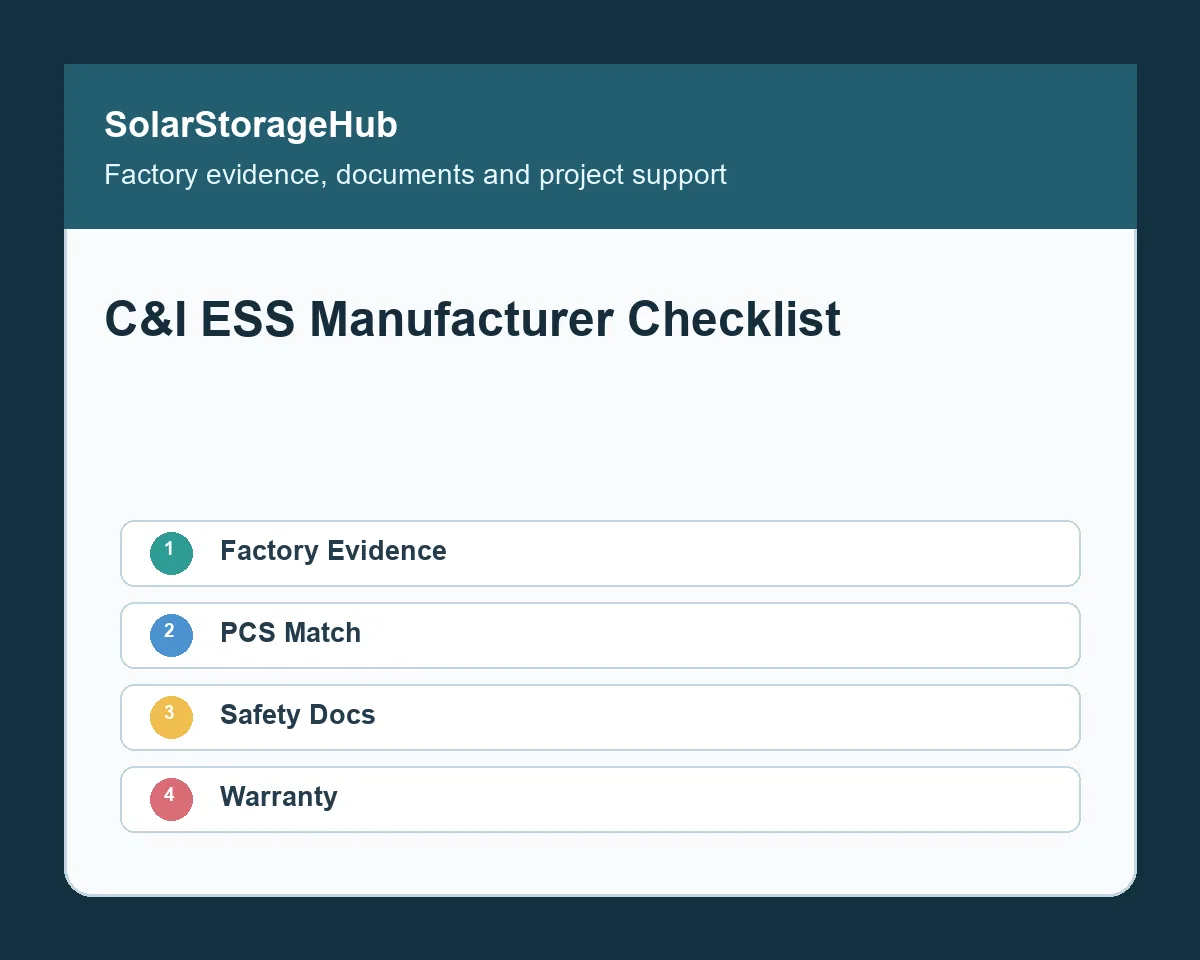
A buyer searching for a C&I ESS factory usually needs to know what the supplier actually controls. Ask whether the factory assembles battery modules or racks, integrates the BMS, builds the cabinet or container, matches the PCS and EMS, runs the factory acceptance test, and keeps serial-number traceability for the shipped system.
- Factory-controlled scope: battery pack or rack assembly, cabinet integration, wiring, BMS configuration, PCS and EMS integration.
- Repeatable test evidence: model-specific FAT records, insulation checks, alarm tests, charge and discharge records, firmware versions and serial numbers.
- OEM and project support: private-label model mapping, drawings, certification scope, packaging, shipping documents, commissioning support and spare parts.
Connect factory evidence with the C&I ESS commissioning checklist and the battery cabinet vs container BESS checklist. This helps the buyer confirm that manufacturing responsibility continues through site acceptance and warranty handover.
Why manufacturer selection matters in C&I ESS projects
Commercial and industrial energy storage projects usually fail at the interfaces: battery to PCS, PCS to transformer, EMS to metering, fire-safety system to site rules, and warranty language to real operating conditions. A capable manufacturer should help document these interfaces, not only ship equipment.
The buyer should ask what the manufacturer directly controls. Does it assemble battery racks, design cabinets, integrate PCS and EMS, write BMS firmware, test the complete system, or only purchase components from several vendors? A trading supplier may still be useful, but the risk profile is different. The quotation should make responsibilities visible.
C&I ESS manufacturer checklist
| Review area | What to request | Why it matters |
|---|---|---|
| Factory evidence | Production photos, test equipment, QC process, model list and traceability method. | Shows whether the supplier can repeat the quoted configuration. |
| Battery system | Cell, module, rack, BMS, usable capacity, operating window and degradation assumptions. | Defines real kWh, cycle use and warranty conditions. |
| PCS matching | PCS rating, voltage, overload, reactive power, transformer interface and protection plan. | Prevents a battery-only quote from missing grid-side limits. |
| EMS and monitoring | Metering points, dispatch logic, alarms, data export, user roles and communication protocol. | Determines whether the project can actually operate as planned. |
| Safety documents | Test scope, detection, ventilation, suppression, emergency response and commissioning records. | Supports local review, insurer questions and site approval. |
| Warranty | Cycle limits, temperature limits, DoD, auxiliary power, maintenance and response process. | Turns warranty promises into practical operating rules. |
| Project support | Drawings, single-line diagram support, packing list, shipping documents and remote commissioning help. | Reduces delays between purchase order and handover. |
Ask for model-specific evidence
A common buying mistake is accepting generic certificates or a brochure for a different configuration. Ask whether the quoted cabinet or container matches the model name on reports, drawings and labels. If the project uses a private-label name, request a mapping document that connects the private label to the tested and shipped model.
Evidence should cover the actual battery chemistry, rack design, enclosure, cooling method and rated capacity. If the supplier changes cell brand, module layout, PCS model or enclosure design after quotation, the buyer should ask what documents must be revised. The Battery Certification Documents guide explains how to review scope and model identity before ordering.
Review PCS and transformer responsibility
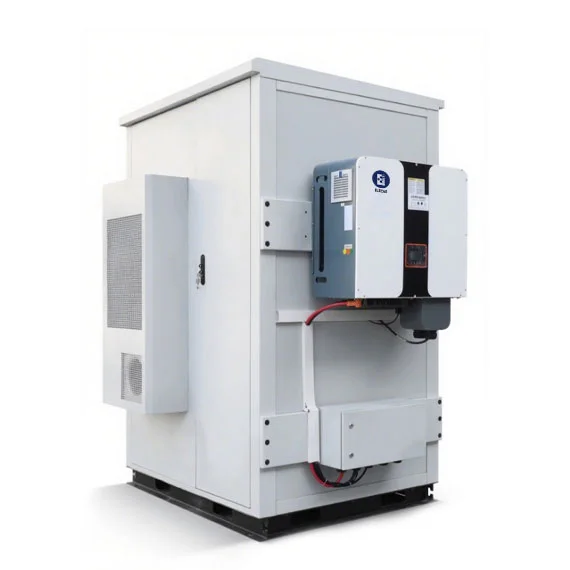
Some suppliers quote a battery cabinet while the buyer assumes the full energy storage system is covered. In C&I projects, the PCS, transformer, AC protection, site controller and grid interface are just as important as the battery racks. Confirm who selects the PCS, who checks transformer capacity, and who owns the protection philosophy.
For peak shaving, demand-charge control or backup support, ask for continuous kW, overload behavior, ramp rate, reactive power, communication protocol and grid code assumptions. The C&I ESS PCS Sizing Checklist gives a practical list of power-side questions before final quotation.
Check EMS, metering and dispatch logic
A battery system without a clear control plan can become an expensive idle asset. Ask how the EMS receives load data, solar production data, tariff rules, state of charge, fault states and remote dispatch commands. For a factory, metering location can decide whether peak shaving works. For solar plus storage, PV curtailment and export-control rules can change the economic result.
Request screenshots, alarm examples, data export format and user-role descriptions. If the site uses an existing monitoring platform, confirm whether Modbus, CAN, RS485, Ethernet, cloud API or dry-contact signals are required. These questions should be answered before purchase, not during commissioning.
Connect safety documents with site approval
C&I ESS safety review is site-specific. The manufacturer should provide product documents, but the buyer still needs local engineering and authority review. Ask for detection, ventilation, suppression design basis where applicable, emergency response information, cause-and-effect matrix and maintenance requirements.
Useful official references include the UL Solutions energy storage system testing and certification page and the NFPA 855 standard development page. These sources help identify document categories, but final requirements depend on local authorities and insurers. Use the C&I BESS Fire Safety Checklist to organize the supplier package.
Make warranty terms operational
A warranty is only useful if operating rules are clear. Ask for cycle limits, depth of discharge, temperature limits, charge and discharge current, SOC storage rules, auxiliary power requirements, firmware update rules and maintenance records. If the site will operate in high temperature, low temperature or dusty conditions, confirm whether warranty coverage changes.
Buyers should also clarify response time, spare-parts availability, remote support, local service partner and evidence required for claims. The C&I ESS Maintenance Checklist explains how BMS logs, cooling records and alarm histories support warranty discussions.
Compare manufacturer support by project stage
Before order, the supplier should help review load profile, PV capacity, site voltage, target kWh, target kW and expected operating mode. During production, it should provide drawings, schedule updates, inspection records and packing information. Before shipment, it should provide labels, serial numbers, factory acceptance evidence and shipping documents. During commissioning, it should support settings, alarms, EMS logic and handover records.
If the supplier cannot explain these stages, the buyer should expect more local engineering work and a higher risk of delays. The C&I ESS Quote Checklist helps collect site data early so the manufacturer can quote around real project assumptions.
What to send before asking for a manufacturer quote
Prepare the installation country, site use, target kWh, target kW, daily cycle plan, backup requirement, grid voltage, transformer capacity, PV size, site photos, available footprint, ambient temperature, communication requirements, safety requirements and delivery schedule. If the project is a container system, include access and foundation information using the 20ft vs 40ft BESS Container Checklist.
SolarStorageHub can help compare manufacturer responses, identify missing documents and organize a cleaner quotation package for buyer review. Send project information through Contact.
FAQ
What is the difference between a C&I ESS manufacturer and a reseller?
A manufacturer usually controls part of design, assembly, testing and documentation. A reseller may source equipment from others. Both can be useful, but the buyer should know who owns technical responsibility.
What factory evidence should buyers request?
Request production photos, model-specific test records, QC process, serial-number traceability, battery configuration and final inspection evidence.
Should the manufacturer choose the PCS?
The manufacturer can recommend a PCS, but the buyer should confirm grid voltage, transformer capacity, overload behavior, protection and local grid requirements.
What documents are needed before shipment?
Request final drawings, packing list, labels, serial numbers, safety documents, test records, shipping documents, commissioning plan and warranty terms.
How can buyers compare two C&I ESS quotes?
Compare usable kWh, PCS kW, cooling method, safety package, EMS function, warranty limits, installation scope, shipping scope and after-sales responsibility.
Can one manufacturer document package fit every site?
No. Product documents are only part of the package. Local authorities, insurers and engineers may require site-specific drawings, spacing, emergency response and commissioning records.
When should SolarStorageHub be contacted?
Contact SolarStorageHub before final quotation if you need help checking battery configuration, PCS matching, documentation gaps, warranty terms or project scope.
Related SolarStorageHub Resources
If you are turning this article into a buying decision, compare the relevant product families and send your inverter model, target capacity, installation country, and quantity plan for confirmation.