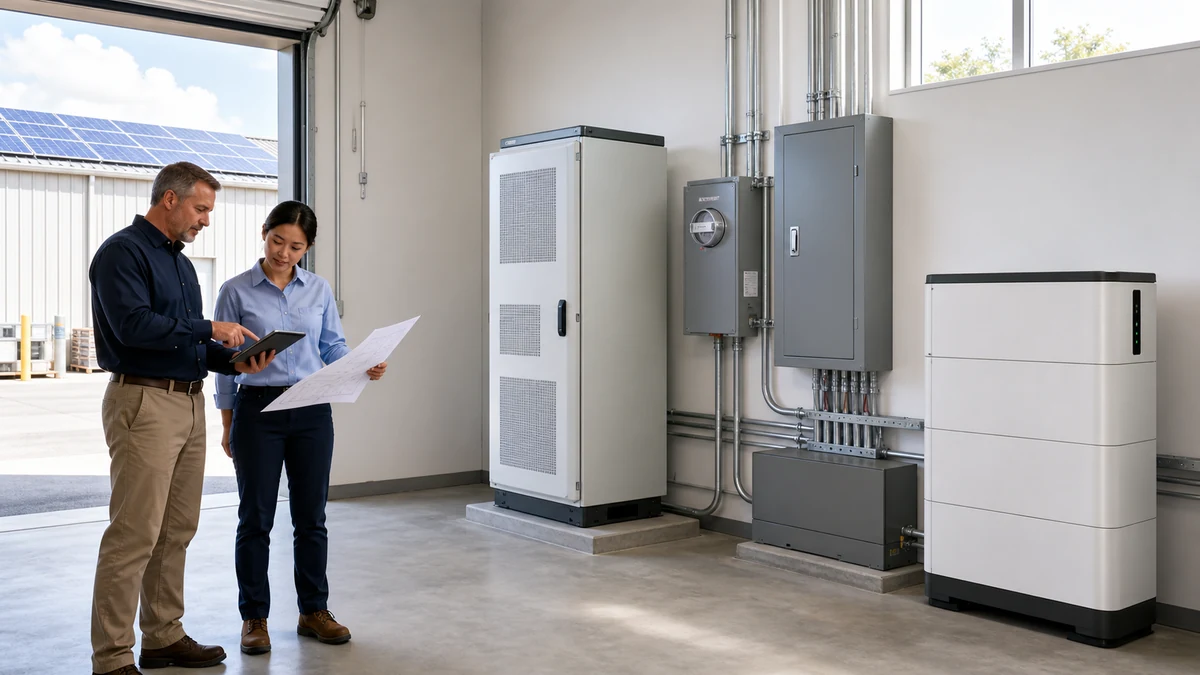

C&I Energy Storage System Case Study Checklist: Load, Savings and Evidence
A C&I energy storage system case study should prove the operating conditions behind the result. A cabinet photograph, installed kWh figure and percentage-saving headline do not show whether the site had the same load profile, tariff, transformer limit, solar generation, backup requirement or control strategy as the buyer's project. Credible C&I energy storage system cases connect baseline data, system design, dispatch logic and measured evidence.
This checklist is for industrial buyers, commercial facility teams, EPC companies and distributors reviewing supplier case studies before requesting a quotation. It does not present a fictional customer project or promise a return. Instead, it explains the evidence needed to decide whether a case is comparable and what must be recalculated for a new site.
1. Define the Case Objective Before Reading the Result
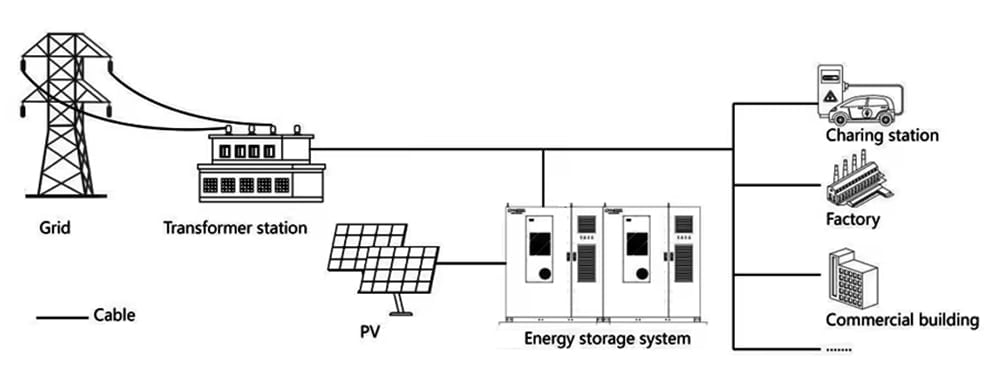
Start by identifying the duty the energy storage system was designed to perform. Peak shaving reduces short demand peaks. Energy arbitrage shifts electricity from lower-cost to higher-cost periods. Solar self-consumption stores excess PV for later use. Backup projects reserve energy for critical loads. Power-quality or grid-support projects may prioritize response speed, reactive power, voltage support or export control.
A single system can perform several duties, but the priorities and state-of-charge reserve must be documented. A case that claims both maximum daily arbitrage and long backup duration may be using conflicting assumptions. Ask which operating mode had priority, how the EMS resolved conflicts and whether the published result came from one mode or a combined strategy.
2. Check the Baseline Period and Interval Load Data
The baseline should show what happened before storage was installed. Record the start and end dates, meter location, interval length, missing-data treatment, production changes, shutdown days, weather-sensitive loads and unusual events. A short period selected around one high peak can exaggerate expected savings. A full year is useful when seasonality matters, but a shorter period may be acceptable if it represents the actual operating pattern and limitations are stated.
For demand-charge analysis, the interval must match the billing method. The C&I ESS peak-shaving data checklist explains how 15-minute loads, demand windows, tariff rules and dispatch limits affect sizing. Compare the baseline invoice data with the interval meter data so the calculation uses the same billing boundary.
3. Record the Exact Installed System Boundary
Do not compare cases using battery nameplate capacity alone. Record usable kWh, continuous and peak PCS kW, battery voltage, permitted state-of-charge window, expected cycles, round-trip efficiency basis, thermal management, auxiliary consumption, transformer and switchgear scope, metering points, EMS version, communications and backup interface.
| Case-study field | Evidence to request | Why it changes the result |
|---|---|---|
| Site and load | Industry, operating hours, interval data, peak pattern and critical loads | Defines power, energy and reserve requirements. |
| Battery | Usable kWh, SOC window, chemistry, cycle target and degradation basis | Nameplate kWh may overstate dispatchable energy. |
| PCS and grid | Continuous kW, overload, voltage, transformer limit and protection | Determines how quickly the battery can change site demand. |
| EMS logic | Forecast inputs, setpoints, reserve rules, export limit and fallback mode | Explains why the system charged or discharged at each interval. |
| Project scope | Cabinet or container, HVAC, fire package, civil work and commissioning | Prevents a battery-only price from being compared with a complete project. |
| Measurement period | Dates, meter source, exclusions, downtime and data-quality notes | Shows whether the published result is repeatable and complete. |
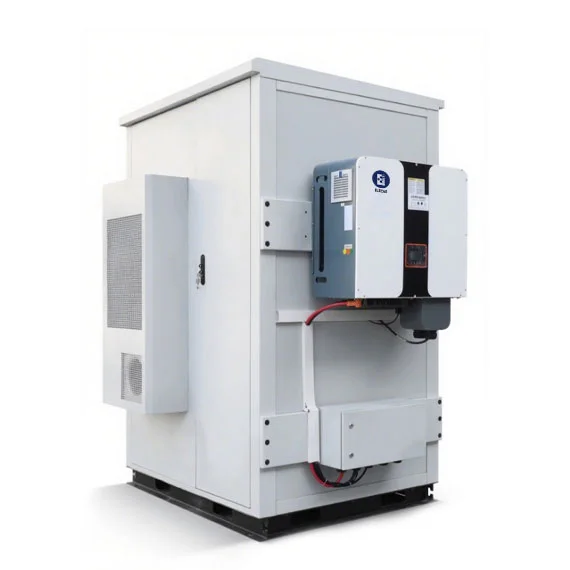
Use the C&I energy storage product range to compare formats. Smaller projects may use an all-in-one outdoor battery storage cabinet, while larger or more integrated scopes may use a 20ft or 40ft containerized BESS. The case should identify the exact configuration, not only a product-family name.
4. Ask for the Dispatch Logic and Operating Constraints
Measured load and battery power trends should be understandable. Ask when charging was allowed, how target demand was calculated, what prevented over-discharge, how PV forecasts or tariffs were used, and what happened when communication or metering failed. The case should show reserve SOC, minimum dwell time, charge and discharge limits, transformer constraints and export-control settings.
A chart without timestamps, units or setpoints is difficult to verify. Request representative EMS screenshots or exported trends with site demand, battery power, SOC and target demand on the same time axis. Sensitive customer information can be anonymized, but the relationship among the signals should remain clear.
5. Separate Modeled, Guaranteed and Measured Results
Modeled savings are calculated before installation using assumptions. A guaranteed value is a contractual commitment with defined conditions and exclusions. Measured savings are calculated from actual post-commissioning data. These three numbers should never be mixed. Label the basis, period, data source and calculation method for each one.
For measured peak shaving, show the original site peak, controlled peak, billing demand and any coincident-demand rule. For arbitrage, show charged and discharged energy, applicable tariff periods, efficiency losses and auxiliary consumption. For backup, report tested critical load, transfer behavior, reserve SOC and demonstrated duration rather than a theoretical runtime only.
6. Rebuild the Financial Calculation
Ask for the tariff version, demand-charge rate, time-of-use prices, fixed charges, export compensation, taxes included or excluded and the period used for currency conversion. Identify whether maintenance, financing, insurance, degradation, battery augmentation, replacement parts and EMS service fees are included. A simple payback headline can change significantly when these assumptions change.
Recalculate the result with the buyer's own tariff and load data. A case study is a reference for operating logic, not a substitute for a site model. If the supplier cannot show the calculation steps, treat the stated saving as marketing information rather than decision-grade evidence.
7. Include Availability, Alarms and Maintenance
A case should report whether the system was available when needed. Ask for the measurement-period availability definition, planned maintenance, forced outages, alarm summary, EMS or communications downtime, HVAC events and any periods excluded from the result. A high savings number during a short, problem-free window may not represent annual operation.
The C&I ESS maintenance checklist describes BMS logs, cooling checks, alarms and warranty records that should continue after handover. Case evidence is stronger when operating results are supported by maintenance and incident records rather than a single commissioning-day screenshot.
8. Trace FAT, SAT, Commissioning and Handover
A credible case connects the factory-tested configuration to the commissioned site. Request model and serial-number records, FAT results, parameter files, protection settings, communication maps, alarm tests, meter checks, EMS acceptance, performance tests, open-item closure and the signed handover date. If the configuration changed after shipment, the case should explain the revision.
Use the C&I ESS commissioning checklist to compare FAT, SAT, EMS and warranty-handover evidence. Safety acceptance and local approval remain site-specific; a successful case in one market does not replace engineering review or authority approval in another.
9. Score the Evidence Before Using the Case
A repeatable scorecard keeps a polished brochure from outweighing missing data. Mark each area as verified, partly verified, unverified or not applicable. Set mandatory failures for missing baseline data, unclear system scope, unlabeled modeled results or a result period that excludes material downtime without explanation.
| Evidence area | Suggested weight | Full-score requirement |
|---|---|---|
| Baseline and tariff | 20% | Dated interval data and calculation boundary match the stated objective. |
| Installed system scope | 20% | Usable kWh, PCS kW, SOC limits, EMS and project boundary are identified. |
| Dispatch evidence | 20% | Demand, battery power, SOC and setpoints explain operating behavior. |
| Measured results | 20% | Modeled and measured values are separated with dates and exclusions. |
| Commissioning and availability | 10% | Acceptance, downtime, alarms and maintenance are traceable. |
| Comparability | 10% | Differences from the buyer's site are listed and require recalculation. |
10. Prepare a Comparable Case Request
When asking a supplier for examples, provide the buyer's installation country, industry, interval load file, tariff, grid voltage, transformer limit, PV capacity, operating objective, critical loads, ambient conditions, available footprint, communication needs and target schedule. Request one or two cases with the closest operating conditions, not the largest installed project.
After checking whether a case is comparable, use the C&I ESS exporter checklist to verify the legal seller, factory and integrator roles, order-specific documents, FAT, packaging, shipping and warranty responsibility before requesting a commercial offer.
The C&I ESS site-survey checklist and C&I ESS quote checklist help organize the inputs. For a project-specific review, send SolarStorageHub the load profile, tariff, single-line diagram and required operating mode. Any expected saving or runtime must be calculated from the submitted site data.
For general technical context, the U.S. Department of Energy energy storage information provides independent information about storage technologies and grid applications. Local engineering, safety requirements and financial assumptions should still control the final decision.
C&I Energy Storage System Case Study FAQ
What should a credible C&I energy storage system case study include?
It should identify the site duty, baseline period, interval load data, tariff or operating constraint, installed battery and PCS scope, dispatch logic, measurement period, exclusions, commissioning records and measured results. Photos and headline savings alone are not enough.
How much load data is needed before comparing a C&I ESS case?
Use interval data that captures normal operations, peak events, shutdowns and seasonal changes. Fifteen-minute data is common for demand-charge analysis, but the interval and date range should match the tariff and project objective.
Should modeled savings and measured savings be shown separately?
Yes. Modeled savings are forecasts based on assumptions. Measured savings use actual meter and operating data after commissioning. A case study should label both, show the calculation period and explain any difference.
Can two energy storage case studies be compared by kWh alone?
No. Compare usable kWh, PCS kW, state-of-charge limits, cycles, tariff, load shape, availability, ambient conditions, auxiliary consumption, control strategy and included project scope.
Does a case study prove the same result will occur at another site?
No. It demonstrates what happened under a defined set of conditions. The next site needs its own load data, tariff, grid constraints, environmental conditions, safety review and financial model.
What evidence should a buyer request before accepting a supplier case?
Request anonymized interval data where permitted, system configuration, single-line diagram, EMS trend examples, commissioning sign-off, alarm and availability summary, calculation method, tariff assumptions and a clear statement of modeled versus measured results.
Final Buyer Rule
Use a C&I energy storage system case study only after the baseline, system boundary, dispatch logic, measurement period and calculation method are traceable. Then replace the original site's load, tariff, constraints and project scope with the buyer's own inputs. A comparable evidence package is useful; an unexplained savings headline is not.
Related SolarStorageHub Resources
If you are turning this article into a buying decision, compare the relevant product families and send your inverter model, target capacity, installation country, and quantity plan for confirmation.