
C&I ESS Quote Checklist: Site Data, Load Profile and Warranty Evidence Before Pricing
Buyer note: A C&I ESS quote should not start with battery capacity alone. Before a distributor, EPC team, or project owner asks for a price, the supplier needs site data, load behavior, inverter requirements, installation limits, documents, and warranty evidence. A clean quote package reduces the risk of under-sized batteries, incompatible inverters, missed safety items, and weak after-sales support.
This checklist is written for commercial and industrial buyers comparing C&I ESS, Solar Inverter, Solar Panel, and related Home Energy Storage product paths. Use it with the Battery Storage Buyer Resources hub and send project details through Contact when the site is ready for supplier review.
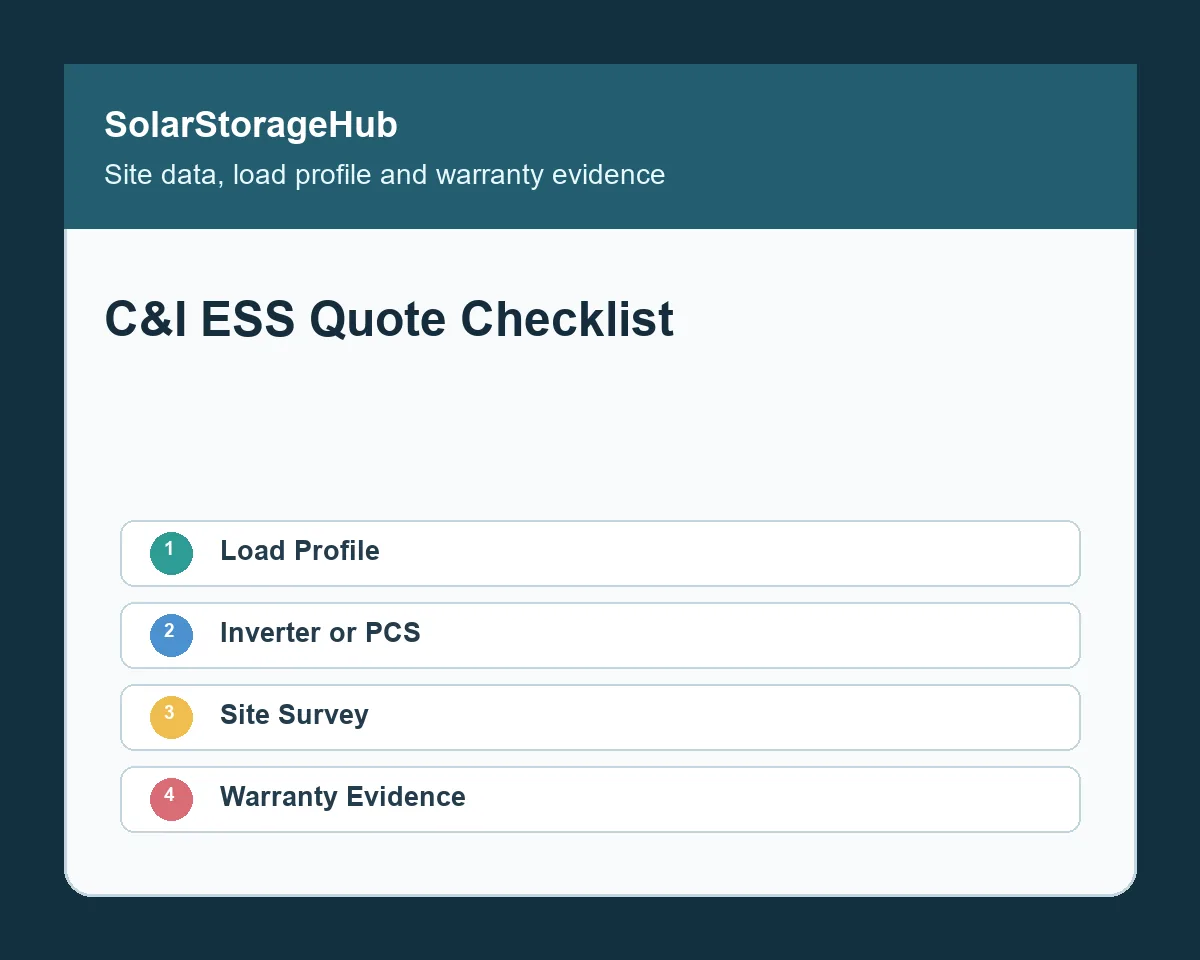
Why C&I ESS quotes fail early
Many quote requests are too thin. They say "we need 100kWh" or "please quote a 215kWh cabinet" without explaining the load, grid condition, PV size, inverter model, peak demand target, site space, temperature, or installation environment. The supplier can still send a price, but the price may not match the real project risk.
A better request separates three questions: what the site needs the battery to do, how the system will connect electrically, and what evidence the buyer needs before payment or shipment. Those questions affect battery capacity, PCS or inverter selection, cabinet cooling, fire and electrical protection, cable design, shipping documents, commissioning work, and warranty terms.
Quote data checklist
| Data area | What to prepare | Why it affects the quote |
|---|---|---|
| Site profile | Business type, location, grid type, available space, indoor or outdoor installation, altitude and ambient temperature. | Determines cabinet format, cooling method, protection level and installation assumptions. |
| Load profile | 15-minute or hourly load data, peak demand, essential loads, operating schedule and backup target. | Controls battery capacity, power rating, reserve margin and expected runtime. |
| Solar input | PV array size, inverter model, roof or ground-mount condition and expected generation window. | Shows whether solar recharge can support the storage target. |
| Electrical connection | Single-line diagram, voltage, phase, transformer limits, breaker space and grid connection rules. | Affects inverter or PCS selection, wiring, protection and commissioning scope. |
| Operating goal | Backup, self-consumption, peak shaving, tariff shifting, generator reduction or mixed use. | Each goal uses a different control strategy and cycle profile. |
| Documents | Datasheet, certificate scope, warranty terms, shipping documents, installation manual and commissioning checklist. | Prevents late-stage delays during procurement, customs, installation or handover. |
Start with the operating goal
A C&I battery can be sold for different reasons, but the design should be honest about the first priority. A system sized for two hours of essential backup may not be ideal for daily peak shaving. A battery selected for solar self-consumption may need a different cycle life discussion than a standby backup battery that only discharges during outages.
Before asking for price, write one primary goal and one secondary goal. For example: "primary goal is to reduce diesel generator runtime during evening outages; secondary goal is to store midday solar surplus." This simple statement helps the supplier choose more realistic battery capacity, power rating, control logic and warranty assumptions.
Load profile matters more than nameplate kWh
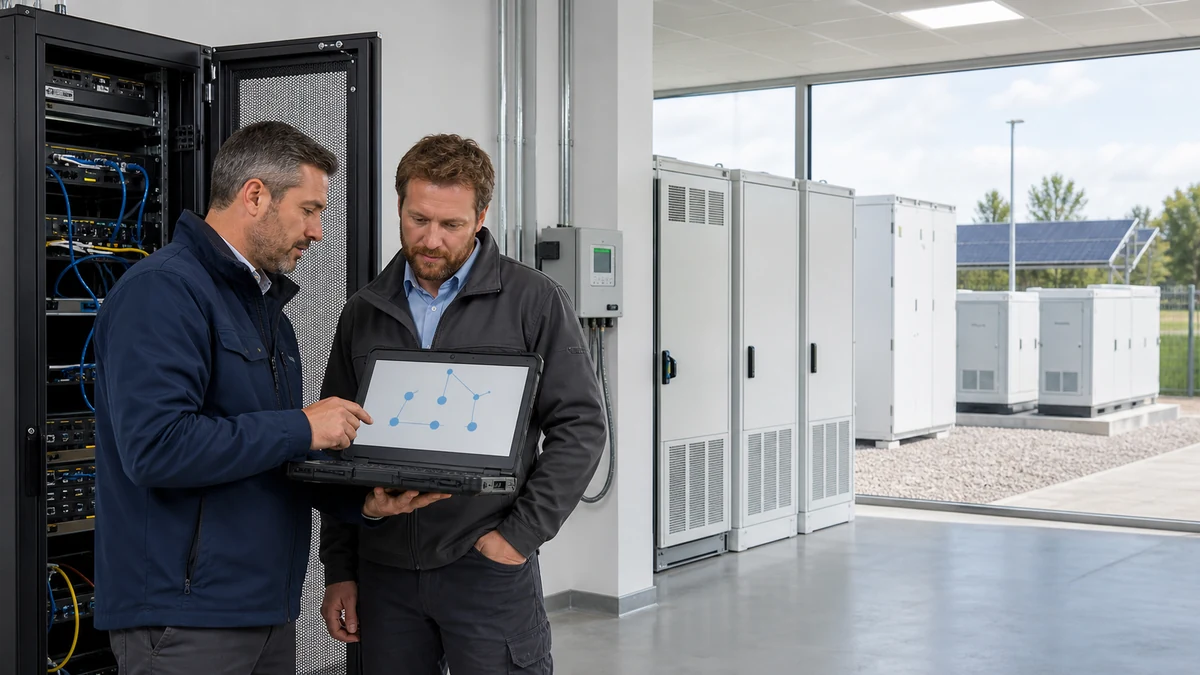
The most useful quote input is a load profile. If the site has a meter record, send the hourly or 15-minute data. If meter data is not available, prepare a load table with equipment name, running power, starting surge, operating hours and whether the load is essential. Commercial loads often include refrigeration, pumps, compressors, IT equipment, lighting, office loads and air conditioning. These loads do not behave the same way.
For runtime planning, compare the load profile with the method in How to Estimate Battery Storage Runtime. Usable kWh, inverter loss, reserve margin and solar recharge assumptions should be discussed before a buyer promises backup hours to the customer.
Check inverter or PCS compatibility early
Battery capacity and inverter power must be checked together. A project may have enough kWh but still fail when motors start, when the inverter reaches its continuous power limit, or when the BMS limits charge or discharge current. For hybrid inverter projects, the buyer should provide exact inverter model, firmware where possible, voltage range, communication protocol and target operating mode.
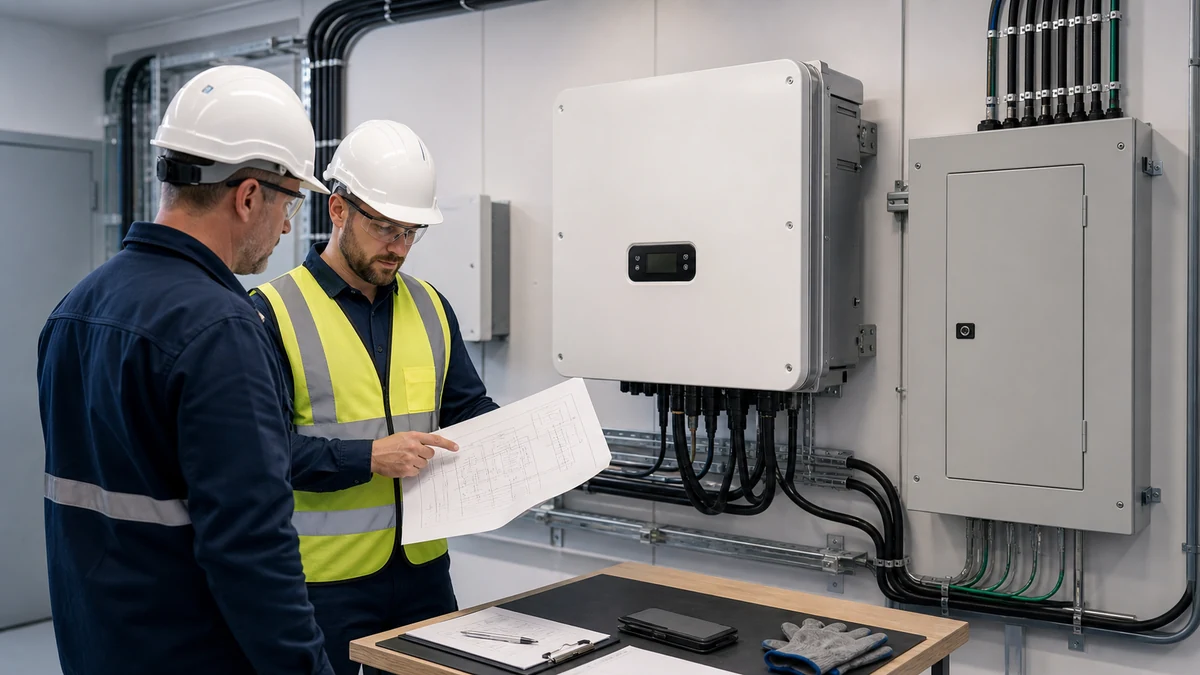
For larger C&I ESS projects using a PCS and battery cabinet, the quote should define DC voltage range, AC output, transformer interface, EMS scope, protection devices, communication protocol and site commissioning responsibilities. The article LiFePO4 Battery Inverter Compatibility gives a practical checklist for CAN, RS485, BMS settings and commissioning evidence.
Include installation and environmental limits
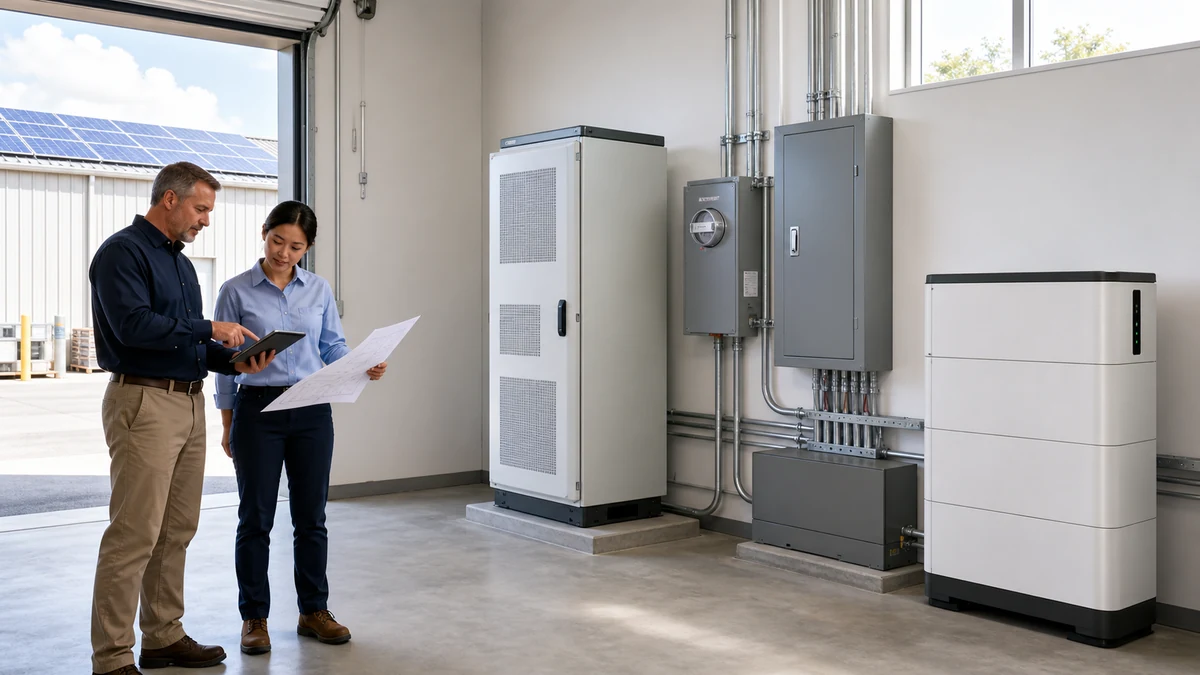
A C&I cabinet placed outdoors in a hot climate has different requirements from a battery room with controlled temperature. The quote should mention indoor or outdoor installation, cabinet clearance, ventilation, dust, humidity, temperature range, flood risk, sun exposure, altitude and service access. These details affect cooling, enclosure rating, derating and maintenance.
For early discussion, buyers can use C&I ESS Site Survey Checklist and C&I Battery Energy Storage Commissioning Checklist. A quote that ignores site survey details often becomes more expensive during installation.
Ask for warranty evidence before payment
Warranty terms should be reviewed before the purchase order, not after a problem appears. Ask what records the supplier expects if a claim is made: serial number list, commissioning report, installation photos, BMS logs, inverter settings, alarm screenshots, maintenance records and shipping photos. A supplier that can explain warranty evidence clearly is usually easier to work with after shipment.
Use LiFePO4 Battery Warranty Claim Evidence to build a clean record set. External references such as UL Solutions energy storage system testing and certification and the U.S. Department of Energy solar-plus-storage overview are useful background when discussing system safety and project scope.
Use solar data carefully
If the project includes PV charging, the buyer should not assume that nameplate solar capacity equals daily battery recharge. Weather, shading, inverter clipping, panel angle, seasonal output and local load timing all matter. A first estimate can be checked with tools such as NREL PVWatts, then adjusted for the actual site.
If the project also needs solar product selection, connect the quote request with the Solar Panel path. Battery storage works best when the PV generation window, load timing and charge control strategy are reviewed together.
What to send SolarStorageHub
A strong first message should include site location, business type, operating goal, load profile, inverter or PCS model if selected, PV size, grid voltage, installation environment, target backup time, certification needs, shipping destination and preferred delivery timeline. If the buyer is still comparing product paths, mention whether the project is closer to a small commercial hybrid inverter system or a larger cabinet-based C&I ESS.
When the information is ready, send it through Contact. SolarStorageHub can review battery capacity, inverter matching, documentation, OEM/ODM needs, and service evidence before the quote is finalized.
Related buyer guide: For C&I ESS projects, this matching guide helps buyers include PV recharge and load timing in the quote package. Read Solar Panel and Battery Storage Matching: PV Recharge, Inverter Limits and Buyer Checks.
Related buyer guide: For quote-to-operation consistency, this maintenance checklist helps owners compare real use with the original C&I ESS quote assumptions. Read C&I ESS Maintenance Checklist: BMS Logs, Cooling, Alarms and Warranty Records.
Related buyer checks to review next
These supporting guides help buyers connect product choice, documentation, shipping, runtime and installation evidence before quotation or deployment.
Related buyer guide: For a peak-shaving quotation, add this interval-data and tariff checklist to the site, load-profile and warranty evidence package. Read C&I ESS Peak Shaving Data Checklist: 15-Minute Loads, Demand Charges and Dispatch Limits.
Related buyer guide: A complete C&I ESS quotation should state PCS power, battery current, transformer and grid assumptions alongside site data. Read C&I ESS PCS Sizing Checklist: kW/kWh Ratio, Overload, Reactive Power and Transformer Limits.
For cabinet pricing, the outdoor battery storage cabinet product page explains which capacity, PCS, cooling, safety, site, and delivery inputs change the quotation. View the product and buyer checks.
Related buyer guide: Use the manufacturer checklist together with quotation data so the supplier can size the project around real site conditions. Read C&I ESS Manufacturer Checklist: Factory Evidence, Documents and Warranty.
Related buyer guide: A quote is safer when site data, load profile and warranty evidence are collected before pricing. Read C&I ESS Factory Audit Checklist: Manufacturing, FAT and Warranty.
Related buyer guide: A quotation checklist helps connect supplier qualification with the actual purchase scope. Read C&I ESS Supplier Qualification Checklist: FAT, PCS Scope and Warranty.
Outdoor cabinet quotations also need cooling, enclosure and PCS evidence. Use the outdoor AC energy storage cabinet checklist to confirm ambient conditions, HVAC capacity, IP rating, cable entry, PCS scope and safety documents before normalizing price.
FAQ
What is the most important data for a C&I ESS quote?
The load profile is usually the most important data. It shows peak demand, operating hours, essential loads, backup target and whether the battery needs high power, high energy, or both.
Can a buyer ask for a quote with only a target kWh?
Yes, but the quote will be rough. Without load profile, inverter data, site conditions and operating goal, the supplier cannot confirm whether the battery size fits the real project.
Should peak shaving and backup use the same battery design?
They can share hardware, but the sizing and control strategy should be checked separately. Peak shaving is about repeated power control, while backup focuses on essential loads and runtime.
What installation information should be sent before pricing?
Send indoor or outdoor location, available space, clearance, temperature range, humidity, dust, altitude, cable route, electrical room condition and service access.
Which documents should be requested with the quote?
Ask for datasheet, manual, warranty terms, certificate scope, shipping documents, commissioning checklist, single-line diagram support and maintenance notes.
How can buyers reduce warranty disputes?
Keep serial numbers, commissioning reports, installation photos, BMS logs, inverter settings, alarm screenshots, maintenance records and shipping photos from the start.
Where should buyers send C&I ESS project details?
Use the Contact page and include site data, load profile, operating goal, inverter or PCS details, PV size, installation environment and document requirements.
Related SolarStorageHub Resources
If you are turning this article into a buying decision, compare the relevant product families and send your inverter model, target capacity, installation country, and quantity plan for confirmation.