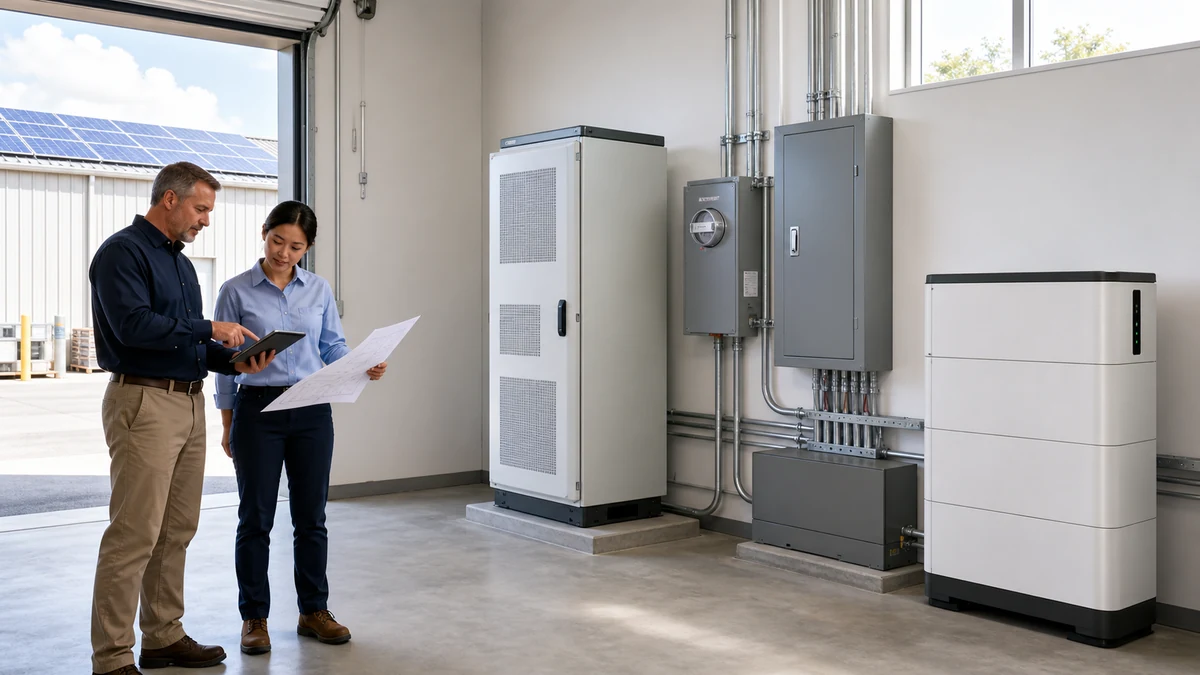

Solar Panel and Battery Storage Matching: PV Recharge, Inverter Limits and Buyer Checks
Buyer note: Solar panel and battery storage matching is not just a question of adding more PV watts to more battery kWh. A useful design checks daily solar production, charge window, inverter input limits, battery charge current, usable capacity, load timing, weather risk and the buyer's real operating goal.
This guide is written for distributors, installers and project buyers comparing Solar Panel, Home Energy Storage, Solar Inverter and C&I ESS options. Use it with the Battery Storage Buyer Resources hub and send project details through Contact when a PV-to-battery sizing review is needed.
Start with the purpose of storage
A solar battery can serve backup power, self-consumption, tariff shifting, generator reduction or a mix of these goals. The solar panel match changes depending on that purpose. A backup system may need enough PV to recover essential energy after an outage. A self-consumption system may need to store midday surplus for evening use. A commercial project may need a control strategy that reduces peak grid demand.
Before choosing panel wattage or battery capacity, write the operating goal in plain language. For example: "store afternoon solar surplus for evening household loads" or "reduce diesel generator runtime at a small commercial site." This helps the supplier avoid quoting a PV array and battery that look balanced on paper but do not match the site behavior.
PV-to-battery matching checklist
| Check item | What to confirm | Why it matters |
|---|---|---|
| Daily PV production | Expected kWh by season, roof angle, shading, climate and panel orientation. | Shows how much energy can realistically charge the battery. |
| Charge window | Time of day when solar surplus is available after local loads are served. | Controls whether the battery can refill before evening or outage use. |
| Battery usable kWh | Depth of discharge, reserve margin, inverter loss and temperature allowance. | Prevents buyers from assuming all nameplate capacity is available. |
| Charge current | BMS charge limit, inverter charge limit and PV charging power. | A battery may not accept all available PV power if current limits are low. |
| Inverter input | PV voltage range, MPPT current, string design and hybrid inverter mode. | Incorrect string design can limit production or damage equipment. |
| Load timing | Daytime loads, evening loads, essential backup loads and surge loads. | Battery sizing depends on when energy is needed, not only daily kWh. |
Estimate solar production with conservative numbers
PV production changes by season, weather, shading, roof angle and system losses. A quote that assumes perfect conditions can overstate how quickly the battery will recharge. Buyers should review average daily production and weak-season production, not only annual yield.
For early estimates, NREL PVWatts can help model solar output in the United States. Local installers should still adjust for actual roof geometry, shade, module choice, inverter clipping and local weather. For product selection, the Solar Panel category should be reviewed together with inverter and battery limits.
Match PV output with battery charge limits
A common mistake is assuming a larger PV array will always charge the battery faster. The battery BMS and inverter may limit charge current. If the PV array can produce more power than the battery can accept, the extra power may be used by loads, exported, clipped or wasted depending on the system design.
Buyers should check battery voltage, maximum charge current, recommended charge current, inverter charge limit, MPPT limit and operating temperature. The BMS Parameters Buyers Should Check guide explains how current and protection values affect real performance.
Use load timing to size storage
Daily energy consumption alone is not enough. A home may use most energy in the evening, while a small commercial site may use most energy during business hours. If loads already consume PV power during the day, there may be less surplus left for the battery. If evening loads are high, a larger battery may be useful, but only if the PV array can refill it often enough.
For backup projects, buyers should first define essential loads and target runtime. The Home Battery Storage Backup Load List guide explains how essential circuits, inverter output and solar recharge affect residential backup planning. For commercial projects, use the C&I ESS Quote Checklist to organize site data before pricing.
Check inverter and MPPT limits
The inverter connects the solar array, battery and loads. Buyers should check PV input voltage range, MPPT current, number of strings, maximum PV power, battery voltage, battery communication, grid or off-grid mode and backup behavior. A panel string that is not matched to the inverter can reduce production or create a safety risk.
Battery communication matters as well. A hybrid inverter may need the correct CAN or RS485 profile to read SOC and follow BMS limits. The article Solar Inverter and Battery Matching Mistakes lists the common failure points around voltage window, firmware and BMS limits.
Plan for weak solar days
Battery storage should be discussed with weather risk in mind. During cloudy days, storm seasons or winter, PV recharge can be much lower than average. If the project needs critical backup, the buyer may need a larger reserve margin, generator support, grid charging strategy or stricter load control.
For homeowners, this means not promising that solar panels will fully recharge the battery every day. For commercial buyers, it means checking whether the operating goal depends on daily cycling, standby backup or generator reduction. Each goal has a different tolerance for weak solar days.
Review documents and evidence
Solar panel and battery matching should also include documentation. Ask for panel datasheet, inverter manual, battery datasheet, BMS limits, wiring diagram, warranty terms, certificate scope and installation notes. For safety context, external references such as the U.S. Department of Energy homeowner solar guide, the DOE solar-plus-storage overview and UL Solutions energy storage testing and certification are useful background.
After installation, keep photos, serial numbers, inverter settings, string information, BMS screenshots and commissioning notes. The LiFePO4 Battery Warranty Claim Evidence guide explains why these records help after-sales support.
What to send for PV-to-battery review
A good first message should include location, roof or ground-mount details, panel wattage target, inverter model, battery capacity target, load profile, backup goal, grid connection, installation environment and document requirements. If the buyer already has PV output data or a utility bill, include it. If not, send a rough load list and roof information first.
SolarStorageHub can help review solar panel, inverter and battery storage matching for home and light commercial projects. Send details through Contact when the project is ready for product matching.
Related buyer guide: PV recharge assumptions in a peak-shaving model should be checked against inverter limits, export rules and the actual site load. Read C&I ESS Peak Shaving Data Checklist: 15-Minute Loads, Demand Charges and Dispatch Limits.
Related buyer guide: After shipment quality is approved, use the final module electrical values to confirm PV string, inverter and battery charging limits. Read Solar Panel Pre-Shipment Inspection Checklist: EL Test, Flash Data and Container Loading.
Related buyer guide: Winter PV recharge planning should include heater power, household loads and delayed battery charging. Read LiFePO4 Cold-Weather Charging Checklist: BMS Cut-Off, Battery Heating and Winter Testing.
Related buyer guide: PV recharge and inverter limits should be checked against the selected AC-coupled or DC-coupled retrofit architecture. Read AC-Coupled vs DC-Coupled Home Battery Retrofit: Solar, Backup and Inverter Checklist.
Related buyer guide: Panel wattage should be matched with battery recharge targets and inverter input limits before purchase. Read 600W Solar Panel Buyer Checklist: Voc, MPPT, Battery Charging and Site Limits.
Related buyer guide: PV recharge and inverter input limits should be checked before the battery purchase. Read Home Energy Storage Batteries Checklist: Capacity, Inverter and Backup.
Related buyer guide: PV recharge and inverter limits should be matched before ordering a 5kWh, 10kWh or 15kWh battery. Read 5kWh Floor Mounted Solar Battery: 10kWh and 15kWh Checklist.
Related buyer guide: PV input limits and battery recharge expectations should be matched before final inverter selection. Read Solar Battery Storage Inverter Checklist: Voltage, PV Input and Backup.
Related buyer guide: Roof-tile PV output should be matched with battery recharge and inverter input limits. Read Integrated Solar Roof Tiles Checklist: PV Output, Waterproofing and Storage.
Related buyer guide: Solar recharge expectations should be checked against PV input voltage, current and daily sun hours. Read 5kWh Modular Portable Power Station Checklist: Output and Solar Recharge.
Related buyer guide: Solar recharge expectations should be checked against inverter and battery charging limits. Read 600W Foldable Solar Panel Checklist: 24V Output, MPPT and Power Stations.
Related buyer guide: PV recharge assumptions should be checked against battery and inverter limits. Read Floor Mounted Energy Storage System Checklist: 5kWh, Wiring and Setup.
When the PV surface is part of the roof, apply the same voltage, current and energy-yield checks to the 60W integrated solar roof tiles, then include waterproofing and service access in the system review.
FAQ
How many solar panels are needed to charge a battery?
It depends on battery usable kWh, daily load, local sunlight, panel orientation, shading, inverter limits and how quickly the buyer expects the battery to recharge.
Can a larger solar array always charge the battery faster?
No. Battery BMS charge current, inverter charge limit, MPPT capacity and temperature can limit charging even when the solar array is larger.
Should PV size match battery kWh exactly?
No. PV size and battery capacity should be matched to the operating goal, load timing, seasonal production and reserve requirement, not a fixed ratio.
Why does load timing matter?
If loads consume most solar power during the day, less surplus remains for charging. If loads are mainly in the evening, the battery may need more usable capacity.
What inverter details are needed?
Send PV input voltage range, MPPT current, maximum PV power, battery voltage range, communication protocol, backup mode and exact inverter model.
Can solar panels recharge a battery during a grid outage?
Only if the inverter and system design support PV charging in backup mode. Some systems limit or disable solar charging during outages.
Where should PV and battery matching details be sent?
Send the location, PV size, inverter model, battery target, load profile, backup goal and installation details through the Contact page.
Related SolarStorageHub Resources
If you are turning this article into a buying decision, compare the relevant product families and send your inverter model, target capacity, installation country, and quantity plan for confirmation.