
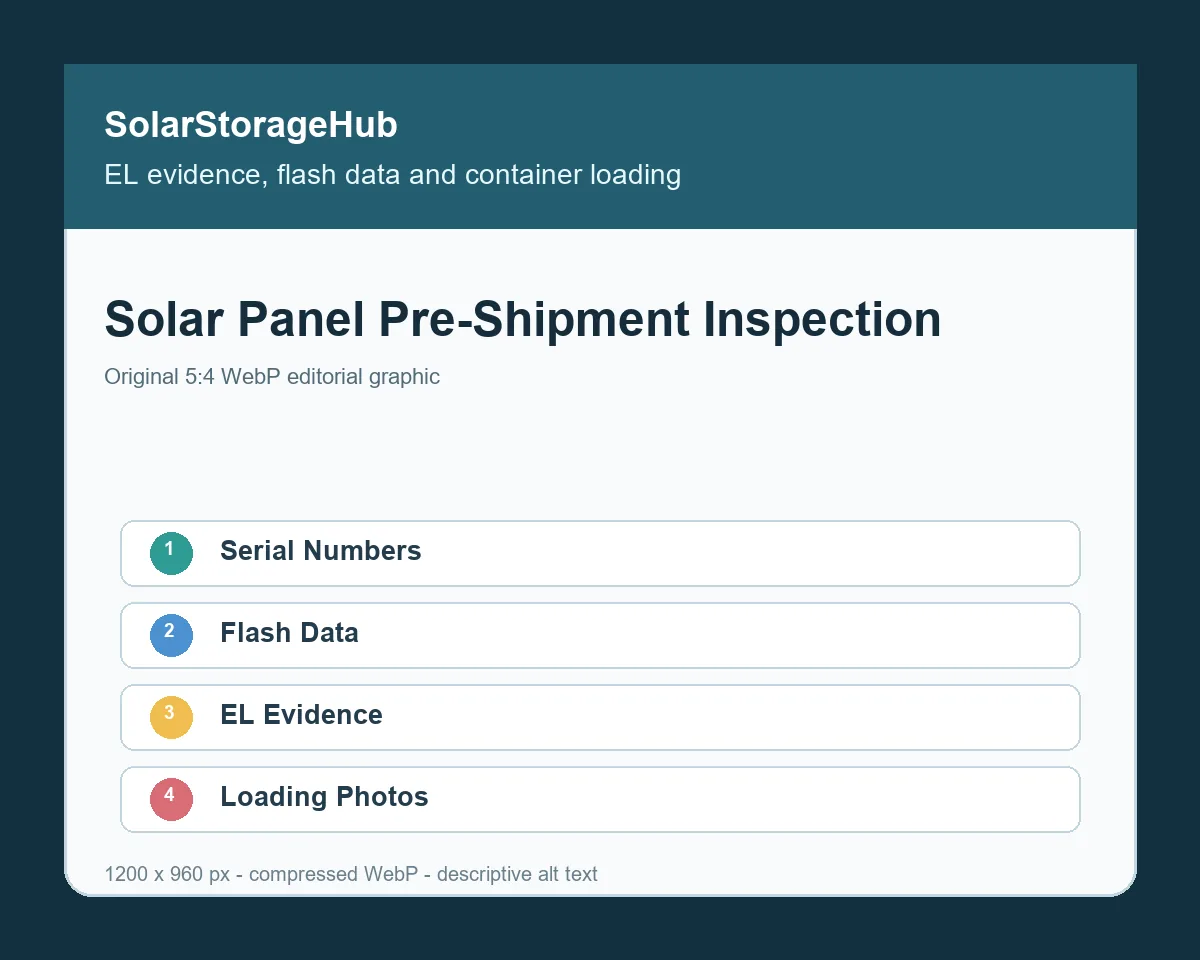
Solar Panel Pre-Shipment Inspection Checklist: EL Test, Flash Data and Container Loading
Procurement note: A solar module shipment should not be approved from a catalogue, sample photo or flash-test summary alone. Distributors need a repeatable pre-shipment inspection that connects the purchase order, module labels, serial numbers, electrical test records, visual condition and packaging evidence before the container is sealed.
Solar pre-shipment inspection verifies that the solar modules, serial numbers, flash-test records, EL evidence, packaging and container loading match the approved order before release. Solar pre-shipment testing should use written sampling and acceptance criteria, link electrical or EL records to module identity, and document every exception and corrective action before the container is sealed.
This checklist is written for distributors, EPC buyers and private-label programs sourcing Solar Panel products alongside Solar Inverter, Home Energy Storage, or C&I ESS. Use the Battery Storage Buyer Resources hub and send the module specification, quantity and destination through Contact before confirming an export order.
Why solar panel inspection must connect product and logistics
Module quality and shipping quality cannot be separated. A panel may pass an electrical test and still arrive with frame deformation, glass damage, wet cartons or pallet movement. A visually clean pallet may contain incorrect labels, mixed power classes or serial numbers that do not match the test file.
A useful inspection creates traceability from the purchase order to the delivered pallet. The buyer should be able to identify which module model, serial number, power class and test result belongs to each pallet. Photos and spreadsheets should be clear enough for a later receiving inspection or warranty discussion.
Solar panel pre-shipment inspection checklist
| Inspection area | What to check | Evidence to collect |
|---|---|---|
| Order identity | Model, power class, quantity, dimensions, cell layout, cable and connector specification. | Approved purchase order and datasheet revision. |
| Labels and serials | Brand, model, ratings, certification marks, barcode quality and unique serial numbers. | Label photos and serial-number spreadsheet. |
| Visual condition | Glass, cells, frame, backsheet, junction box, cables, connectors and sealant. | Sampling record with close-up photos. |
| Electrical evidence | Flash-test data, power tolerance, Voc, Isc, Vmp, Imp and test conditions. | Serial-linked flash list and exception report. |
| EL evidence | Electroluminescence images before shipment when required by the order. | Serial-linked images and acceptance criteria. |
| Packaging | Carton, corner protection, pallet, straps, moisture protection, labels and stacking limit. | Photos of open pallet, closed pallet and container loading. |
| Container loading | Quantity, pallet position, blocking, bracing, door clearance and seal number. | Loading sequence, final-door photo and seal record. |
Freeze the approved specification before inspection
The inspector needs one controlled specification. Confirm the model code, nominal power, power tolerance, dimensions, weight, cell count, cable length, connector type, frame color, label language, packaging quantity and approved artwork. If the order is private label, confirm whether the brand and model naming are covered by the agreed documentation.
Do not inspect against a sales brochure when a technical datasheet or purchase specification is available. Record the document revision and date. Any substitution in cells, connectors, junction box, frame or packaging should be disclosed and approved before shipment.
Check labels and serial-number traceability
Sample labels across several pallets. The label should be readable and consistent with the order and test records. Check model name, rated power, electrical values, certification marks, manufacturing identity and serial-number format. Barcodes or QR codes should scan correctly if the buyer's receiving process depends on them.
Request the complete serial-number list before loading. Compare a sample of physical labels with the spreadsheet and flash-test file. Duplicate, missing or incorrectly formatted serial numbers should be resolved before the container is sealed.
Use a defined visual inspection sample
Agree the sampling method before inspection. Select modules from different pallets and positions, not only the easiest cartons to open. Examine the front glass under suitable light, cell alignment, frame corners, backsheet condition, junction-box attachment, cable length, connector condition and sealant workmanship.
Record every exception with the module serial number and a close-up plus a wider context photo. Terms such as minor scratch or acceptable gap need written criteria. Otherwise the buyer and factory may interpret the same photo differently.
Review flash-test data by serial number
Flash-test evidence should be linked to individual serial numbers. Review rated power distribution, power tolerance, Voc, Isc, Vmp, Imp and the stated test conditions. Look for missing rows, duplicated serials, unusual clusters and values outside the agreed range.
A single average value is not enough for batch acceptance. The buyer should know how exceptions were handled and whether replacement modules were retested. Retain the final test file with the shipment documents so receiving and warranty teams can refer to the same data.
Define when EL images are required
Electroluminescence imaging can reveal cell cracks or inactive areas that may not be obvious during a visual inspection. The purchase agreement should state whether EL evidence is required, at what production stage, for what sample or percentage, and what acceptance criteria apply.
EL images are useful only when they can be traced to the module serial number and interpreted consistently. Buyers should avoid making broad claims from an unlabeled image. IEC provides the official entry for IEC 61215-1:2021 terrestrial photovoltaic module design qualification; the applicable standards and market requirements should be confirmed for the destination project.
Inspect packaging before and during loading
Open at least a defined sample of pallets before final closure. Check module orientation, separators, corner protectors, carton strength, pallet condition, straps, edge protection, moisture protection and handling marks. Packaging should prevent module movement without applying damaging pressure to frames or glass.
During loading, record pallet count and position. Check that pallets are stable, properly blocked or braced, protected from door contact and loaded according to weight and stacking limits. Photograph the container condition before loading, the loading stages, the final row, closed doors and seal number.
Connect the inspection with system design
The module specification must still fit the inverter and site design. Confirm string voltage, current, connector compatibility and the expected temperature range. A correct shipment can still cause project delays if the final module electrical values do not match the MPPT plan.
Use Solar Panel and Battery Storage Matching to connect PV output with inverter and battery charging limits. For a complete quotation package, prepare project details with the Solar Battery RFQ Checklist.
Prepare receiving inspection before shipment
Pre-shipment inspection does not replace destination receiving checks. Send the consignee the pallet list, serial list, container and seal information, loading photos and instructions for reporting visible damage. The receiving team should inspect the seal, container condition, pallet movement, wet cartons and visible glass or frame damage before unloading is complete.
When damage is found, preserve evidence before rearranging the shipment. Record pallet position, packaging condition, module serial number and close-up photographs. Notify the responsible logistics and insurance parties according to the contract rather than waiting until installation.
Build the final shipment approval file
The approval file should include purchase specification, approved artwork, datasheet, packing list, serial-number list, flash-test file, EL evidence when required, visual-inspection report, exception closure, pallet photos, container-loading photos and seal record. Keep the file under one shipment or purchase-order reference.
SolarStorageHub reviews supplied product specifications and order requirements for sourcing and quotation support; independent inspection scope, contract acceptance and destination compliance remain the buyer's responsibility. Send the target market, module type, power class, quantity, branding needs and shipping destination through Contact.
Related buyer guide: Panel buyers should connect wattage claims with EL images, flash test records, packaging and loading evidence. Read 600W Solar Panel Buyer Checklist: Voc, MPPT, Battery Charging and Site Limits.
Related buyer guide: Solar roof tile buyers should request inspection evidence before shipment, especially for PV output and packaging. Read Integrated Solar Roof Tiles Checklist: PV Output, Waterproofing and Storage.
Related buyer guide: Pre-shipment evidence helps confirm panel rating, packaging and batch condition. Read 600W Foldable Solar Panel Checklist: 24V Output, MPPT and Power Stations.
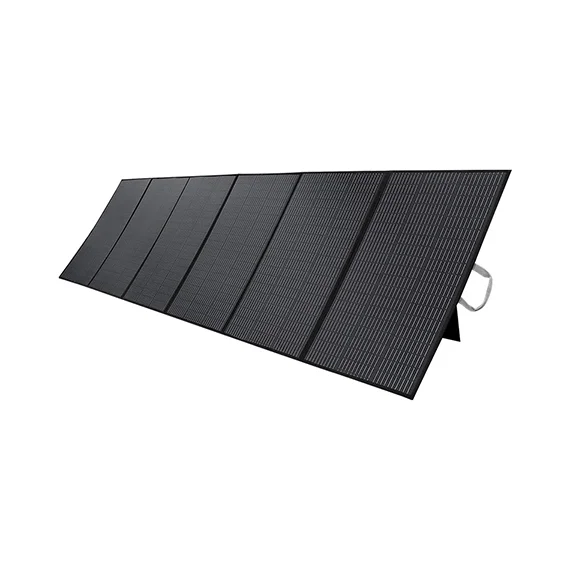
For a model-level inspection example, review the labels, electrical values, connector, folding hardware and packaging listed on the 600W foldable solar panel product page, then freeze the order-specific specification before inspection.
For a roof-integrated PV example, compare the listed electrical values, tile dimensions, junction box, roofing documents and replacement-access requirements on the 60W integrated solar roof tiles product page before defining shipment evidence.
Complete the receiving loop: After shipment release, use the solar panel receiving inspection checklist to document the container seal, unloading sequence, pallet condition, quantity, labels, serials and any claim evidence before stock is dispersed.
FAQ
What should be checked before a solar panel shipment is approved?
Check order identity, labels, serial numbers, visual condition, flash-test data, EL evidence when required, packaging, pallet count and container loading.
Should flash-test data be linked to each module?
Yes. Serial-linked data allows the buyer to verify power and electrical values and retain traceability for receiving or warranty review.
Is electroluminescence testing required for every shipment?
The contract should define whether EL testing is required, the sampling level, production stage and acceptance criteria. Requirements vary by buyer and project.
How should modules be selected for visual inspection?
Select modules from several pallets and positions using an agreed sampling method. Do not inspect only easily accessible cartons.
What packaging evidence should the buyer request?
Request open-pallet photos, closed-pallet photos, labels, straps, corner protection, container condition, loading sequence, final-door photo and seal number.
Does pre-shipment inspection replace receiving inspection?
No. The consignee should still check the container seal, pallet movement, moisture, packaging damage and visible module condition at destination.
What information is needed for a solar panel quotation?
Provide destination market, module type, target power, dimensions or installation limits, quantity, branding needs, connector requirements and shipping destination.
Related SolarStorageHub Resources
If you are turning this article into a buying decision, compare the relevant product families and send your inverter model, target capacity, installation country, and quantity plan for confirmation.