
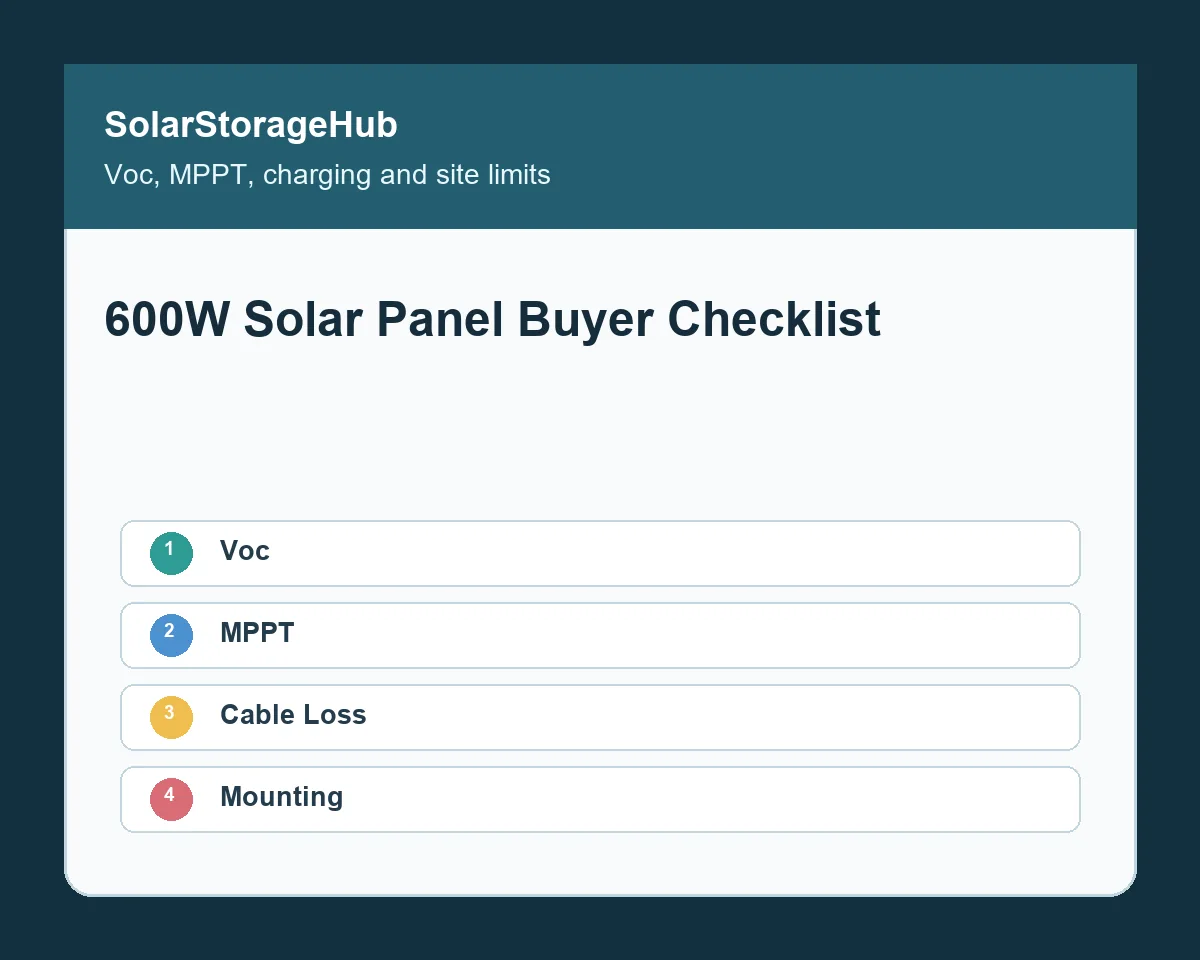
600W Solar Panel Buyer Checklist: Voc, MPPT, Battery Charging and Site Limits
Buyer note: A 600W solar panel can be useful for battery charging, portable power, balcony-style systems or small commercial support loads, but the wattage on the label is only the start. Buyers need to check Voc, current, MPPT voltage, cable loss, mounting strength, battery charging behavior, transport protection and inspection evidence before ordering.
This checklist is written for distributors, installers, small EPC teams and procurement staff comparing a 600W foldable solar panel with broader Solar Panel, Solar Inverter, Home Energy Storage, and C&I ESS configurations. Use it with the Battery Storage Buyer Resources hub, and send project details through Contact if you need panel-to-battery matching support.
What a 600W panel rating does and does not prove
The rated power of a solar panel is measured under standard test conditions. Real output depends on irradiance, temperature, angle, shading, wiring, connector quality, controller limits and battery state of charge. A 600W panel may produce far less during cloudy weather, poor orientation, high temperature or partial shading. The buyer should treat 600W as a laboratory rating, then design around realistic daily energy harvest.
For planning, ask whether the product is a rigid panel, foldable panel or portable kit, and whether the rating refers to one module or a set of connected sections. Also ask for the electrical values at standard test conditions and temperature coefficients. These values determine whether the panel can safely connect to the selected MPPT controller or hybrid inverter.
600W solar panel checklist
| Check item | What to request | Why it matters |
|---|---|---|
| Electrical rating | Pmax, Voc, Vmp, Isc, Imp and tolerance. | Confirms controller and inverter input compatibility. |
| Temperature data | Voc temperature coefficient and operating range. | Cold weather can raise voltage above input limits. |
| MPPT match | Controller MPPT range, max PV voltage and max charge current. | Prevents undercharging, clipping or equipment damage. |
| Battery match | Battery voltage, charge current limit and BMS limits. | Protects the battery and defines realistic recharge time. |
| Wiring | Cable length, wire size, connector type and protection. | Controls voltage drop, heat and field failures. |
| Mechanical design | Frame, folding hinges, stand, mounting points and wind limits. | Reduces damage during outdoor use and transport. |
| Inspection evidence | Flash test, EL image if available, label photo and packing photo. | Connects the shipped product with the ordered rating. |
Check Voc before checking watts
Open-circuit voltage, or Voc, is one of the first values to check. A controller or inverter has a maximum PV input voltage. The panel string must stay below that limit under the coldest expected condition, because voltage rises when temperature drops. A design that appears safe at room temperature can exceed the input limit in cold weather.
Ask the supplier for Voc, the temperature coefficient of Voc and the lowest expected installation temperature. If multiple panels are connected in series, add the adjusted Voc values. If panels are connected in parallel, check current and protection requirements. For hybrid inverter projects, the Hybrid Solar Inverter Commissioning Checklist can help confirm PV input, CT direction, export control and battery protocol during startup.
Match MPPT voltage and battery charge current
A 600W panel needs an MPPT controller or inverter input that can operate within the panel voltage range. If voltage is too low, the controller may not start or may operate inefficiently. If voltage is too high, the equipment can shut down or be damaged. Check the MPPT voltage range, maximum PV voltage, maximum PV current and maximum battery charge current.
Battery charging also has limits. A 48V LiFePO4 battery, for example, may accept a defined charge current based on BMS settings, cell temperature and state of charge. More panel watts do not help if the battery or controller clips charge current. The Solar Panel Battery Storage Matching guide explains how PV recharge, inverter limits and battery settings should be checked together.
Estimate daily energy, not only peak power
Peak wattage is useful for equipment matching, but battery buyers care about daily watt-hours. A panel that reaches a high peak for a short period may still deliver limited daily energy if the site has shade, poor angle or short sun hours. Estimate expected production using local solar resource, tilt, orientation and seasonal conditions.
Official tools and background references can help. The NREL PVWatts Calculator is a useful starting point for estimating PV energy production in the United States, while the U.S. Department of Energy photovoltaic technology basics page explains how PV cells convert sunlight into electricity. These references do not replace local engineering, but they help buyers avoid designing from nameplate wattage alone.
Control cable loss and connector risk
Cable length matters, especially for portable or foldable solar panels. Long, thin cables increase voltage drop and heat. Poor connectors create intermittent faults, water ingress and resistance. Ask for recommended cable size, maximum cable length, connector type, polarity marking and protection method. If the panel will be moved often, strain relief and connector durability matter as much as electrical rating.
For fixed installations, cable routing should avoid sharp edges, standing water, excessive heat and mechanical stress. For temporary installations, provide clear user instructions so panels are not connected backward, stepped on, folded incorrectly or used in unsafe wind conditions.
Compare foldable and rigid 600W panels
A foldable panel may be easier to move, store and deploy for temporary power, vehicles, portable storage kits or emergency charging. A rigid panel may be better for permanent mounting, long service life and wind resistance. The right choice depends on how often the panel moves, whether theft risk is high, whether the site needs fast setup, and whether the mounting surface can support a fixed array.
Ask for weight, folded size, unfolded size, handle design, stand angle, fabric or backing material, junction-box protection and warranty conditions. A foldable panel that is repeatedly packed and unpacked should have strong strain relief and clear folding instructions. A rigid panel should have mounting drawings and wind or load data suitable for the intended installation.
Request pre-shipment inspection evidence
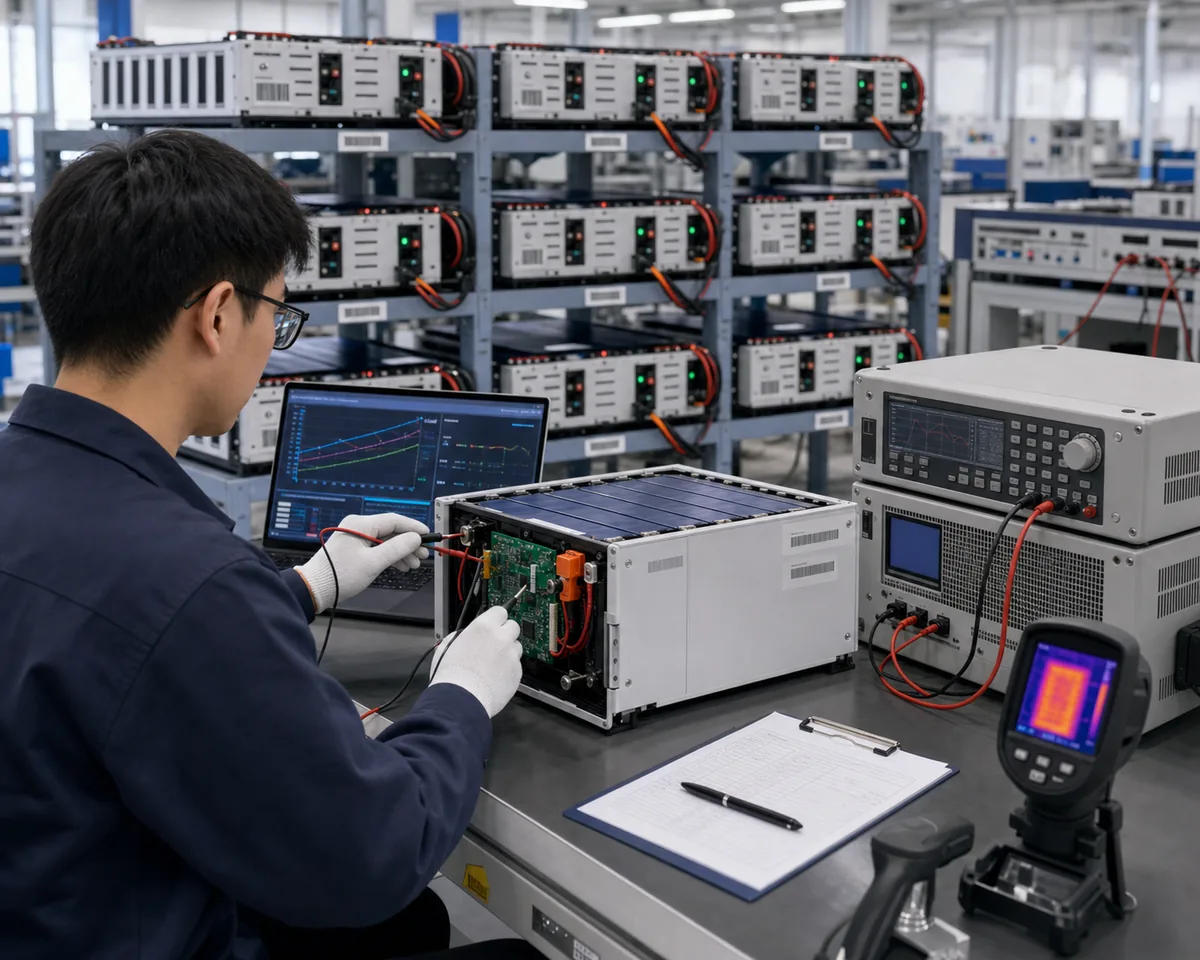
Before shipment, buyers should request a product label photo, packing photo, flash test record and, when available, electroluminescence inspection evidence. The goal is not paperwork for its own sake. The evidence connects the ordered specification with the packed goods and helps catch cracked cells, wrong labels, damaged frames or packaging problems before the goods leave the factory.
The Solar Panel Pre-Shipment Inspection Checklist explains how EL images, flash tests, label photos, carton marks and loading photos can reduce disputes. For buyers ordering mixed panels, controllers, batteries and cables, one consolidated packing list is especially important.
Plan backup behavior when panels charge a battery
If the panel is part of a battery backup system, solar charging is only one part of the experience. The battery must also support critical loads, transfer behavior, restart logic and safe charging after an outage. A small PV input may keep communication devices and lights running, but it may not restart motors, pumps or large appliances without the correct inverter and battery sizing.
For retrofit systems, compare whether new PV should connect through a DC-coupled path or an AC-coupled path. The AC-Coupled vs DC-Coupled Home Battery Retrofit Checklist and the Home Battery Backup Transfer Time Checklist can help define realistic backup expectations.
What to send before asking for a 600W solar panel quote
Prepare the intended use, installation country, panel type, battery voltage, controller or inverter model, expected cable length, mounting method, storage condition, packaging requirement, certification requirement and target order quantity. If the panel must charge a specific battery, include the battery datasheet and BMS charge limits. If it will connect to an existing inverter, include the inverter PV input limits.
SolarStorageHub can help compare a 600W solar panel against the battery, controller, inverter and site conditions before final purchase. Send the electrical and project details through Contact.
If the panel is part of a residential backup system, compare battery capacity and inverter behavior with the Home Energy Storage Batteries Checklist.
Related buyer guide: PV voltage and MPPT limits should be checked whether the project uses panels or integrated roof tiles. Read Integrated Solar Roof Tiles Checklist: PV Output, Waterproofing and Storage.
Related buyer guide: Portable power station buyers should understand panel Voc, MPPT range and battery charging limits. Read 5kWh Modular Portable Power Station Checklist: Output and Solar Recharge.
Related buyer guide: Panel Voc, MPPT range and charging current should be checked before matching a 600W panel with storage. Read 600W Foldable Solar Panel Checklist: 24V Output, MPPT and Power Stations.
FAQ
Can a 600W solar panel directly charge a 48V battery?
Usually it needs a compatible MPPT charge controller or hybrid inverter. The panel voltage and current must match the equipment input limits and the battery charge limits.
Why is Voc important for a 600W panel?
Voc determines whether the panel or panel string can exceed the maximum PV input voltage, especially in cold weather.
Will a 600W panel always produce 600W?
No. Actual output depends on sunlight, temperature, angle, shading, wiring, controller behavior and battery state of charge.
Is a foldable 600W panel better than a rigid panel?
It is better for portability and temporary deployment. A rigid panel is often better for permanent mounting and long-term mechanical stability.
What inspection evidence should a buyer request?
Request label photos, flash test records, packing photos and EL images when available, especially before shipment of larger orders.
How do cable losses affect battery charging?
Long or undersized cables reduce voltage at the controller, waste energy as heat and can make charging less reliable.
What information is needed for panel-to-battery matching?
Provide panel electrical data, battery voltage, BMS charge limits, controller or inverter model, cable length and expected site temperature.
Related SolarStorageHub Resources
If you are turning this article into a buying decision, compare the relevant product families and send your inverter model, target capacity, installation country, and quantity plan for confirmation.