
Integrated Solar Roof Tiles Checklist: PV Output, Waterproofing and Storage
Buyer note: Integrated solar roof tiles combine roofing and photovoltaic generation, so the buying decision should include PV output, roof fit, waterproofing, installation skill, inverter matching, battery storage and inspection evidence. A roof tile that looks clean architecturally still needs to work as a reliable electrical and roofing product.
This checklist is written for builders, distributors, installers and project buyers comparing 60W solar roof tiles with conventional Solar Panel, Solar Inverter, Home Energy Storage, and small C&I ESS configurations. Use the Battery Storage Buyer Resources hub or contact SolarStorageHub through Contact before ordering.
Understand the difference between roof tiles and framed panels
A framed solar panel is usually mounted above an existing roof. Integrated solar roof tiles become part of the roof surface, so the project must satisfy both electrical and roofing requirements. Buyers should ask who designs the roof layout, who handles flashing and waterproofing, who connects strings, and who takes responsibility if the roof leaks.
Output per tile can look small compared with a full-size module, but the total system depends on tile quantity, roof area, orientation, shading, ventilation and string design. The buyer should evaluate the whole roof plane rather than one tile in isolation.
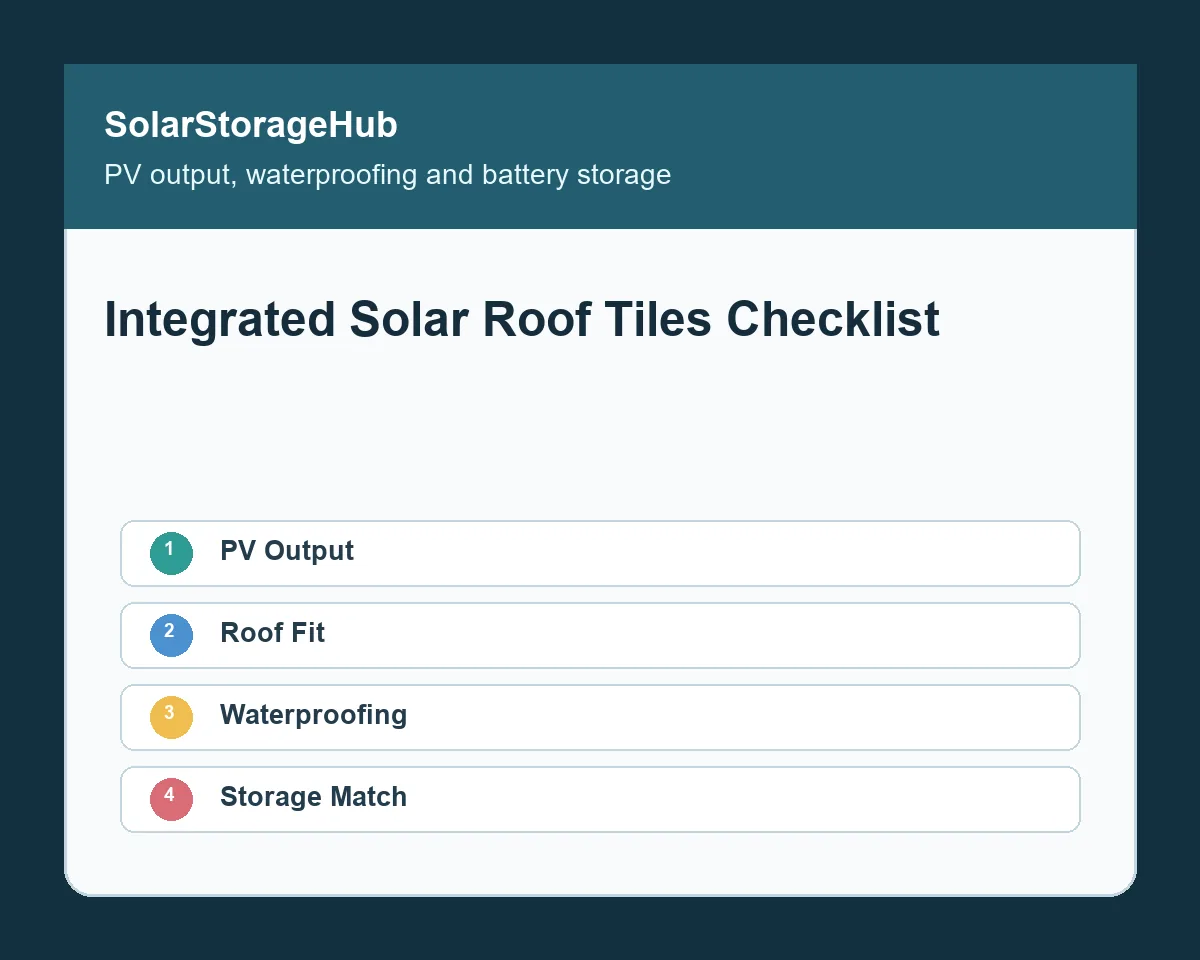
Integrated solar roof tiles checklist
| Review area | What to confirm | Why it matters |
|---|---|---|
| PV output | Rated watts per tile, tolerance, Voc, Vmp, Isc, Imp and temperature data. | Defines string design and inverter matching. |
| Roof fit | Tile size, overlap, roof pitch, battens, flashing and edge details. | Prevents layout problems and installation delays. |
| Waterproofing | Drainage path, sealing method, penetration rules and installer responsibility. | Protects the building and reduces warranty disputes. |
| Wiring | Connector type, cable routing, junction access and string grouping. | Supports safe installation and future service. |
| Inverter match | MPPT voltage range, max PV voltage, current and string count. | Prevents underproduction or input-limit issues. |
| Battery storage | Expected PV production, battery capacity, charge power and backup needs. | Turns roof generation into usable stored energy. |
| Inspection evidence | Label photos, electrical test records, packing photos and installation guide. | Connects the shipped tiles with ordered specifications. |
Check PV electrical data before roof layout
Before drawing the roof layout, ask for electrical data for the tile: rated power, voltage at maximum power, current at maximum power, open-circuit voltage, short-circuit current and temperature coefficients. The inverter string design must keep voltage within safe limits in local cold and hot conditions.
The 600W Solar Panel Buyer Checklist explains the same Voc and MPPT principles for panels. Roof tiles need the same discipline, but string design can become more detailed because many smaller units may be connected across a roof plane.
Plan waterproofing and service access
Integrated solar roof tiles should not be treated as ordinary electrical equipment installed after the building is finished. Roof structure, underlayment, battens, flashing, drainage, edge treatment and tile replacement method all matter. Ask whether the manufacturer provides roof details for valleys, ridges, eaves, hips and penetrations.
Service access should also be planned. If a tile or connector fails, the installer should know how to isolate, remove and replace it without damaging the roof. Buyers should request installation instructions and training requirements before committing to a product family.
After commissioning, use the integrated solar roof tiles maintenance checklist to turn that service-access requirement into a fault-isolation, replacement, spares and close-out record.
Match roof PV with inverter and battery storage
Roof-tile PV output should be matched with inverter MPPT limits and battery capacity. A visually attractive roof is not enough if the inverter cannot operate the strings efficiently or if the battery is too small to absorb useful daytime energy. For homes with backup goals, the system should define critical loads and battery reserve.
The Solar Panel Battery Storage Matching guide explains how PV recharge, inverter limits and usable battery kWh should be checked together. The Solar Battery Storage Inverter Checklist can help review MPPT, battery voltage and backup output.
Use official PV production tools carefully
PV production depends on location, roof orientation, tilt, shade, temperature and system losses. The NREL PVWatts Calculator is useful for estimating solar energy production, though integrated roof products may need additional assumptions for ventilation, layout and product-specific losses. The U.S. Department of Energy photovoltaic technology basics page is also useful for general PV background.
Use these tools as a planning reference, not a substitute for a qualified roof and electrical design. Local building codes, electrical codes and manufacturer instructions should control the final installation.
Request pre-shipment and installation evidence
For roof-integrated products, inspection evidence matters because replacement after installation is expensive. Ask for product labels, packing photos, electrical test records, connector details, installation manual, carton marking and batch traceability. If the order is for a distributor, request sample installation photos and installer training materials.
The Solar Panel Pre-Shipment Inspection Checklist is useful for organizing PV product evidence before loading. For roof tiles, add waterproofing and installation-document checks to the normal PV inspection package.
What to send before requesting a roof-tile quote
Prepare the installation country, roof type, roof pitch, available roof area, orientation, shading photos, target power, inverter preference, battery storage target, waterproofing requirements, certification needs and estimated quantity. If the tiles are for a building project, include drawings and the construction schedule.
SolarStorageHub can help compare integrated solar roof tiles with conventional panels, inverters and battery storage options before quotation. Send the project package through Contact.
Related buyer guide: Roof-integrated PV and portable panels both need output, wiring and inverter matching checks. Read 600W Foldable Solar Panel Checklist: 24V Output, MPPT and Power Stations.
FAQ
Are integrated solar roof tiles the same as solar panels?
No. Both generate electricity, but roof tiles also form part of the roof surface, so waterproofing and roof layout are part of the purchase decision.
How is roof-tile PV output calculated?
Multiply rated watts per tile by the number of usable tiles, then adjust for orientation, tilt, shading, temperature and system losses.
Can solar roof tiles charge a home battery?
Yes, if the inverter and battery system are designed for the PV voltage, power and daily energy production from the roof-tile array.
What roof information should a buyer provide?
Provide roof area, pitch, orientation, roof material, layout drawings, shading photos, waterproofing details and local installation requirements.
Do roof tiles need a special inverter?
Not always, but the inverter MPPT range, maximum voltage, current and string plan must match the tile electrical data.
What inspection evidence should be requested?
Request labels, electrical test records, packing photos, connector information, installation manual and batch traceability.
When should SolarStorageHub review the project?
Before order confirmation, especially when roof tiles must connect with a battery, hybrid inverter or distributor installation package.
Related SolarStorageHub Resources
If you are turning this article into a buying decision, compare the relevant product families and send your inverter model, target capacity, installation country, and quantity plan for confirmation.