
600W Foldable Solar Panel Checklist: 24V Output, MPPT and Power Stations
A 600W foldable solar panel can be useful for portable power stations, mobile work, outdoor backup, RV energy, field equipment and temporary solar charging. The purchase still needs more than a wattage check. Buyers should confirm Voc, Vmp, current, MPPT input range, cable length, connector type, operating temperature, mechanical durability, packing method and inspection evidence before approving a batch order.
This checklist is written for distributors, retailers, project buyers and OEM teams comparing 24V monocrystalline foldable solar panels for battery storage and power station applications. It connects the product decision with Solar Panel, Home Energy Storage, Solar Inverter and the Battery Storage Buyer Resources hub, because the panel only works well when it matches the charging device and real site conditions.
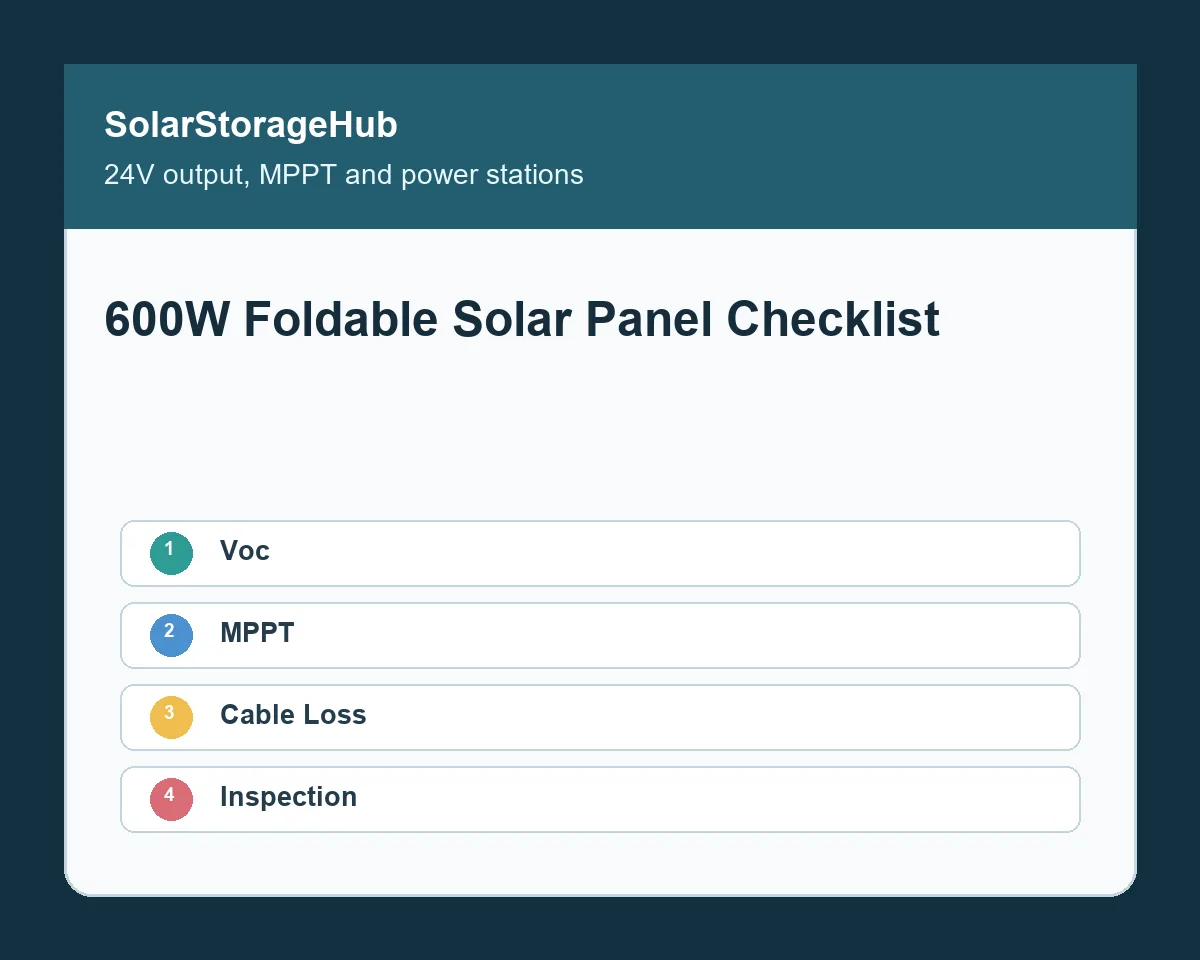
Do not judge a foldable panel only by watts
The 600W label describes rated output under test conditions, not guaranteed field output. Real charging depends on sun angle, temperature, shading, panel cleanliness, cable loss, controller limits and battery state of charge. A panel can be correctly rated and still recharge slowly if the MPPT input range is wrong or if the cable is too long for the current. Buyers should ask for Pmax, Voc, Vmp, Isc, Imp, tolerance, temperature coefficient and recommended controller range.
Cold weather can raise Voc above the value seen during warm testing, while hot weather can reduce voltage and power. If the buyer connects multiple panels in series or parallel, both voltage and current limits must be checked. For portable power stations, ask whether the supplier has tested the exact connector, PV input voltage range and maximum input power. Compare this with the 5kWh modular portable power station checklist when the panel is part of a storage package.
MPPT matching controls charging speed
The solar charge controller or portable power station MPPT input decides how much of the panel output can be used. Request the MPPT voltage range, maximum input voltage, maximum current, maximum PV wattage and connector standard from the battery or power station supplier. Then compare those limits with the panel electrical data. A 600W panel may not deliver 600W to a small power station if the station accepts only a lower PV input power.
Product example: To compare stored energy and AC output, review the listed 3kWh and 5kWh models on the 3kWh and 5kWh LiFePO4 portable power stations page. Treat the PV voltage window, maximum solar input, connector, recharge-time conditions and expansion capability as order-specific items; confirm them in the exact model datasheet before pairing any 600W panel.
The National Renewable Energy Laboratory provides PVWatts for estimating solar energy production under real location assumptions. Reference: NREL PVWatts. Buyers do not need a full engineering model for every portable order, but they should use realistic sun-hour assumptions before promising recharge time to customers.
600W foldable solar panel buyer checklist
| Check item | What to request | Why it matters |
|---|---|---|
| Electrical rating | Pmax, Voc, Vmp, Isc, Imp and power tolerance. | Confirms whether the panel matches the power station or controller input. |
| MPPT limits | Allowed PV voltage, current and maximum input watts. | Prevents slow charging, input clipping or equipment protection trips. |
| Connector | Connector type, polarity, adapter list and cable gauge. | Reduces field support issues and wrong-cable returns. |
| Cable loss | Cable length, wire size and recommended extension limit. | Controls voltage drop and heat during outdoor charging. |
| Mechanical design | Fold structure, hinge detail, stand angle and fabric or frame material. | Shows whether the panel can survive repeat setup and transport. |
| Inspection evidence | Flash data, EL image if available, label photo and packing photo. | Connects delivered goods with the approved specification. |
| Packaging | Carton size, protection method, accessory list and pallet quantity. | Protects panels during shipping and helps distributors plan stock. |
Check cable route and outdoor handling
Foldable panels are moved more often than fixed panels, so cable strain and connector protection matter. Ask how the cable is stored, whether the connector has a dust cap, whether the stand locks at a stable angle and whether the fabric or frame protects the cells during transport. If the customer will use the panel at a campsite, construction site, farm or field test area, the setup should tolerate repeated folding, uneven ground and quick packing.
Shading is another practical issue. A small shadow from a handle, cable, tree branch or equipment case can reduce output. Buyers should ask whether the panel uses bypass diode protection and how the supplier recommends placing the panel. If the panel is sold with a battery or inverter, compare it with the solar panel and battery storage matching guide and the 600W solar panel Voc and MPPT checklist.
Pre-shipment proof reduces after-sales disputes
For B2B buyers, the best support evidence is collected before shipment. Request sample photos, label photos, flash data, packing photos, accessory list and carton marks. If the buyer needs branded packaging, confirm logo placement, manual language, label format and barcode requirement before production. A clear inspection file helps resolve questions about rated power, connector type, cable length and package contents.
SolarStorageHub reviews PV output, battery charging assumptions, inverter or power station limits, packaging and inspection records before quotation. If the order is part of a larger solar storage package, compare related products under C&I ESS and use the Contact page to send target power station model, panel quantity, connector requirement, destination country and expected order plan.
When a 600W foldable panel is the right choice
A 600W foldable solar panel is a good fit when the buyer needs movable PV charging without a permanent roof or ground mount. It can support portable power stations, field work, emergency kits, RV use, outdoor demonstrations and temporary off-grid loads. It is easier to ship and store than rigid panels when the customer values mobility.
It is not always the right choice. If the installation is permanent, rigid panels may offer better long-term mounting and lower handling risk. If the battery is large, one foldable panel may recharge too slowly. If the customer needs daily cycling, compare PV size, battery capacity and load profile before promising backup performance. The right package depends on electrical matching and real use, not only a high watt number.
Related buyer guide: PV input checks help buyers avoid voltage and current mismatch when panels are selected. Read 18kW Three Phase Solar Inverter Checklist: Battery Protocol and PV Input.
After confirming Voc, Vmp, Imp, connector, polarity and MPPT limits, compare those requirements with the 600W foldable solar panel product specifications before requesting a model-specific datasheet.
FAQ
Can a 600W foldable solar panel charge any power station?
No. The power station must support the panel voltage, current, connector and maximum PV input power.
Why is Voc important?
Voc can rise in cold conditions. If it exceeds the controller or power station limit, the input may shut down or be damaged.
Will the panel always produce 600W?
No. Output depends on sunlight, angle, temperature, shading, cable loss and MPPT limits.
What inspection evidence should distributors request?
Request flash data, label photos, packing photos, accessory list and, when available, EL inspection evidence.
What cable details matter?
Check cable length, wire gauge, connector type, polarity and allowed extension length to reduce voltage drop and heat.
Is a foldable panel better than a rigid panel?
It is better for mobile use and temporary charging, while rigid panels are usually better for permanent installations.
When should SolarStorageHub review the panel choice?
Before order confirmation, especially when the panel must match a specific power station, battery, inverter or private-label package.
Related SolarStorageHub Resources
If you are turning this article into a buying decision, compare the relevant product families and send your inverter model, target capacity, installation country, and quantity plan for confirmation.