
LiFePO4 Cold-Weather Charging Checklist: BMS Cut-Off, Battery Heating and Winter Testing
Installation note: A LiFePO4 battery can discharge in conditions where charging should already be limited or stopped. That difference matters in cold climates. If an installer treats the discharge temperature range as the charging range, the system may trigger BMS protection, fail to recharge after an outage, or repeatedly start and stop as the battery temperature crosses a threshold.
This checklist is written for distributors, installers and buyers comparing Home Energy Storage, smaller C&I ESS, Solar Inverter, and Solar Panel systems. Use it with the Battery Storage Buyer Resources hub, then send the site temperature, battery model and inverter model through Contact before confirming a cold-weather configuration.
Why low-temperature charging needs a separate review
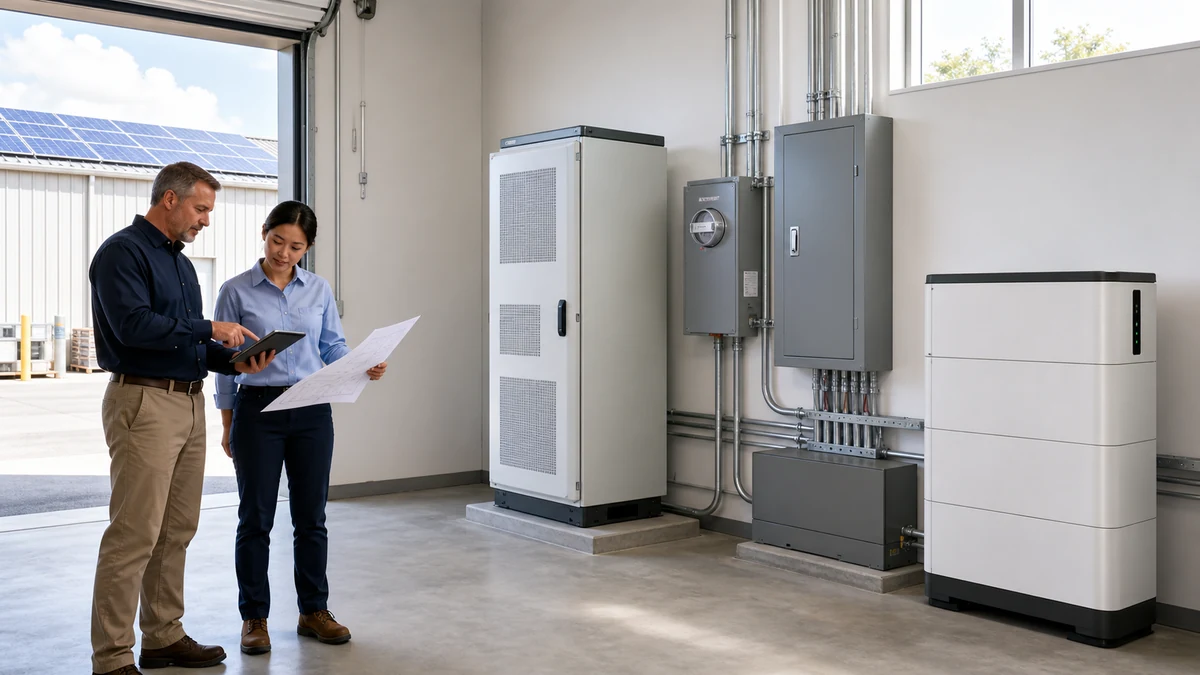
Battery temperature is not the same as outdoor air temperature. A wall-mounted battery inside an insulated utility room may remain above its low-temperature limit while an outdoor cabinet at the same site becomes much colder overnight. Wind, enclosure material, thermal mass, solar exposure, charging current and the battery's previous operating state all affect cell temperature.
The buyer should therefore ask for cell or pack charging limits, not a general statement that the battery works in winter. The review should identify the temperature sensor used by the BMS, the threshold for charge reduction or cut-off, the restart condition, heater control logic, inverter response and the records available for troubleshooting.
LiFePO4 cold-weather charging checklist
| Check area | What to confirm | Evidence to keep |
|---|---|---|
| Charge temperature | Supplier-approved full-current range, derating range, charge cut-off and restart threshold. | Battery datasheet and operating manual revision. |
| Temperature sensing | Sensor location, number of sensors, BMS reading and difference between cell and ambient temperature. | BMS screenshot or service log. |
| Heater design | Built-in or external heater, power source, control threshold, warm-up time and failure alarm. | Wiring diagram and heater test record. |
| Inverter response | Whether charge current follows BMS limits and what happens when communication is lost. | CAN/RS485 profile and commissioning screenshots. |
| Enclosure | Indoor or outdoor rating, insulation, condensation control, clearance and service access. | Installation photos and site temperature range. |
| Solar recharge | PV charging behavior when the battery is cold and loads still need power. | Morning test log with PV, SOC and temperature. |
| Handover | Winter operating instructions, alarm explanation and customer escalation process. | Signed handover record and saved settings. |
Use the battery manual, not a generic temperature number
LiFePO4 products do not all use the same low-temperature charging logic. Cell format, pack design, sensor placement, heater configuration, BMS firmware and charge current can change the permitted range. Buyers should request the exact model manual and confirm that its model number matches the label, datasheet and quotation.
Record four values separately: normal charging range, reduced-current range, charge cut-off threshold and charge restart threshold. A gap between cut-off and restart is normal control hysteresis; it prevents rapid switching near one temperature. The installer should also know whether the threshold is based on the coldest sensor, an average value or another BMS rule.
Distinguish cell temperature from room temperature
A thermometer on the wall is useful but does not replace the BMS temperature reading. After a cold night, cells inside a large battery may remain colder than the room even after the heater starts. Conversely, battery operation can produce heat that keeps the pack warmer than the surrounding air.
During commissioning, save both ambient and BMS readings at a known time. If readings differ greatly, check sensor location and allow enough time for temperatures to stabilize. This record becomes important when a customer reports that the inverter is available but the battery will not accept solar or grid charging.
Check heater power and control logic
A self-heating battery needs a clear power path. Ask whether the heater uses battery energy, PV input, grid power or charging current from the inverter. If the battery is deeply discharged and cold, the system may not have enough available energy to warm itself without external power. That scenario should be tested before the product is sold for unattended winter backup.
Confirm the heater start and stop thresholds, expected warm-up time, maximum power and alarm behavior. The heater should not be treated as a substitute for an appropriate enclosure or installation location. For outdoor installations, the responsible designer should consider insulation, moisture, ventilation, drainage, cable entry and local electrical requirements together.
Verify BMS and inverter communication
With correct communication, the BMS can send allowable charge current and protection status to the inverter. The inverter should reduce or stop charging when the battery reports a low-temperature limit. If the system falls back to voltage control, the installer needs to know whether low-temperature protection remains fully inside the BMS and how the inverter displays the condition.
Use the Solar Inverter and Battery Matching Mistakes guide and the BMS Parameters Buyer Checklist to document protocol, firmware, current limits and alarm interpretation. A compatibility logo is not enough; keep screenshots from the actual battery and inverter combination.
Test the morning recharge scenario
A practical winter test begins with the battery near the expected morning temperature. Record battery SOC, cell or pack temperature, ambient temperature, inverter mode and available PV power. Observe whether the heater starts, whether charge current is blocked or reduced, how long warm-up takes and whether the system resumes charging without manual intervention.
Repeat the observation with realistic household loads. If the loads use most of the available PV while the heater also needs power, battery recharge may begin later than the customer expects. The Solar Panel and Battery Storage Matching guide helps compare winter PV production, load demand and recharge time.
Plan for outages at low state of charge
Cold-weather backup planning should include a low-SOC case. A battery may reach its reserve after a night outage and then remain below its charging threshold in the morning. Ask whether PV can power loads directly while the battery warms, whether the inverter can restart after a full shutdown and whether grid power is required for recovery.
Reserve SOC may need seasonal adjustment, but the customer should not change it without understanding the effect on daily self-consumption and backup runtime. Review the Home Battery Backup Transfer Time Checklist and Home Battery Storage Backup Load List when winter resilience is part of the quotation.
Document enclosure and condensation risks
Temperature control and moisture control are connected. A sealed or insulated enclosure can reduce temperature swings, but condensation may still form when warm moist air reaches cold surfaces. Follow the product installation manual for enclosure rating, clearance, ventilation and permitted orientation. Do not add insulation that blocks designed airflow or service access.
Photograph the battery location, cable entries, drainage path, wall clearance and nearby heat sources. Record the expected minimum and maximum site temperature. If an external heater or conditioned room is used, include its failure mode in the service plan rather than assuming it will always operate.
Create a winter handover record
The final handover should explain the low-temperature icon or alarm, normal heater behavior, expected delay before charging, minimum ventilation and clearance, reserve SOC, emergency contact and actions the customer should not take. Save the battery serial number, firmware, inverter profile, charge limits, temperature readings and a successful cold-start or simulated test.
The Home Battery Storage Installation Handover Checklist provides the wider installation record. Buyers reviewing safety documentation can also consult IEC 62619:2022 and UL Solutions energy storage system testing and certification.
What to send for a cold-weather battery review
Prepare the battery model, inverter model, minimum site temperature, indoor or outdoor location, enclosure details, daily load, PV array size, desired backup time, grid availability and whether the battery includes a heater. Include the datasheet and manual revision when available.
SolarStorageHub can compare the supplied product limits and project assumptions before quotation; final installation design and code compliance remain with the responsible local professional. Send the information through Contact.
Related buyer guide: Cold-weather charging limits can change battery operation and warranty expectations. Read Home Energy Storage Batteries Checklist: Capacity, Inverter and Backup.
Related buyer guide: Cold-weather charging limits can affect floor-mounted LiFePO4 battery installation and warranty. Read 5kWh Floor Mounted Solar Battery: 10kWh and 15kWh Checklist.
FAQ
Can a LiFePO4 battery discharge when it is too cold to charge?
Often yes, but the exact limits depend on the battery model and BMS. Always use the supplier's charging and discharging ranges separately.
Does a self-heating battery always charge immediately?
No. It may need time and an available power source to warm the cells before charging begins.
Is outdoor temperature the same as battery temperature?
No. Enclosure design, thermal mass, sunlight, wind and recent operation can make cell temperature different from ambient temperature.
What should the inverter do during a low-temperature alarm?
It should follow the approved battery communication and charge-current limits. The exact display and fallback behavior should be tested.
Can insulation be added around the battery?
Only when it follows the product and enclosure design. Insulation must not block airflow, drainage, cable access or required clearances.
What winter test should installers perform?
Record temperature, SOC, heater behavior, PV availability, charge current, alarms and automatic recovery under a realistic morning load.
What information is needed before quoting a cold-climate system?
Provide minimum temperature, installation location, battery and inverter models, heater type, PV size, load profile and backup requirement.
Related SolarStorageHub Resources
If you are turning this article into a buying decision, compare the relevant product families and send your inverter model, target capacity, installation country, and quantity plan for confirmation.