
5kWh Floor Mounted Solar Battery: 10kWh and 15kWh Checklist
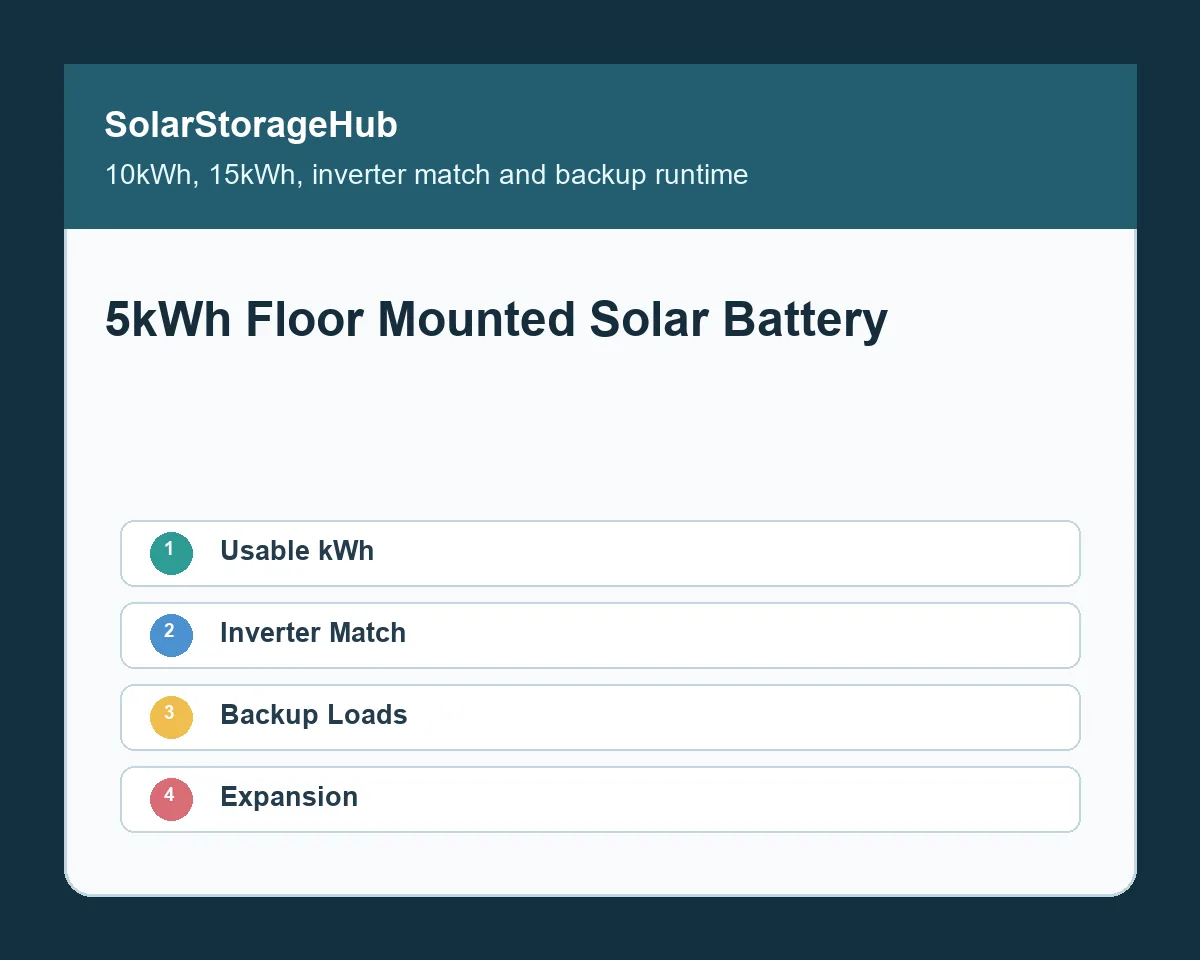
Buyer note: A 5kWh floor mounted solar battery is often the entry point for residential backup and solar self-consumption, but the right choice depends on usable capacity, inverter protocol, backup load size, PV recharge rate, installation space and future expansion. A 10kWh or 15kWh version may be more practical if the home needs overnight storage or more outage reserve.
This checklist is written for distributors, installers, OEM/ODM buyers and homeowners comparing 5kWh, 10kWh and 15kWh floor-mounted solar batteries with broader Home Energy Storage, Solar Inverter, Solar Panel, and small C&I ESS applications. Use it with the Battery Storage Buyer Resources hub or send project data through Contact.
When a 5kWh floor mounted battery makes sense
A 5kWh battery is usually best for small homes, essential-load backup, solar self-consumption, demonstration systems, rental properties or distributor sample orders. It can support lights, internet equipment, small refrigeration and selected low-power loads when the inverter and backup panel are designed correctly. It is not automatically enough for air conditioning, pumps, ovens or long outage coverage.
For buyers, the main advantage is simplicity. A floor-mounted battery can be easier to position than a wall-mounted unit when the wall is weak, the owner wants future expansion, or the installer wants service access from the front. The tradeoff is floor space, clearance and protection from water, heat and impact.
5kWh vs 10kWh vs 15kWh battery comparison
| Capacity option | Typical buyer fit | Key checks before ordering |
|---|---|---|
| 5kWh floor mounted battery | Essential-load backup, small solar storage, sample orders and budget-sensitive projects. | Usable kWh, inverter protocol, backup load list and expansion path. |
| 10kWh floor mounted battery | More practical overnight self-consumption and longer outage reserve for selected loads. | Charge current, cabinet size, cable size, floor space and BMS parallel rules. |
| 15kWh floor mounted battery | Larger residential backup, small commercial support loads or higher PV recharge targets. | Inverter power, surge loads, ventilation, installation clearance and warranty limits. |
| Expandable system | Distributors and installers who want one product family for several project sizes. | Maximum parallel quantity, firmware consistency, communication address and commissioning process. |
Calculate usable capacity before runtime
Runtime should be calculated from usable capacity, not only nameplate capacity. A battery may reserve part of its capacity for protection, warranty or emergency operation. Inverter settings, BMS limits, temperature and aging assumptions also change what the owner can actually use.
Make a simple load list before selecting capacity. Record the load name, running watts, starting watts and required hours. A 5kWh battery can look generous on paper, but a few high-power loads can drain it quickly or exceed inverter output. The Home Battery Backup Transfer Time Checklist helps confirm real outage behavior instead of relying only on capacity math.
Match inverter voltage and communication protocol
Most buying problems start with inverter matching. Confirm whether the battery uses 48V or 51.2V nominal voltage, whether the inverter supports the battery chemistry, and whether communication uses CAN, RS485 or another protocol. Ask for the inverter compatibility list, cable pinout, recommended parameter settings and firmware requirements.
A battery can be electrically connected but still operate poorly if SOC reporting, alarms or charge-current limits are wrong. For hybrid systems, use the Hybrid Solar Inverter Commissioning Checklist to verify CT direction, export control, charge settings and battery protocol during startup.
Plan PV recharge and daily cycling
A floor-mounted solar battery should be sized with the solar array and inverter charge power. If the PV array is small, a larger battery may not fully recharge during cloudy days. If the inverter limits battery charge current, more panel capacity may not shorten recharge time as expected. Daily cycling should also stay within warranty limits.
For U.S. solar resource estimates, the NREL PVWatts Calculator is a useful official tool. It does not replace local design work, but it helps buyers avoid designing a battery system from panel nameplate alone. The Solar Panel Battery Storage Matching guide connects PV recharge, inverter limits and battery capacity in more detail.
Check installation space and service access
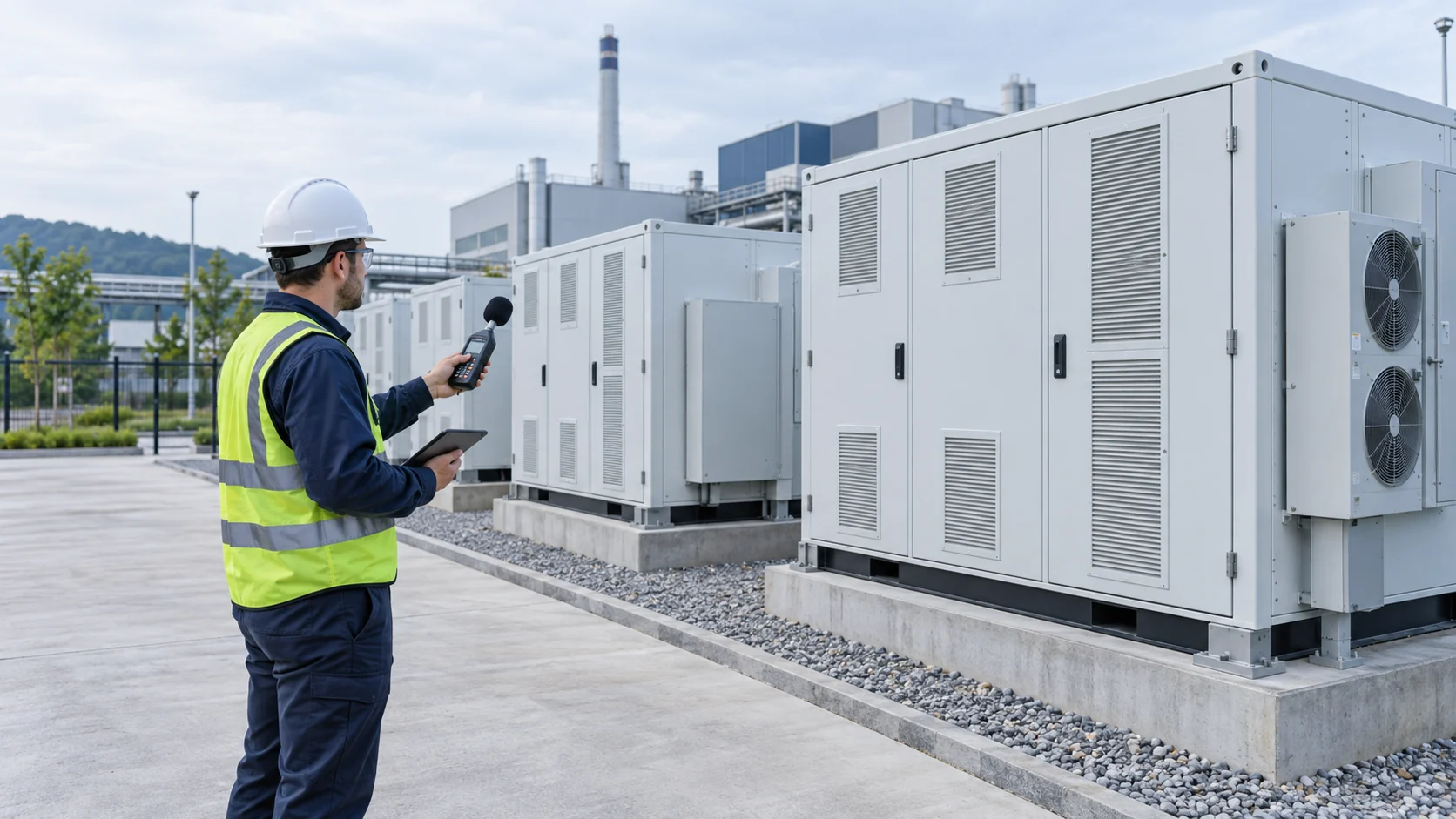
Floor-mounted batteries need a stable base, safe cable route, clearance, ventilation, dry surroundings and protection from accidental impact. Ask for installation drawings, minimum clearance, floor loading, cable entry location, breaker or fuse requirements and service access. If several batteries are installed in parallel, confirm the distance between cabinets and whether cable lengths must match.
Cold or hot locations need extra review. Low temperatures can block LiFePO4 charging, while high temperatures can reduce performance or shorten service life. The LiFePO4 Cold-Weather Charging Checklist explains how BMS cutoff and heating assumptions should be checked before installation.
Define expansion rules before the first order
Many buyers start with 5kWh and plan to add batteries later. This can work, but expansion rules should be clear before purchase. Ask whether old and new batteries can be mixed, whether firmware must match, how many units can be paralleled, how communication addresses are set and whether the inverter can handle the larger total capacity.
For distributors, expansion consistency is also a stock-management issue. A stable 5kWh, 10kWh and 15kWh product family makes it easier to train installers, prepare manuals and reduce after-sales confusion. If private-label branding is needed, include label, carton, manual and warranty-language requirements early.
What to send before requesting a floor-mounted battery quote
Prepare the installation country, inverter brand and model, desired kWh, backup load list, PV size, indoor or outdoor placement, floor space, temperature range, required certificates, expected quantity and branding requirements. If the order is for distributor stock, include the target market and the common inverter brands your installers use.
SolarStorageHub can help compare a 5kWh floor mounted solar battery with 10kWh and 15kWh options before quotation. Send the project details through Contact.
Related buyer guide: Runtime and inverter matching should be checked together with floor space and installation clearance. Read Floor Mounted Battery Checklist: Space, Wiring and Inverter Fit.
Related buyer guide: Runtime and inverter matching should be compared across 5kWh, 10kWh and 15kWh options. Read Floor Mounted Energy Storage System Checklist: 5kWh, Wiring and Setup.
Related buyer guide: A floor-standing battery buyer should compare runtime and inverter fit before selecting 5kWh, 10kWh or 15kWh capacity. Read Floor Standing Energy Storage Battery Checklist: 5kWh to 30kWh Fit.
FAQ
Is a 5kWh floor mounted solar battery enough for a home?
It can be enough for essential loads, but whole-home backup usually needs a larger capacity, careful inverter sizing and a defined backup load panel.
Should buyers choose 5kWh, 10kWh or 15kWh?
Choose based on usable capacity, daily energy use, backup duration, PV recharge ability and inverter output, not only the lowest purchase price.
Can floor-mounted batteries be expanded later?
Often yes, but parallel quantity, firmware, communication address, cable length and inverter support must be confirmed before the first order.
What inverter information is needed?
Provide inverter brand, model, battery voltage, communication protocol, maximum charge current, maximum discharge current and firmware version if available.
Does a 15kWh battery require a larger inverter?
Not always, but larger capacity often reveals inverter limits. Check continuous power, surge power, charge current and backup output before ordering.
What installation records should be kept?
Keep photos, serial numbers, wiring diagrams, battery settings, inverter settings, test results and owner instructions for warranty and service.
When should SolarStorageHub review the project?
Before final quotation, especially when the battery must match an existing inverter, support future expansion or meet distributor branding needs.
Related SolarStorageHub Resources
If you are turning this article into a buying decision, compare the relevant product families and send your inverter model, target capacity, installation country, and quantity plan for confirmation.