
Floor Standing Energy Storage Battery Checklist: 5kWh to 30kWh Fit
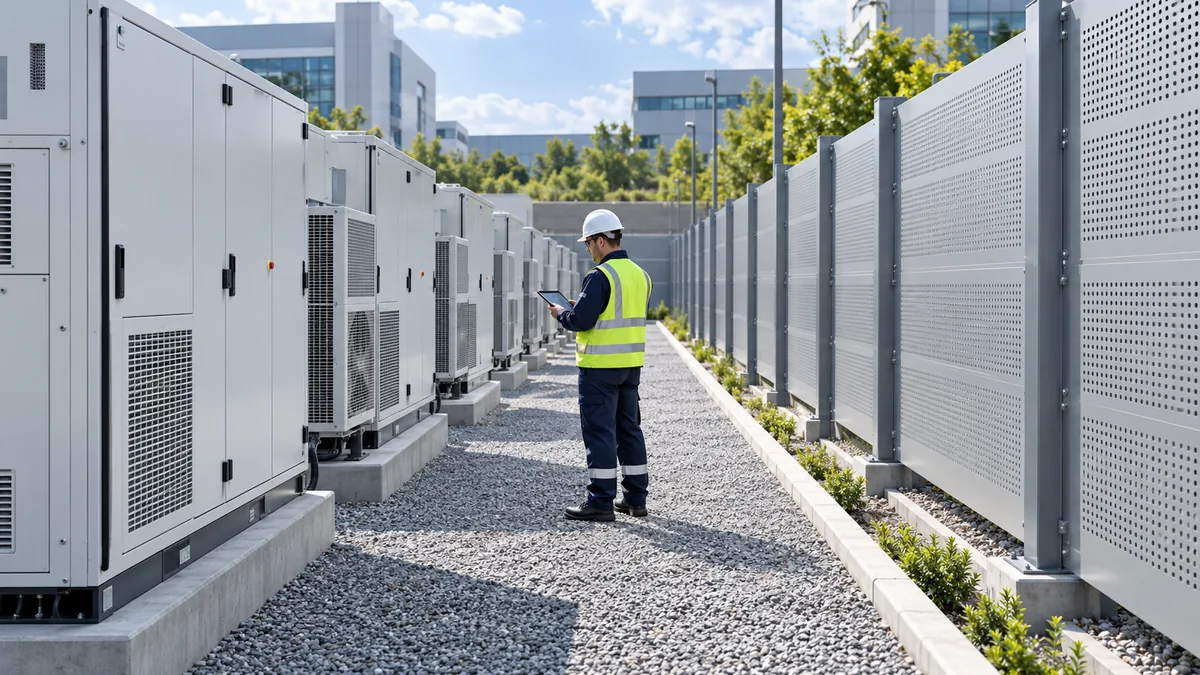
A floor standing energy storage battery is often selected because it looks easy to place, cable and expand. In real projects, the decision is more specific: the buyer needs to check usable kWh, inverter communication, floor clearance, cable route, breaker size, battery current, wall spacing, service access and shipment evidence before approving the model. A 5kWh cabinet and a 30kWh LiFePO4 floor-mounted battery can both be correct, but they solve different project problems.
This checklist is written for distributors, installers, OEM buyers and project teams comparing floor-mounted LiFePO4 batteries for home energy storage, small commercial backup and solar storage projects. Use it with the 5kWh 10kWh 15kWh floor-mounted battery, the 30kWh 600Ah floor-mounted LiFePO4 battery, and the SolarStorageHub contact page when a project needs a model review before quotation.
Start with usable capacity, not only nominal kWh
The label capacity is a starting point, but it does not tell the buyer how the battery will behave in the field. A 5kWh system may be suitable for light backup, router, lighting, small refrigeration or short evening use. A 10kWh or 15kWh floor battery can cover more home backup and self-consumption. A 30kWh battery is closer to a larger residential, villa, small commercial or distributor stock item, where shipping, installation space and inverter current limits matter more.
Buyers should ask for usable energy assumptions, recommended depth of discharge, BMS charge and discharge limits, and the inverter model that will be used with the battery. The home energy storage category is useful for residential project context, while C&I ESS pages help when the same battery platform is being considered for small commercial backup or distributor applications.
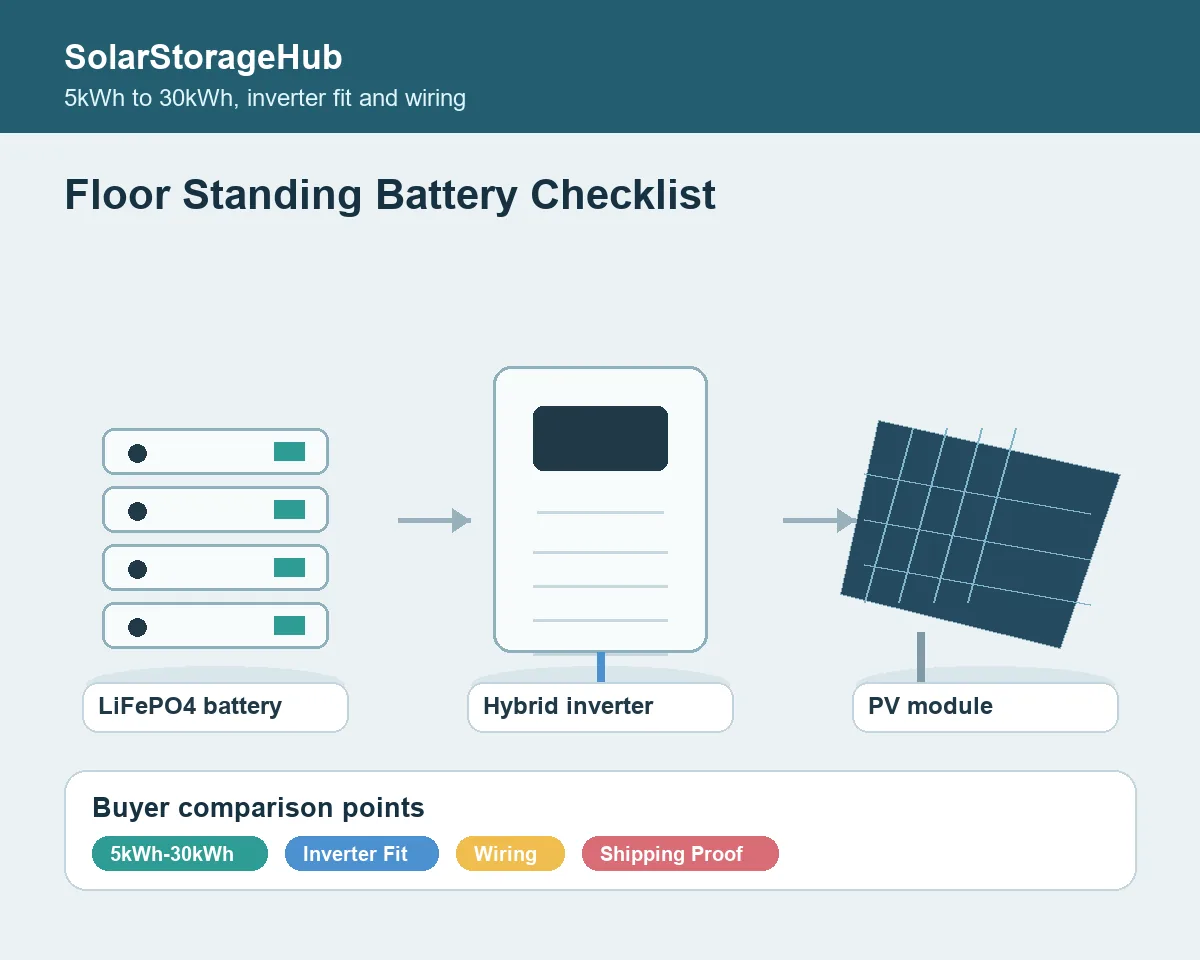
Floor standing battery checklist
| Check item | What to request | Why it matters |
|---|---|---|
| Usable capacity | Nominal kWh, usable kWh, recommended depth of discharge and expected cycle-life basis. | Prevents buyers from planning runtime from nameplate capacity alone. |
| Battery current | Max continuous charge and discharge current, peak current and BMS protection limits. | Confirms whether the battery can support the inverter and backup load. |
| Inverter communication | CAN or RS485 protocol, approved inverter list, voltage range and setup screenshots if available. | Reduces startup failures caused by protocol or parameter mismatch. |
| Installation space | Floor footprint, wall clearance, cable entry, ventilation space and service access. | Defines whether the battery can be installed cleanly without later relocation. |
| Wiring and protection | Breaker recommendation, cable size guidance, grounding notes and wiring diagram. | Protects the battery and installer from under-sized electrical design. |
| Shipping evidence | UN38.3, MSDS, label photo, packing photo, pallet or carton details and serial number record. | Connects the delivered battery with the ordered specification. |
| Warranty terms | Cycle warranty, exclusions, installation requirements, maintenance notes and claim evidence. | Clarifies what the supplier will support after installation. |
5kWh, 10kWh, 15kWh and 30kWh are different buying decisions
A 5kWh battery is usually judged by compact size, easy wiring, inverter fit and repeat installation speed. It is common for installers and distributors who need a simple residential battery platform. A 10kWh or 15kWh unit needs more attention to usable backup time, wall clearance, cable length and parallel expansion. A 30kWh floor-mounted LiFePO4 battery is a heavier project item; the buyer should ask about floor loading, delivery access, battery current, inverter pairing and packaging evidence.
The 5kWh floor-mounted solar battery checklist gives a more detailed runtime and inverter review. For large-capacity projects, the 30kWh LiFePO4 battery checklist explains 600Ah capacity, runtime and shipping evidence. If the project includes PV input, also check the solar panel and solar inverter assumptions before finalizing the battery.
Do not approve the battery before checking the inverter
Many floor standing battery problems appear during commissioning, not during quotation. The battery voltage may be in range, but the inverter still needs the correct BMS protocol, charge current, discharge current, SOC reporting and protection settings. If the inverter is already selected, send the model number and battery voltage platform to the supplier before order confirmation. If the inverter is not selected, ask for a confirmed compatible inverter list.
For communication details, review the LiFePO4 battery inverter compatibility guide. For broader project matching, the solar battery storage inverter checklist helps buyers compare battery voltage, PV input and backup behavior.
Evidence buyers should ask for before shipment
Before shipment, ask for the final battery label photo, packing photo, serial number record, inspection sheet, communication setup note and export document list. A distributor ordering several units should also ask whether each battery can be traced to its test record. A small installer may not need a complicated report, but the basic evidence should still connect the shipped battery with the ordered capacity, voltage and model.
For general technical context around storage and solar integration, the U.S. Department of Energy solar and storage basics page is a useful reference. SolarStorageHub uses this kind of practical framing when checking battery capacity, inverter match, installation assumptions and documentation before quotation.
Related buyer guide: Floor-standing batteries should be checked against inverter fit and installation space. Read Home Battery Inverter Compatibility Checklist: Backup Load and PV Input.
FAQ
Is a 5kWh floor mounted solar battery enough for home backup?
It can be enough for light backup, but it depends on the load list. Refrigeration, pumps, heating, air conditioning and long outage time can quickly push the buyer toward a larger battery or a critical-load-only plan.
When should I choose a 30kWh LiFePO4 floor battery?
A 30kWh battery fits larger homes, villas, small commercial backup or buyers who need more usable energy in one floor-mounted system. Check inverter current, installation space, delivery access and packaging evidence before ordering.
What inverter details should I send to check compatibility?
Send inverter brand, model number, battery voltage range, CAN or RS485 protocol, max charge current, max discharge current and whether the system will use backup, self-consumption or off-grid mode.
Does floor standing mean easier installation?
It can be easier than wall mounting for heavier batteries, but installers still need floor space, wall clearance, cable routing, breaker selection, grounding and service access.
What documents matter for export orders?
Ask for UN38.3, MSDS, packing list, label photos, carton or pallet details, serial number record and any country-specific import documents required by the buyer.
Can SolarStorageHub review a floor-mounted battery quotation?
Yes. Send the target capacity, inverter model, application, installation country, quantity plan and any supplier datasheet through the contact page.
Related SolarStorageHub Resources
If you are turning this article into a buying decision, compare the relevant product families and send your inverter model, target capacity, installation country, and quantity plan for confirmation.