
C&I Battery Cabinet vs Container BESS: Sizing, HVAC and Site Layout Checklist
Commercial battery storage buyers often ask a simple question too late: should this project use several outdoor battery cabinets or a containerized BESS? The answer affects civil works, cable routing, HVAC, fire safety review, commissioning time, transport cost and long-term service access. A cabinet solution can be easier to place on smaller C&I sites, while a container BESS may be more practical when capacity, integration scope and site control increase.
This guide is written for distributors, EPC teams, installers and project owners comparing early quotations. It is not a replacement for local engineering approval, but it gives buyers a cleaner way to request drawings, PCS scope, battery data, cooling assumptions and handover evidence before a deposit is paid. If you are still defining the product path, compare SolarStorageHub C&I ESS, solar inverter, solar panel and Home Energy Storage options, then send project details through Contact.
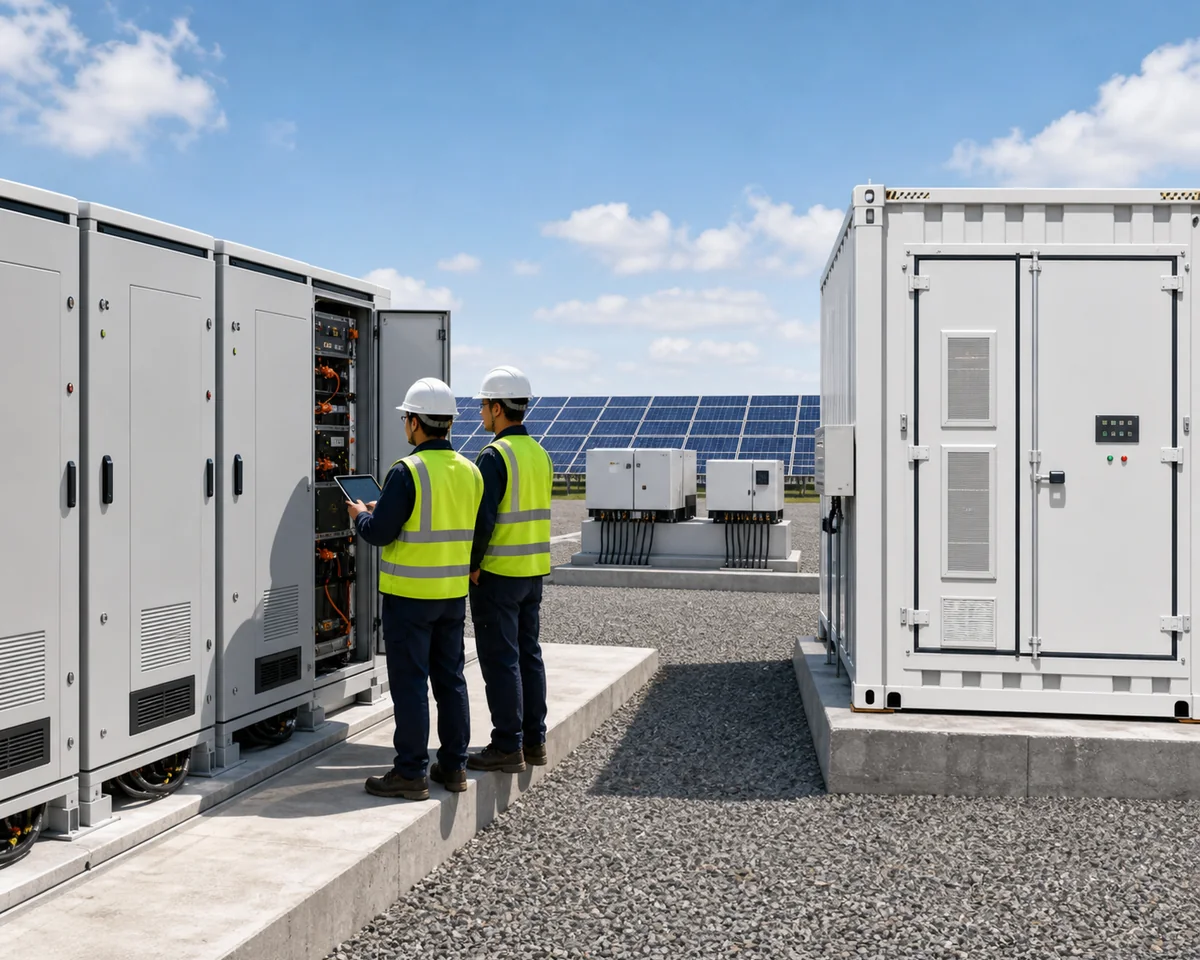
Start with the site, not only the battery capacity
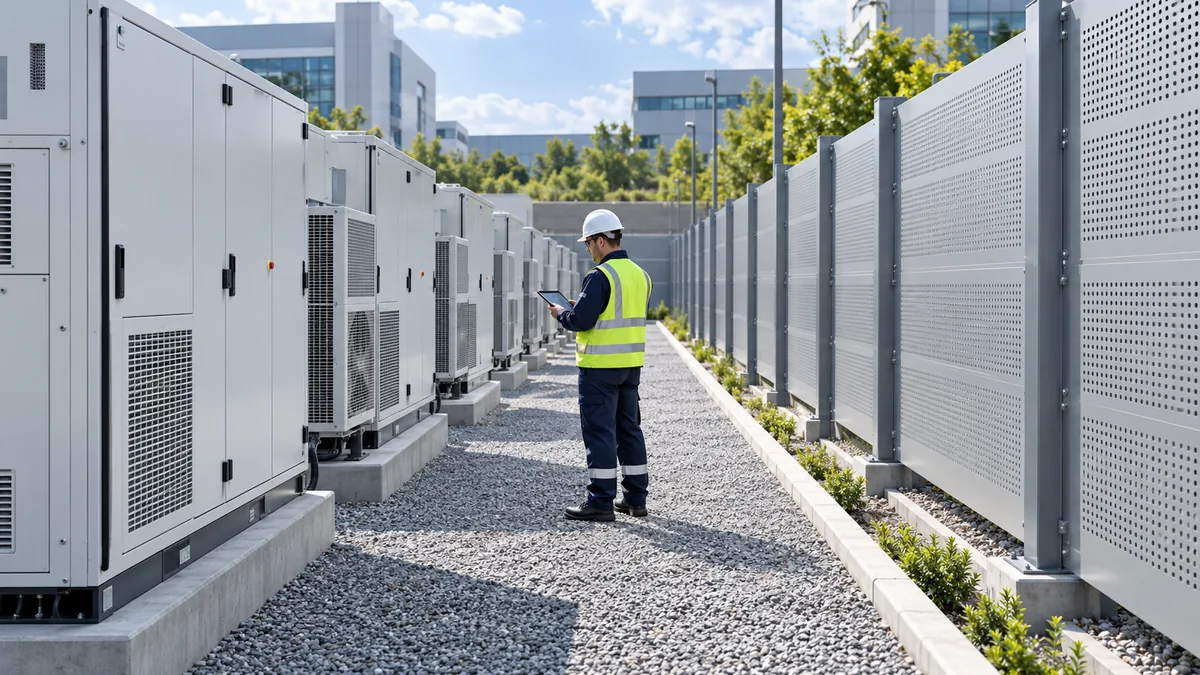
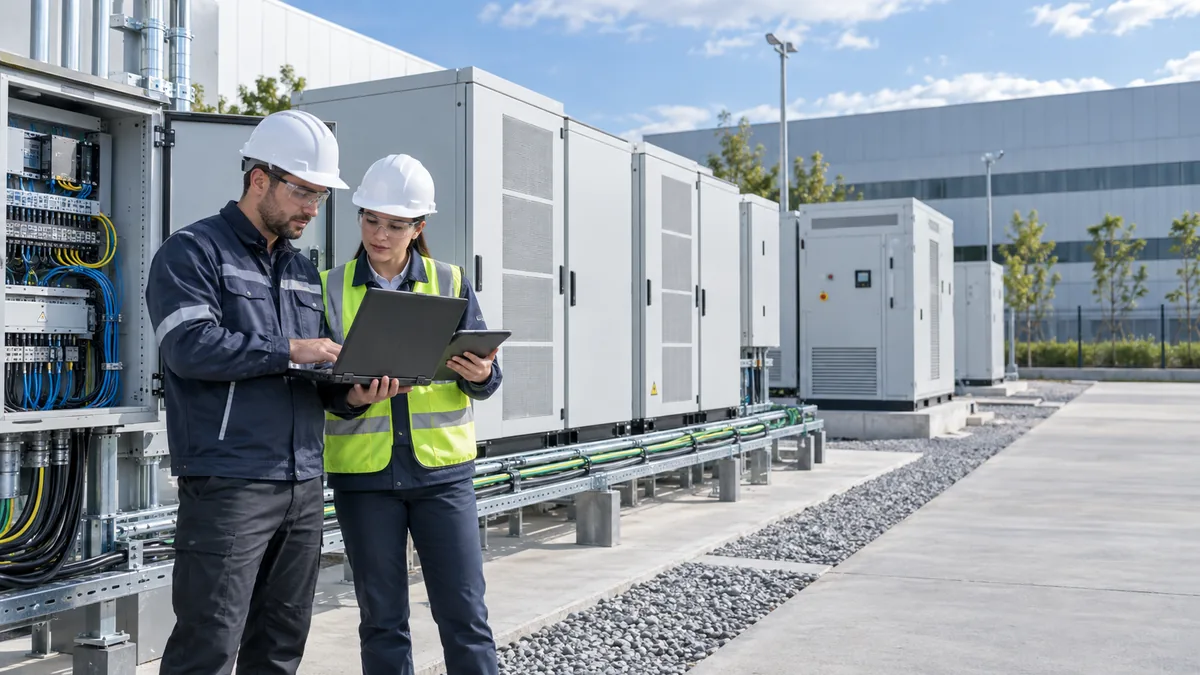
A 500kWh cabinet set and a 500kWh container do not create the same project. The battery nameplate may look similar, but the installed result depends on AC power rating, DC voltage platform, PCS location, cable length, ambient temperature, available footprint, lifting access and maintenance clearance. Buyers should ask suppliers to show how the equipment will sit on the site, how service teams will open doors, and how hot air, emergency access and drainage are handled.
For a rooftop, factory yard, retail park or small solar-plus-storage project, modular cabinets can reduce the first step size. For a larger ground-mounted solar project, industrial park or multi-MWh installation, a container BESS may simplify factory integration and make the project boundary easier to document. The right choice is the one that matches the site constraints, not the one with the cleaner brochure photo.
Cabinet ESS vs container BESS checklist
| Decision point | Outdoor battery cabinet | Container BESS | Buyer check |
|---|---|---|---|
| Typical project size | Useful for smaller C&I sites, phased expansion and limited spaces. | Better for larger blocks and projects needing higher factory integration. | Request usable kWh, rated kW, expansion method and minimum order block. |
| Footprint and civil works | Can be placed as separate cabinets, but needs clear cable routes and service clearance. | Needs a larger pad, crane or forklift planning, access road and drainage review. | Ask for layout drawings, foundation notes and door opening clearance. |
| HVAC and thermal control | Each cabinet may have its own cooling path and filter maintenance needs. | HVAC is often integrated for the full container, with airflow and redundancy questions. | Confirm ambient range, derating, filter access and cooling maintenance interval. |
| PCS and inverter scope | PCS may be external or matched with cabinet groups. | PCS, transformer and EMS may be integrated or supplied as separate skids. | Confirm AC voltage, grid mode, export control, protection settings and communication. |
| Fire safety boundary | Cabinet spacing, detection output and isolation design must be clear. | Container layout, detection, ventilation, suppression interface and emergency access need review. | Request fire safety notes, alarm interface and local compliance assumptions. |
| Service access | Technicians may need access on multiple sides across several cabinets. | Service can be concentrated, but container interior access and aisle width matter. | Ask for maintenance procedure, spare parts plan and remote support boundary. |
When an outdoor battery cabinet is the better fit
Choose a cabinet-first approach when the site has moderate capacity needs, limited construction appetite, or a phased budget. Battery cabinets are often easier to quote for factories, farms, retail sites, schools, small industrial parks and solar self-consumption projects where the buyer wants a practical starting point rather than a multi-MWh system from day one.
Cabinets still need proper engineering. Ask whether the cabinet is rated for outdoor installation, how cable entry is protected, where condensation can form, whether the BMS supports the selected PCS or inverter, and what happens if the site later adds PV or more battery capacity. For battery and inverter matching, review the inverter compatibility checklist and the Battery Storage Buyer Resources hub before formal quotation.
When a container BESS is the better fit
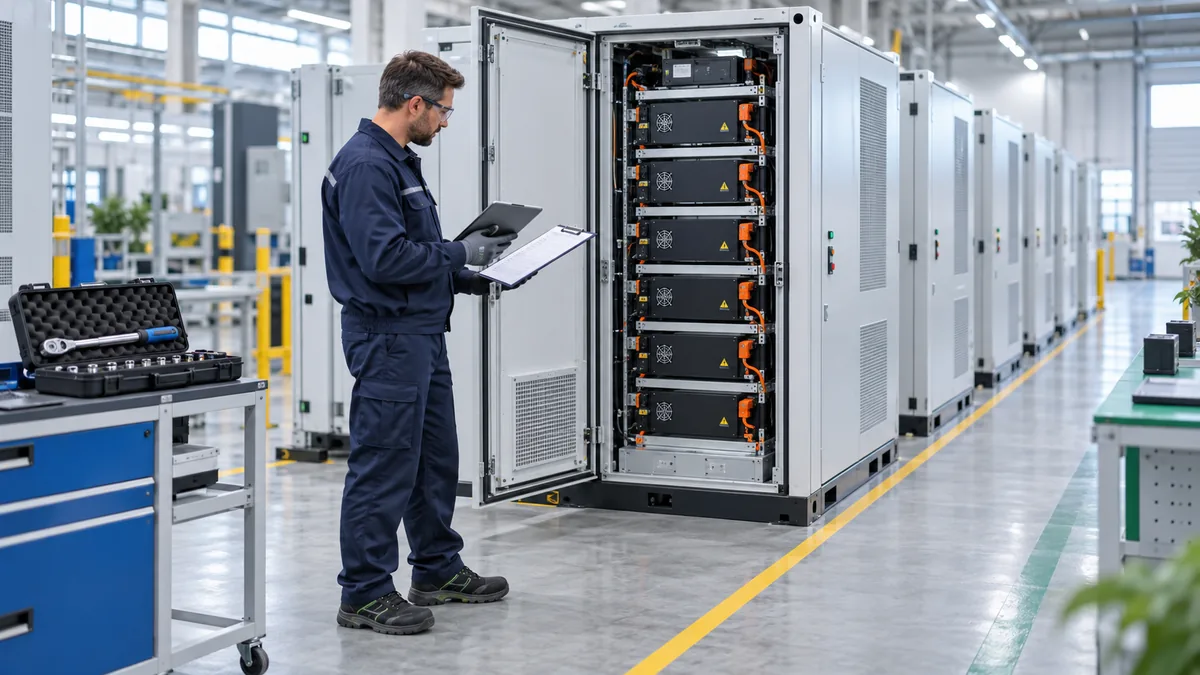
A container BESS becomes attractive when the project needs a larger energy block, stronger factory integration, easier transport as a single system boundary, or more controlled thermal and fire safety design. It can also help when the buyer wants a clearer separation between battery container, PCS area, transformer, EMS and site-level controls.
The tradeoff is site planning. Containers need space, foundation work, lifting access and more careful utility coordination. Buyers should not accept a container quotation unless it includes a layout drawing, battery string data, HVAC concept, fire safety interface, PCS and transformer boundary, communication architecture and commissioning list. For deeper planning, compare the 20 ft and 40 ft BESS layout checklist with the C&I ESS fire safety checklist.
PCS, solar PV and grid connection decide more than the cabinet shell
The enclosure format matters, but the project usually succeeds or fails around power conversion and controls. A battery cabinet without a clear PCS scope can turn into a partial equipment sale. A container without a grid connection plan can sit on site waiting for missing settings, protection coordination or export control logic.
Ask for the PCS rating, AC voltage, grid phase, operating mode, islanding or backup assumptions, EMS protocol, BMS communication method and PV input boundary. If the project includes solar generation, confirm whether PV is connected through a hybrid inverter, an AC-coupled PCS architecture or a separate solar inverter. The U.S. Department of Energy provides a useful overview of grid-scale and distributed energy storage topics, while NREL publishes research around energy storage systems and grid integration. Use these as background references, then confirm local requirements with the project engineer.
If the site reports voltage dips, repeated outages or motor-start disturbances, use the unstable power supply in factories checklist to separate power-quality diagnosis from the cabinet or container choice before defining PCS power, backup duration and commissioning evidence.
What to send before asking for price
A serious quote needs more than "we need 500kWh." Send the installation country, application, daily load curve if available, expected backup duration, PV capacity, grid voltage, peak demand, indoor or outdoor location, available footprint, temperature range, certification needs, target delivery date and whether the buyer expects OEM branding or a standard product package.
SolarStorageHub reviews battery, inverter, PCS, PV, shipping, certification and warranty assumptions before quotation. The review is practical: the aim is to catch missing scope early, so the buyer can compare cabinet and container options with the same boundary. If you have a rough drawing, project photo or bill of materials, share it through Contact and ask for a product-fit check before committing to one format.
Related buyer guide: Cabinet and container choices change commissioning access, HVAC checks and handover records. Read C&I ESS Commissioning Checklist: FAT, SAT, EMS and Warranty Handover.
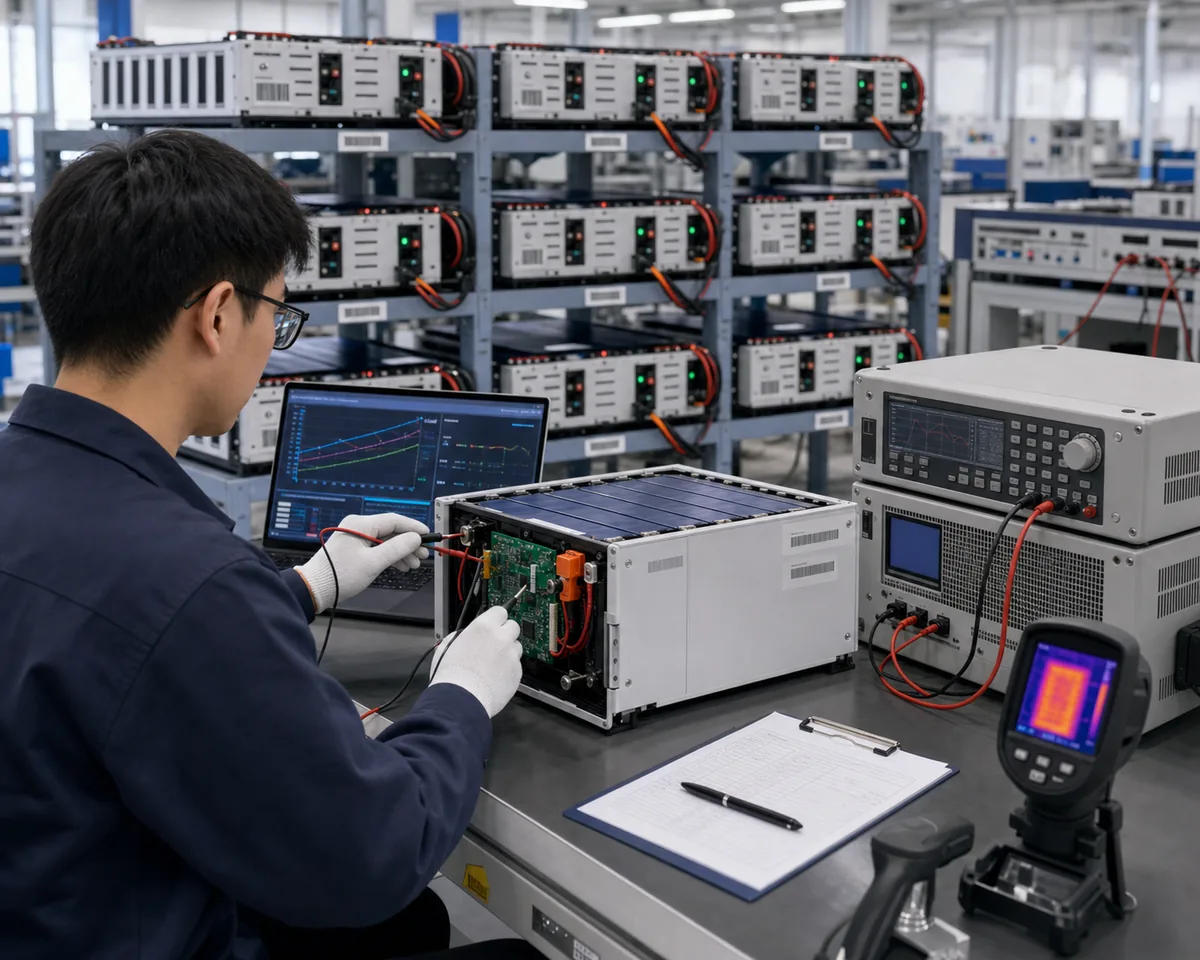
Related buyer guide: Cabinet and container selection should be checked against the factory integration and test scope. Read C&I ESS Factory Checklist: Manufacturing, FAT, Documents and Warranty.
FAQ
Is a battery cabinet cheaper than a container BESS?
Not always. A cabinet can be cheaper for smaller projects, but the final cost depends on PCS scope, installation work, cable routing, HVAC, shipping and commissioning. Compare installed cost, not only battery price.
What capacity should move from cabinets to a container?
There is no fixed line. Many buyers start considering a container when capacity, PCS scope, service access and site control become easier to manage as one integrated block. The site layout should decide the format.
Can outdoor battery cabinets be expanded later?
Some cabinet systems support phased expansion, but buyers must confirm DC voltage platform, BMS limits, PCS capacity, cable routing, software settings and warranty rules before assuming future growth is simple.
Does a container BESS include PCS and transformer?
Sometimes, but not always. A quote may include only the battery container, or it may include PCS, EMS, transformer and auxiliary systems. Ask for a scope table that clearly lists what is inside and outside the supplier boundary.
Which option is easier for maintenance?
Cabinets can be simple when the system is small and service clearance is generous. Containers can centralize service work but need safe interior access, clear aisle width, HVAC maintenance access and documented shutdown steps.
What documents should I request before ordering?
Request a datasheet, site layout drawing, foundation notes, single-line diagram, PCS scope, HVAC notes, fire safety interface, BMS protocol, warranty terms, FAT report, packing method and commissioning checklist.
Related SolarStorageHub Resources
If you are turning this article into a buying decision, compare the relevant product families and send your inverter model, target capacity, installation country, and quantity plan for confirmation.