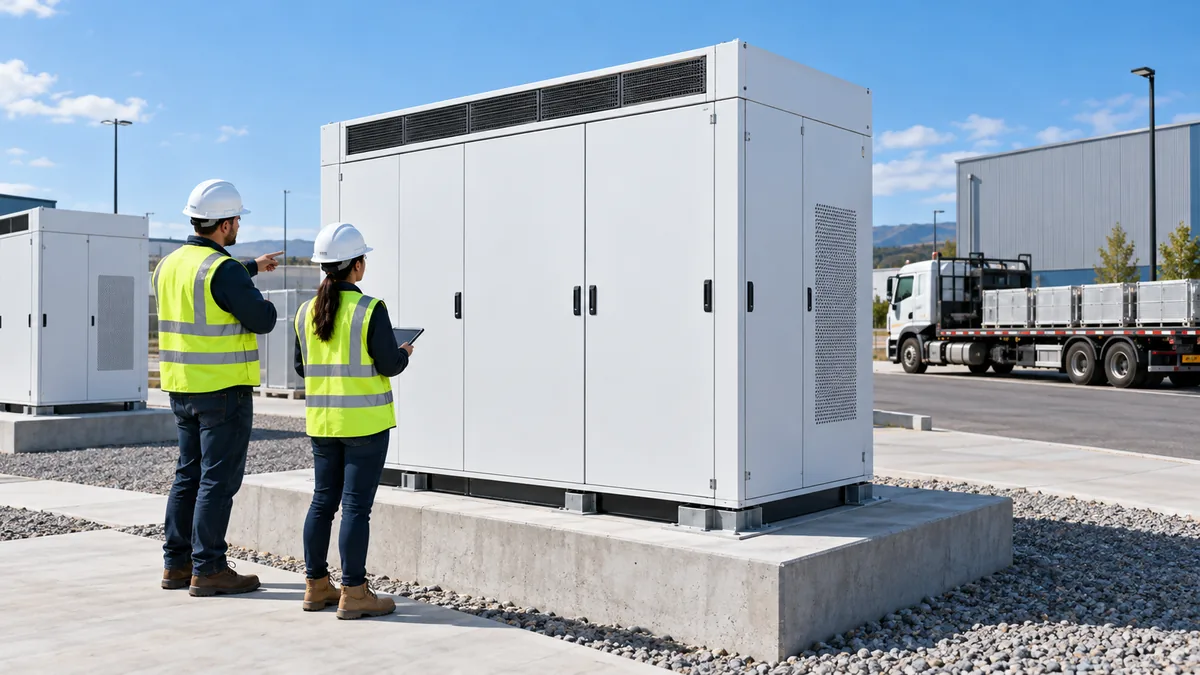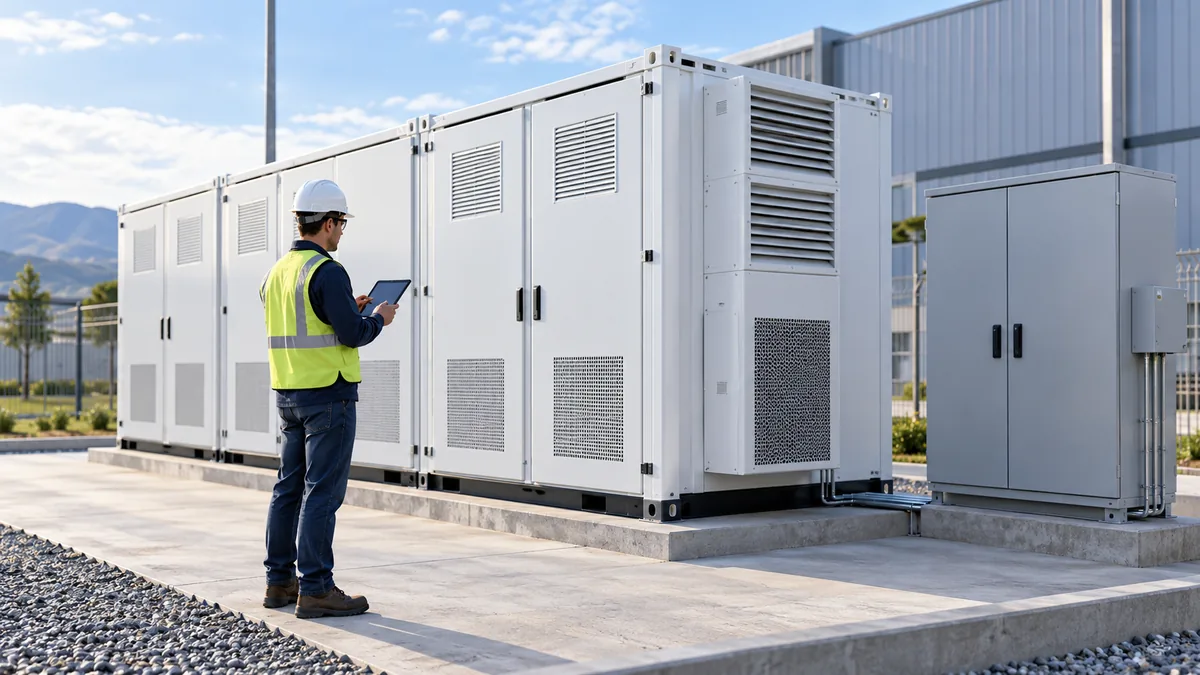

C&I ESS Delivery Readiness Checklist: Site Access, Foundation and Lifting
C&I ESS delivery readiness means confirming that the ordered equipment can reach the site, be received safely and be placed on its approved foundation before the truck is dispatched. A completed battery factory acceptance test does not prove that the destination gate, access road, unloading area or lifting arrangement is ready.
This checklist helps industrial owners, EPC teams and distributors turn delivery assumptions into signed evidence. It covers the last-mile route, equipment identity, civil interfaces, unloading responsibilities and hold points. It is not a lifting method statement, structural design or permission to handle a battery system. The equipment supplier, competent lifting team and responsible site engineers must approve the actual operation under applicable local requirements.
1. Define the delivery and placement boundary
Start with a simple question: what exactly is being delivered, to which location, and who takes responsibility at each handover? Separate arrival at the site gate, unloading from the vehicle, temporary storage, movement to the foundation and final placement. These are different milestones, even when one contractor performs several of them.
Record the seller, freight provider, importer, site owner, civil contractor and lifting contractor. Give each interface one accountable coordinator, with a named deputy and a contact available on delivery day. A delivery term alone is not a complete operational plan; use the exporter and wholesaler checklist to clarify the commercial scope alongside the physical work.
Keep arrival, unloading and installation acceptance separate
A signed transport receipt should describe the condition and quantity received, with reservations where appropriate. It should not accidentally state that the ESS has passed electrical commissioning or performance acceptance. Confirm the wording, authorized signatory and evidence required for each milestone before dispatch.
2. Freeze the actual transport configuration
Request the model-specific packing drawing, transport dimensions, total shipping mass, package identification and handling instructions. Confirm whether batteries, PCS, cooling equipment or accessories travel installed, separately packed or removed for transport. An empty enclosure drawing is not a substitute for the loaded configuration that will arrive.
The approved information should identify the relevant center-of-gravity data and supplier-authorized lifting or handling interfaces. Do not assume that every enclosure corner, roof fitting or forklift opening is a lifting point. Require the lifting team to review the supplier's instructions and resolve missing information before booking equipment.
Reconcile the delivery configuration with the purchase order and packing list. A late hardware substitution may change mass, dimensions or foundation interfaces. Follow the design-freeze and change-approval checklist rather than treating a changed transport drawing as an administrative detail.
3. Survey the complete last-mile route
Assess the route from the public road to the receiving position, not just the final gate width. Record turns, slopes, overhead restrictions, temporary structures, road condition, traffic interfaces and locations where vehicles must reverse or wait. The actual vehicle and load envelope need review by the transport provider, with permits and escorts identified where applicable.
Photograph constraints and mark them on a dated route plan. Include the planned arrival time, parking location, site entry procedure and any factory operating restrictions. Recheck the route shortly before delivery because scaffolding, parked machinery, construction trenches and stored materials can invalidate an earlier survey.
Use the C&I ESS site-survey checklist for the broader project inputs. The delivery release needs a current route approval for the specific shipment, not a generic statement that the site has road access.

4. Obtain civil and foundation release evidence
The responsible civil engineer should confirm that the installed foundation matches the approved equipment interface. Check the document revision, location, surveyed levels, support arrangement, anchoring details, drainage provisions and any required construction acceptance records. Do not infer readiness solely from a photograph of a finished concrete pad.
Separate the permanent equipment foundation from the ground used by delivery vehicles and lifting equipment. Their load cases and support requirements may differ. The competent lifting team and civil engineer should resolve ground conditions, buried services, trenches, voids and other stability risks using project-specific evidence.
There is no universal ground-bearing value or concrete waiting period that applies to every ESS delivery. Ask the responsible professionals for documented acceptance criteria. Refer to the cabinet-versus-container layout checklist when equipment format changes the physical interfaces.
5. Assign a competent lifting and unloading team
Appoint the responsible contractor before dispatch. Ask for a project-specific plan that addresses the actual equipment, handling method, people, workspace and foreseeable risks. Equipment selection, lifting accessories, stability assessment and operating limits belong to the competent team; a battery kWh rating or a seller's generic crane suggestion cannot establish lifting suitability.
The UK Health and Safety Executive's planning and organising lifting operations guidance emphasizes competent planning, clear actions and responsibilities, and consideration of risks such as proximity hazards, overloading and suspended loads. These principles help structure a procurement review, but local law and the site-specific plan govern the work.
Require evidence of appropriate competence, equipment examination or inspection where required, and pre-use checks. Review permits, supervision, communications and stop-work authority. Confirm that the contractor has accepted the latest supplier handling instructions rather than preparing a plan for a similar-looking cabinet.
6. Preserve the working area and emergency interfaces
Coordinate the delivery with the site's operating teams. Define vehicle and pedestrian controls, access restrictions, neighboring work and the areas that must remain clear. The work plan should address overhead and underground services, visibility, weather conditions and how a change on the day will be assessed.
Keep required emergency routes and equipment access available throughout the operation. Do not use the intended maintenance aisle as an unreviewed storage location for crates, accessories or temporary equipment. Ask the site safety lead to confirm arrangements for an abnormal battery condition, transport damage or an interrupted operation.
The HSE lifting-equipment guidance collection provides UK regulatory context; it does not certify the proposed ESS operation. Coordinate battery-specific emergency interfaces with the BESS fire-safety document checklist and the actual site response plan.
7. Use a documented dispatch hold-point checklist
Make dispatch conditional on evidence, not on an optimistic delivery date. Each gate needs an owner, document reference, status and explicit acceptance. The examples below describe review outputs, not engineering approval criteria. Adapt them to the contract and destination requirements.
| Release gate | Evidence to retain | Accountable reviewer | Hold example |
|---|---|---|---|
| Shipment identity | Approved packing list and loaded configuration | Supplier and buyer coordinator | Mass or package details unresolved |
| Delivery route | Current route survey and vehicle review | Transport provider and site lead | Unreviewed access restriction |
| Civil readiness | Foundation and working-ground release records | Responsible civil engineer | Support or ground evidence missing |
| Handling plan | Approved plan, team and equipment records | Competent lifting contractor | Supplier handling data not accepted |
| Site controls | Permits, access controls and emergency arrangements | Site safety and operations leads | Conflicting work or blocked access |
| Receiving readiness | Inspection procedure and exception contacts | Authorized receiving lead | No agreed damage-response process |
Do not average a failed safety-critical gate into an overall score. Keep the shipment on hold until the responsible party closes the issue or approves a documented revised arrangement. Record who authorizes dispatch and how the site confirms that approval remains valid.
8. Agree receiving and damage-response procedures
Prepare a receiving record with arrival time, shipment identifiers, package quantities, visible condition and photographs. Agree when transport seals and packaging can be inspected without creating unsafe access. The receiving team should know whom to contact before signing an unqualified receipt or altering damaged packaging.
If there is suspected battery damage, leakage, unusual heat or another abnormal condition, follow the site emergency procedure and obtain competent assessment. Do not energize the system, open it for an improvised inspection or continue handling just to clear the vehicle. Preserve evidence when safe and coordinate with the supplier, carrier and insurer.
Use the import-documentation checklist to reconcile shipping identity. The BESS quality-assessment guide connects receiving condition with later quality gates; neither replaces an abnormal-condition response plan.
9. Plan temporary storage and schedule changes
A delayed foundation or an unavailable contractor should trigger a revised delivery decision, not an improvised storage location. Ask the supplier for transport and storage conditions for the actual configuration, including relevant temperature, moisture, inspection and duration limits. Confirm how battery condition will be monitored during an extended delay.
Keep equipment identification and shipment records linked while units are stored. Define security, access, packaging preservation and any required supplier inspections. Clarify whether protective packaging should remain in place and who approves its removal; do not assume that outdoor operating suitability also approves every packaged storage condition.
Document the cost and schedule consequences of a hold, including vehicle waiting, rescheduling, additional storage and reinspection. Contractual urgency must not override the technical release gates. Confirm warranty-related conditions with the supplier instead of assuming that the commercial delivery date and warranty start date are identical.
10. Reconfirm the plan before work starts
Conduct a pre-operation review using the latest configuration, route, ground release and contractor plan. Confirm that the delivered equipment matches the approved records and that the named people and equipment are present. Address changed weather, nearby work, vehicle positioning or newly identified damage through the responsible team's change process.
The competent supervisor should control the operation under the approved method and stop-work arrangements. Buyers can verify that the review and approvals exist; they should not substitute this checklist for the contractor's technical decisions or direct an unapproved maneuver.

Record the review time, attendees, accepted changes and unresolved holds. If conditions differ materially from the plan, obtain the required reassessment before proceeding. A verbal instruction to continue is not a replacement for the appropriate approval.
11. Close physical delivery before commissioning
After placement, record equipment identity, final position, visible condition, relevant civil interface checks and outstanding work. Capture the handover between the lifting team and installation contractor. Keep damaged or missing items and temporary arrangements on a controlled exception list with owners and closure dates.
Physical placement does not authorize energization. Electrical connections, protective earthing, cooling, fire-system interfaces, controls and commissioning still require their own qualified inspections and release. Use the FAT, SAT and commissioning checklist to continue the project without conflating transport acceptance with functional acceptance.
For a quotation discussion, send SolarStorageHub the destination, proposed equipment format, access photographs, foundation status and intended delivery scope. Request model-specific handling documents and clarify which party supplies the professional transport, civil and lifting services. Preserve the approved records with the final project handover pack.
12. Frequently asked questions
Does a completed FAT mean the site is ready for delivery?
No. FAT concerns the agreed factory test scope. Site delivery readiness separately requires approved shipment details, route access, civil interfaces, handling arrangements, receiving procedures and responsible people. A factory test does not approve the destination ground or lifting operation.
Can battery capacity determine the required crane size?
No. Battery kWh is not a lifting design input by itself. The competent lifting team needs the actual shipping configuration, mass, center of gravity, approved handling interfaces and site conditions to select equipment and prepare the operation.
Who should approve the ESS foundation before arrival?
The responsible civil engineer and relevant project parties should release the foundation against the approved equipment interface and construction acceptance criteria. Ground supporting delivery and lifting equipment needs its own appropriate review; a finished-pad photograph is not sufficient evidence.
Does signing a delivery receipt mean the ESS passed SAT?
No. A receiving record should document the delivered quantity and condition under the agreed terms. Site acceptance testing is a separate technical milestone after installation and the required checks. Define authorized signatories and acceptance wording for each milestone before dispatch.
Related SolarStorageHub Resources
If you are turning this article into a buying decision, compare the relevant product families and send your inverter model, target capacity, installation country, and quantity plan for confirmation.