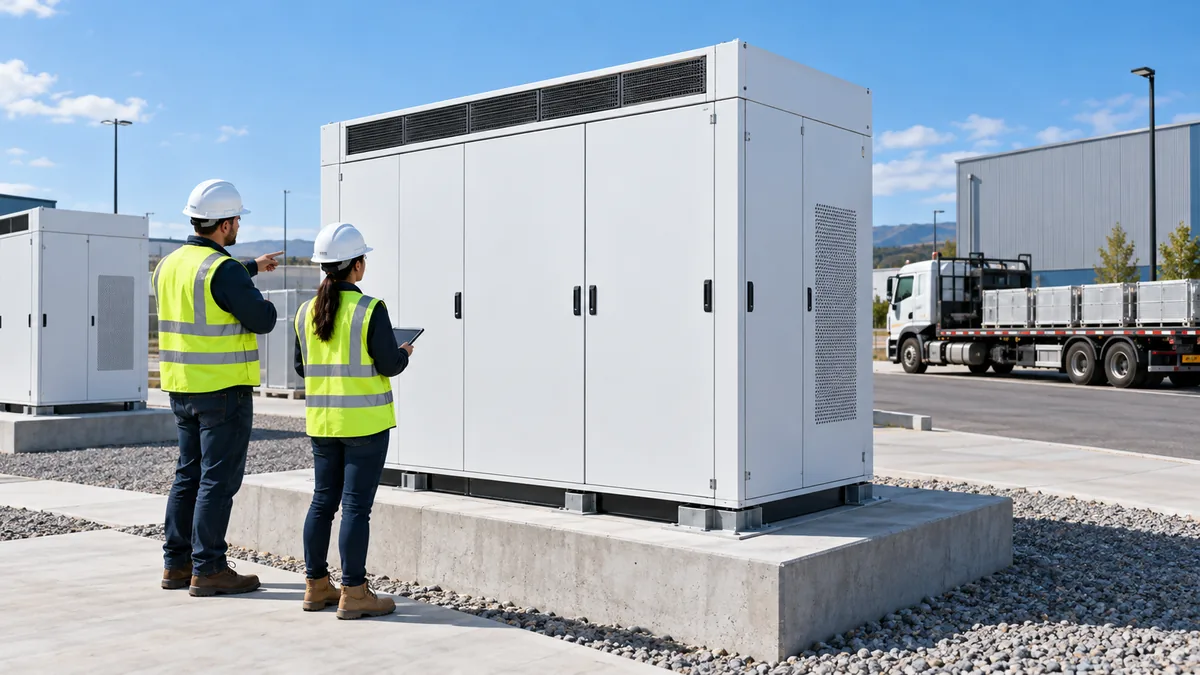

Portable Power Station for Refrigerator Backup: Startup, Runtime and Food Safety
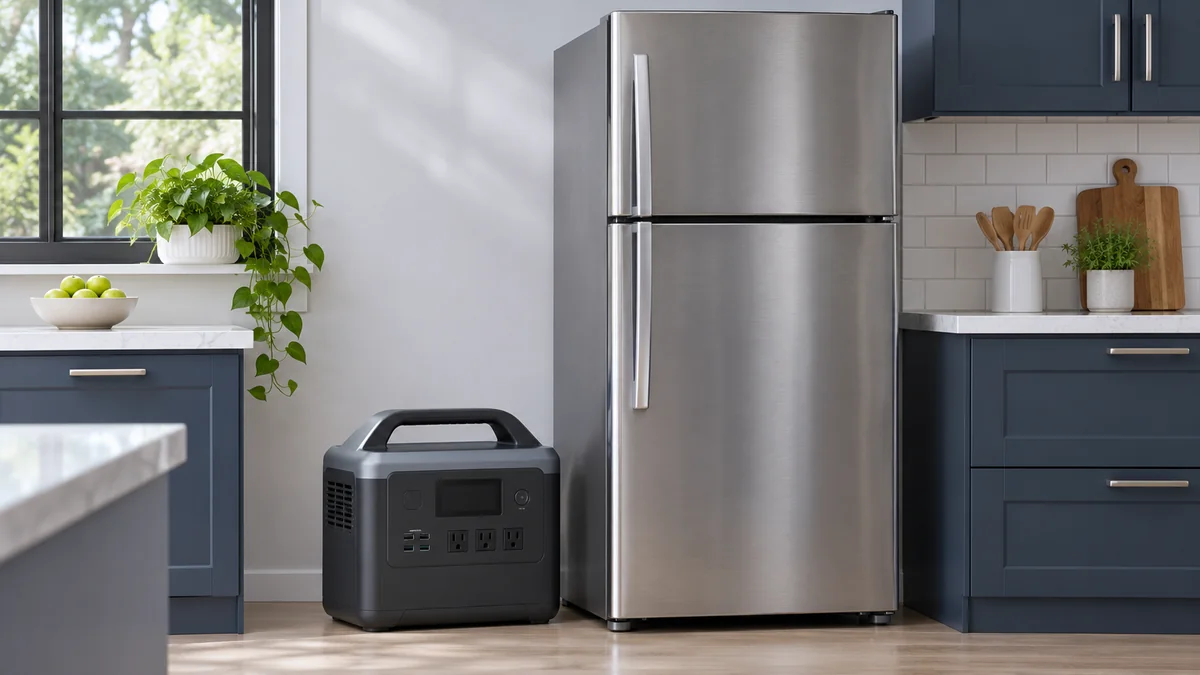
A portable power station for refrigerator backup needs to pass two separate checks: it must start and run the appliance, and it must deliver enough usable energy for the outage you want to cover. A large battery does not solve an incompatible AC output, and a high surge-power headline does not tell you how long the food will stay cold.
This guide helps household buyers and small-order distributors prepare a refrigerator-specific buying checklist. It covers domestic AC refrigerators, not refrigerated trucks, commercial cold rooms or medical storage. All numerical examples below are hypothetical planning calculations, not measurements of an ELECNO product or promises of runtime. Follow both manufacturers' manuals and local electrical-safety requirements.
1. Start with the exact refrigerator, not a generic wattage
Photograph the appliance nameplate and record its model, AC voltage, frequency and rated electrical input. Note whether it is a refrigerator-freezer, a separate freezer or a compact fridge. Include an ice maker, defrost heater or other accessories when relevant. Appliances of similar external size can have quite different energy consumption and starting behavior.
Do not treat a nameplate current multiplied by voltage as a reliable daily-energy figure. That information is useful for electrical compatibility, but compressor cycling, control electronics, ambient temperature and defrost operation affect consumption over time. A brief running-power reading can miss a load that appears later.
Keep the purchase scope narrow. A refrigerator plus a router is not the same job as a refrigerator, kettle and microwave together. The essential-load list guide can help separate what must remain powered from what can wait.
2. Check continuous AC output and compressor starting separately
Confirm that the station's outlet voltage, frequency, plug arrangement and waveform meet the refrigerator manufacturer's requirements. Then check continuous output, short-duration surge capability and the conditions attached to each rating. A label such as “peak” without a duration or test basis is incomplete evidence.
A compressor may need more power while starting than while running. The actual requirement depends on its design and operating state; there is no universal multiplier that proves compatibility for every refrigerator. Some inverter-driven compressors behave differently from conventional on/off models. Ask for a compatibility test with the exact refrigerator or an agreed representative load, not just a marketing statement about motor support.
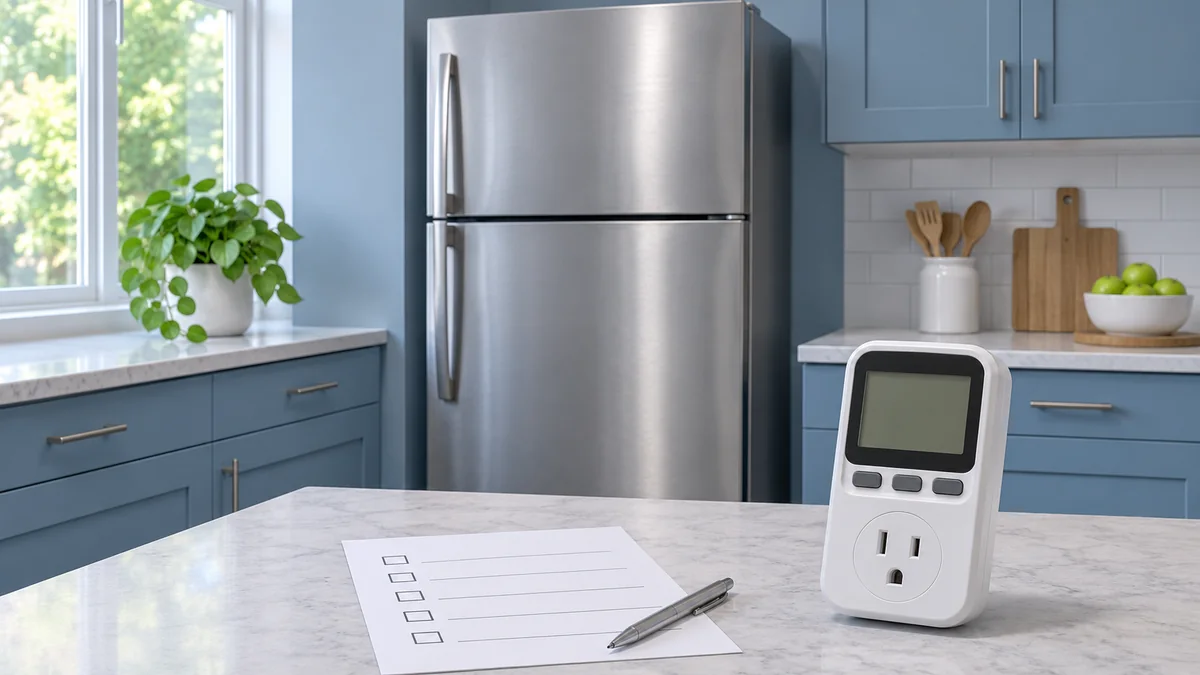
A normal household plug-in energy monitor may record accumulated kWh well without resolving a short starting event. It is not automatically an inrush-current instrument. If startup measurement is necessary, a qualified person should choose suitable equipment and a safe method. Do not open the refrigerator or power station to obtain a reading.
Reduced-voltage “boost” modes are not interchangeable with normal rated AC output. Use such a mode only if the appliance and station documentation explicitly permit it. Our 5kWh portable power station buyer guide explains why battery energy and output power are different purchasing checks.
3. Measure energy over a representative operating period
Where the appliance uses an accessible plug and both manuals allow it, a correctly rated plug-in monitor can help record energy consumption before purchase. Follow the monitor's instructions and do not use adapters or extension arrangements that exceed their ratings. If the connection is inaccessible, damaged or fixed-wired, ask a qualified electrician rather than improvising access.
Record total kWh and elapsed hours under normal use. A full day is a useful starting point, but a longer period may be needed to capture defrost cycles and realistic variation. Note room temperature, door openings, initial contents and whether warm food was added. An empty refrigerator stabilizing after switch-on is not the same test as an already-cold appliance during an outage.
An annual energy label offers a screening estimate: divide annual kWh by 365 to get an average daily figure. It is not a measurement of your kitchen or a startup-power specification. The official ENERGY STAR refrigerator guidance discusses appliance efficiency and selection; it does not certify a particular portable power station as compatible.
4. Estimate runtime using one consistent energy boundary
The simplest calculation uses measured daily appliance energy and the station's verified usable AC energy at a comparable load. If those AC-energy data already include conversion and idle losses, do not subtract the same losses again. If only nominal battery energy is available, any conversion efficiency, reserve and inverter-idle assumptions must be stated separately.
Illustrative calculation only: suppose a refrigerator uses 1.2kWh in a representative 24-hour period. Its average demand over that period is 1,200Wh ÷ 24h = 50W. Suppose a hypothetical station has 2,000Wh nominal capacity, an intentionally available fraction of 80%, an assumed conversion efficiency of 90%, and a separately accounted 10W inverter idle draw.
On that explicitly simplified basis, the AC-equivalent energy budget is 2,000 × 0.80 × 0.90 = 1,440Wh. Dividing by the assumed 50W appliance average plus 10W idle demand gives about 24 hours. This is a planning result for those assumptions, not a rating for any product. It does not establish compressor-start compatibility.
The estimate changes if the refrigerator works harder, the station is cold, the battery has aged, another load is connected or the station shuts down early. Do not subtract a reserve twice when a manufacturer's usable-energy figure already excludes it. For a wider explanation of energy boundaries, see how to estimate battery storage runtime.
5. Look for low-load shutdown and restart behavior
A refrigerator can be quiet between compressor cycles while still needing power for controls and the next restart. Some portable stations have energy-saving settings that switch the AC output off below a threshold. Ask whether that function can be disabled, what the threshold and delay are, and whether the configured state survives a restart or firmware update.
Check what happens at low state of charge and after recharge. Does the AC outlet restart automatically, or must someone press a button? Can a normal compressor cycle resume without an alarm? Agree these questions before purchase. Never bypass protection or repeatedly force a stalled compressor to start; stop and follow the appliance's fault and restart instructions.
If you expect automatic outage support, ask for the actual transfer specification and its limitations. “Pass-through charging,” “EPS” and “UPS” describe different implementations across products. None of those words alone proves uninterrupted operation or unattended refrigerator support. This article does not recommend a portable station for medical refrigeration or other safety-critical loads.
6. Use a refrigerator-backup comparison sheet
| Buying check | Evidence to request | What it does not prove |
|---|---|---|
| AC compatibility | Exact voltage, frequency, waveform and approved connection | That every refrigerator with the same plug will work |
| Starting and running | Continuous rating, surge duration and relevant load-test conditions | Runtime from the surge number alone |
| Energy endurance | Usable AC energy at a comparable load and stated cutoff | A fixed number of days in every kitchen |
| Cycling and restart | Eco-mode settings, low-load threshold and recovery behavior | Safe unattended use without reviewing both manuals |
| Recharge | Allowed AC/PV inputs, simultaneous-use limits and realistic charging conditions | Continuous operation through bad weather |
| Food protection | Appliance thermometer and an outage contingency plan | Food safety from the battery percentage display |
For a household comparing a portable station with a fixed system, the home battery buyer guide explains the broader installation decision. A fixed battery and inverter are not plug-in substitutes for a portable station; they need their own design and installation assessment.
7. Treat solar recharge as variable, not guaranteed
A folding panel's rated watts are not continuous power throughout the day. Irradiance, shade, orientation, temperature and charging limits change the energy that reaches the battery. Confirm the permitted PV voltage range, maximum current, connector polarity and allowed connection arrangement for the exact station. A matching connector is not proof of electrical compatibility.
Account for simultaneous appliance consumption while charging. If a refrigerator consumes energy while a panel is producing it, only the remaining net energy can increase state of charge after losses. Do not describe a panel and station combination as indefinite backup without a realistic weather-dependent energy balance and a fallback plan.
The foldable solar panel matching checklist covers those input checks. Browse the 600W foldable panel listing as a product enquiry path, not as an assurance that it matches every station. Request written confirmation for the proposed combination.
8. Keep electrical safety and food safety separate
Use the station in a dry location, within its temperature limits, with the ventilation and clearances specified in its manual. Keep it away from water, hot surfaces and obstructed escape routes. Do not use damaged cords or place the unit inside a cupboard to hide it. Follow both manufacturers' instructions for direct appliance connection and any permitted extension lead.
Never feed a portable station into a household wall outlet. Supplying fixed circuits requires a compliant installation and suitable changeover arrangement designed by a qualified professional. This is different from connecting one permitted appliance to the station's own outlet.
Food temperature is a separate issue from whether the compressor appears to run. Keep appliance thermometers in the refrigerator and freezer. FDA guidance recommends a refrigerator at or below 40°F (about 4°C) and a freezer at or below 0°F (about −18°C). It says an unopened refrigerator will keep food cold for about four hours without power; that is general emergency guidance, not extra guaranteed runtime to add to a battery estimate.
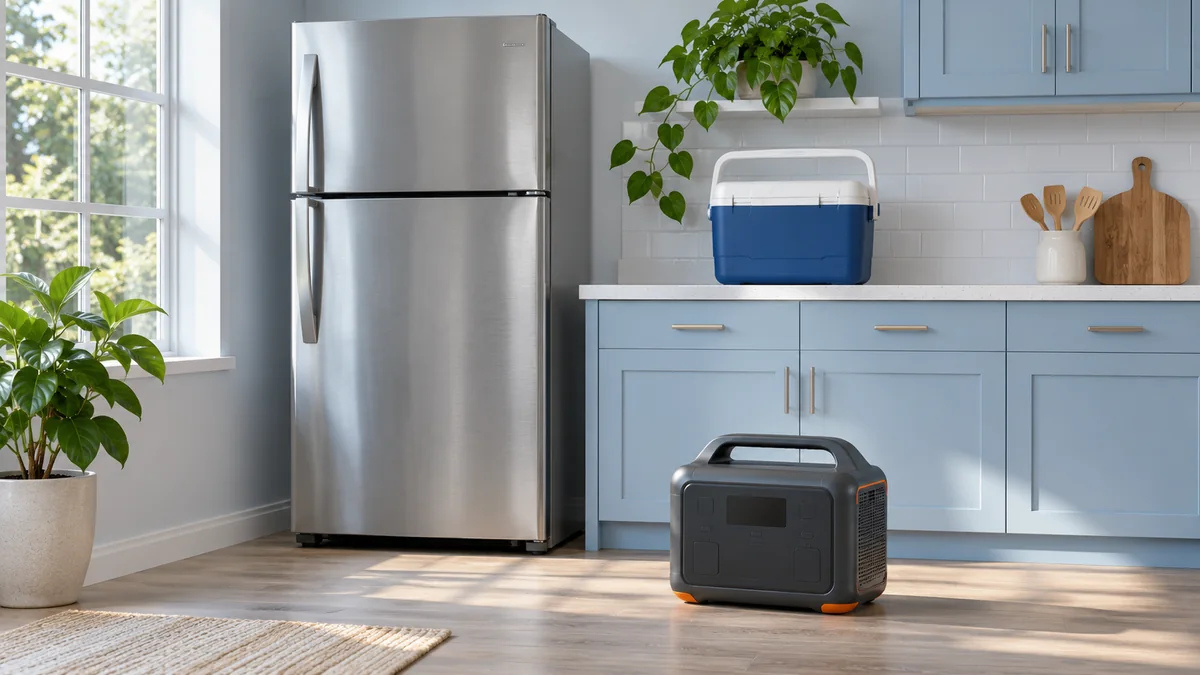
Keep doors closed as much as possible and prepare a cooler/ice contingency where appropriate. Follow the current FDA power-outage food-safety guidance and your local public-health advice when deciding what to keep or discard. Never taste food to decide whether it is safe. A station displaying remaining charge does not establish a safe food-temperature history.
9. Send a refrigerator-specific enquiry before ordering
Send SolarStorageHub the refrigerator model/nameplate, destination voltage and frequency, measured kWh and recording period, required outage duration, other loads, recharge options and whether automatic transfer is expected. Ask for the exact station model, current manual, rated-output conditions, usable-energy test basis, low-load settings, warranty and shipping scope.
Use the RFQ checklist to keep configuration and commercial assumptions together, then contact SolarStorageHub for an enquiry. Request confirmation rather than assuming that a capacity label, an AI illustration or a general article proves suitability. If the seller cannot provide the needed evidence, leave that item unresolved before payment.
Refrigerator Backup FAQ
Can a portable power station run a refrigerator?
It may, if the exact station meets the refrigerator's AC requirements, continuous and starting demand, and required energy duration. Confirm both manuals and relevant test evidence; battery capacity alone does not prove compatibility.
How long will a 2kWh power station run a refrigerator?
There is no universal duration. Use measured refrigerator energy and verified usable AC energy, allowing for reserve, idle consumption and operating conditions without counting losses twice. A planning calculation is not a product runtime guarantee.
Why does the station turn off when the refrigerator stops running?
A low-load or energy-saving shutdown setting is one possible cause, but it is not a diagnosis. Check the exact manual, configured threshold and any fault indication. Do not bypass protection or assume every model allows that setting to be disabled.
Does a running refrigerator mean the food is safe after an outage?
No. Use appliance thermometers and follow current food-safety guidance, including the food's temperature history. Compressor operation and a battery charge display do not prove that perishable food stayed at a safe temperature.
Related SolarStorageHub Resources
If you are turning this article into a buying decision, compare the relevant product families and send your inverter model, target capacity, installation country, and quantity plan for confirmation.