
Power Storage Inverter Checklist: Grid Mode, Battery Protocol and Export
A power storage inverter is the control point between solar input, battery storage, backup loads and the grid. Buyers often compare rated kW first, but the real fit depends on grid mode, battery voltage, BMS communication, PV input limits, export control, CT direction, backup output, transfer behavior and commissioning evidence. A high-power inverter can still create problems if it does not match the battery or site wiring.
This checklist is written for distributors, installers, EPC teams and OEM buyers comparing hybrid, off-grid and three-phase storage inverter options. It supports the Solar Inverter category, Home Energy Storage, C&I ESS, Solar Panel matching and the Battery Storage Buyer Resources hub.
Start with the site mode
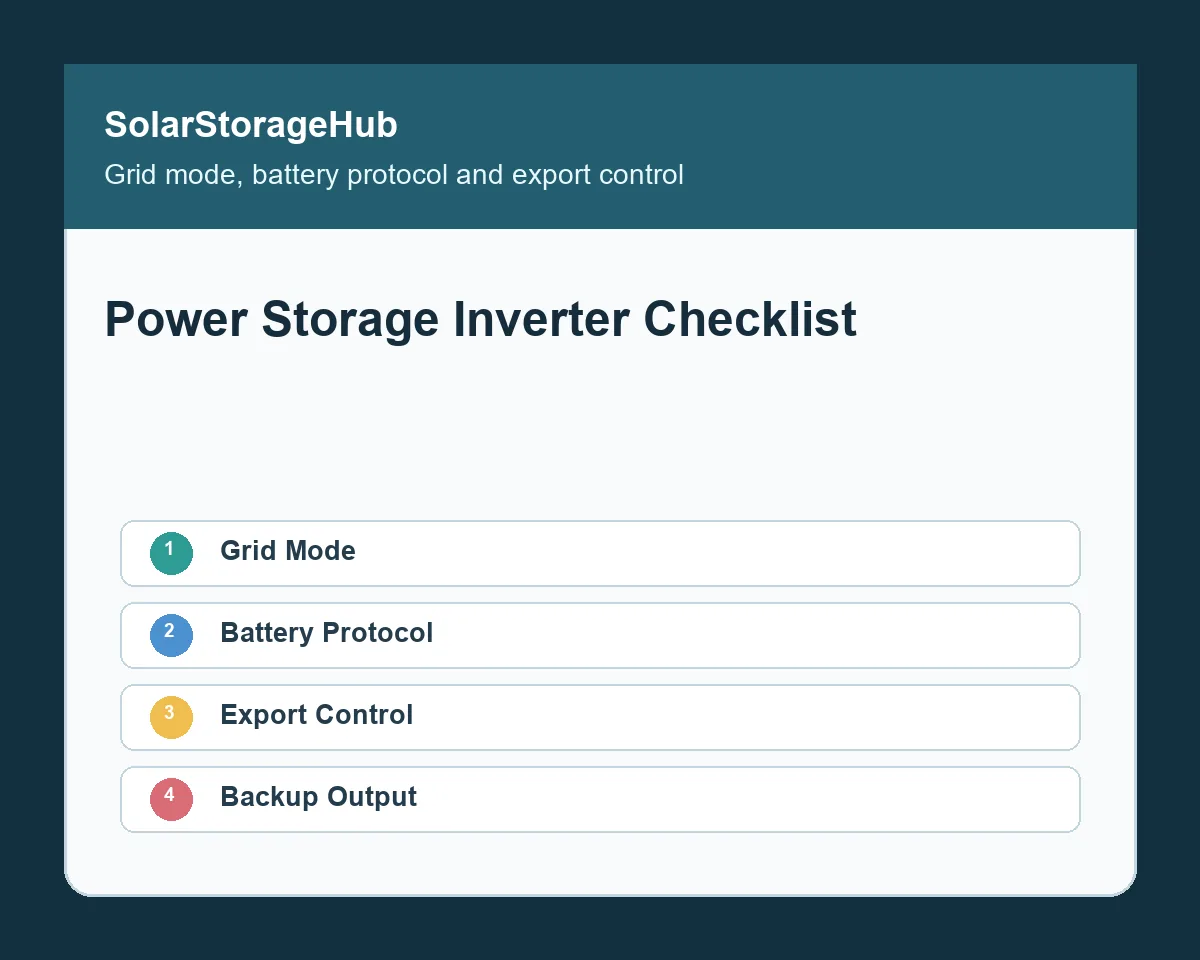
The first inverter question is not only how many kilowatts the inverter can output. The buyer should define the site mode: grid-tied self-consumption, backup, off-grid, generator support, export limitation, peak shaving or three-phase commercial use. Each mode changes wiring, control logic and compliance requirements. A home backup system may prioritize transfer behavior and critical loads, while a commercial site may prioritize CT accuracy, export control and transformer limits.
Ask for the inverter operating modes, supported grid voltage, phase configuration, frequency range, neutral requirements, generator input options, anti-islanding behavior and local grid-code assumptions. If the inverter is used with PV, confirm whether it has built-in MPPT inputs or whether it will coordinate with an existing solar inverter. If it will use a battery, confirm whether it supports the exact battery voltage and communication protocol.
Battery protocol controls more than SOC display
Battery communication is not a small accessory. The inverter may use CAN or RS485 to receive SOC, charge current, discharge current, alarms, temperature limits and protection status. If communication fails, the inverter may operate in a limited mode, display inaccurate SOC or shut down during charge and discharge. Ask the supplier for tested battery models, protocol files, firmware versions and recommended settings.
The U.S. Department of Energy explains that inverters manage power conversion and grid services in solar energy systems. Reference: Energy.gov inverter basics. For a storage project, the inverter is also a battery-control device, so it should be checked with the real battery model, not only by voltage class.
Power storage inverter buyer checklist
| Check item | What to request | Why it matters |
|---|---|---|
| Grid mode | Grid-tied, backup, off-grid, generator or export-limited mode. | Defines wiring, settings and commissioning tests. |
| Battery voltage | Low-voltage or high-voltage range, current limits and allowed capacity. | Prevents mismatch with the selected LiFePO4 battery. |
| BMS protocol | CAN or RS485 list, firmware version and protocol file. | Controls SOC, alarms, charge current and protection behavior. |
| PV input | MPPT voltage range, max PV voltage, current and PV power. | Prevents PV clipping, undercharging or input protection trips. |
| Export control | CT direction, meter type, export limit and response logic. | Reduces risk of unwanted grid export or wrong consumption readings. |
| Backup output | Rated power, surge behavior, transfer time and critical-load limit. | Shows whether backup loads can restart safely. |
| Commissioning | Settings backup, test record, screenshots and alarm report. | Creates evidence for warranty and after-sales support. |
Export control depends on CT direction and meter logic
Export control problems often come from simple wiring errors. A CT installed in the wrong direction can make the inverter read import as export or export as import. A meter installed in the wrong location can make the inverter respond to the wrong load. Ask for CT installation diagrams, meter wiring diagrams, export-limit settings and commissioning screenshots. During startup, test whether the inverter reduces power when export is limited and whether the monitoring platform reports the correct direction.
For hybrid inverter commissioning, compare this article with the CT direction, export limit and battery protocol checklist. If the buyer is matching a LiFePO4 battery, also review the solar inverter and battery matching mistakes checklist.
Backup behavior should be tested with real loads
Backup output is not the same as normal grid-tied output. Ask for EPS or backup output rating, surge power, transfer time, neutral bonding guidance, allowed load type and overload behavior. Motors, pumps, compressors and old appliances can have starting current higher than their running wattage. A buyer should build a critical-load list and test whether those loads restart after transfer.
Battery capacity also affects backup reliability. A 10kWh or 30kWh battery may still disappoint if the inverter output is too low or if PV recharge is unrealistic. Compare backup decisions with the home energy storage batteries checklist and the solar battery storage inverter checklist. For three-phase projects, the 18kW three-phase inverter checklist can help connect inverter power with site loads.
Commissioning evidence protects the buyer
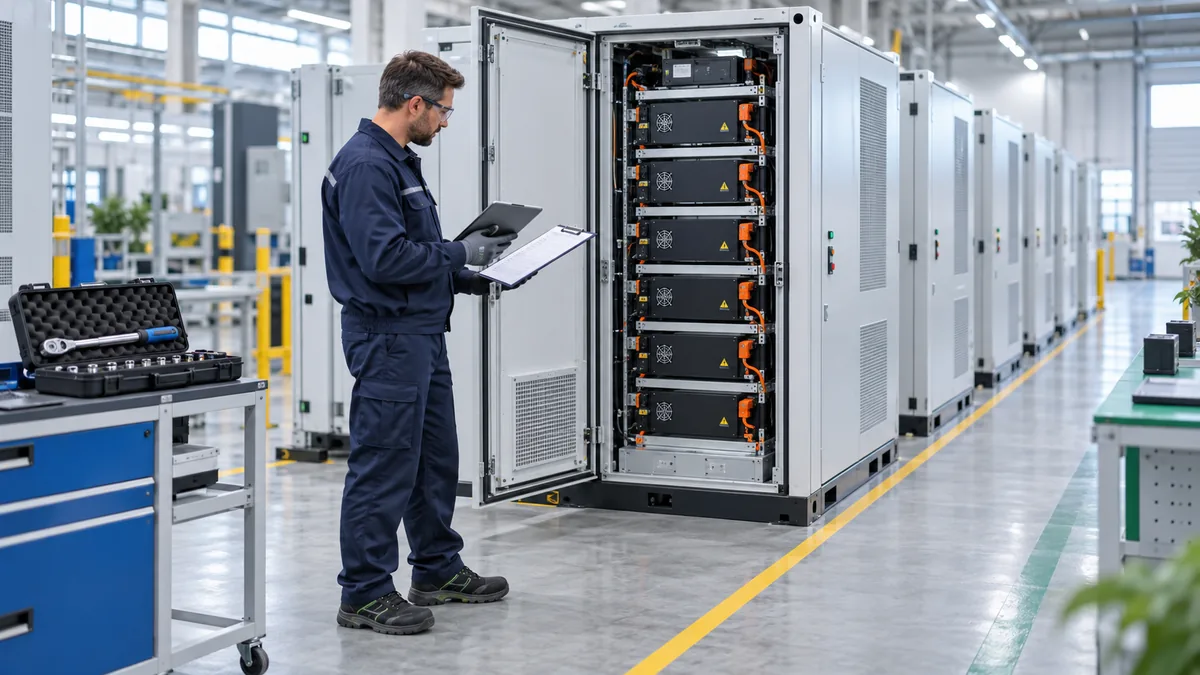
A good inverter order should end with a commissioning file, not only a working screen. Ask the installer or supplier to keep firmware version, battery protocol settings, PV input readings, grid readings, CT direction test, export-control test, backup transfer test, alarm list, monitoring screenshots and settings backup. This evidence helps diagnose problems later and supports warranty discussion.
SolarStorageHub reviews inverter mode, battery protocol, PV input, export control, backup output and commissioning evidence before quotation. If the inverter must support a battery package, PV array, generator or C&I ESS cabinet, share the battery model, PV string plan, grid voltage, installation country and load list through the Contact page.
When a power storage inverter is the right choice
A power storage inverter is the right format when the buyer needs one system to manage PV, battery charging, AC loads, grid interaction and backup. It can work for home energy storage, small commercial storage, off-grid sites, generator support and solar-plus-storage projects. It gives the project one control point, which can simplify monitoring and service.
It is not always the only answer. Existing PV systems may need AC coupling. Larger commercial systems may need a dedicated PCS and EMS. Small portable systems may use an integrated power station instead. The right inverter choice depends on site mode, grid rules, battery platform, PV input and service expectations.
Related buyer guide: Inverter grid mode, export control and battery protocol are core custom-system decisions. Read Custom Solar Energy Storage Solutions Checklist: Battery, Inverter and PV.
Related buyer guide: The power storage inverter guide explains grid mode, battery protocol and export evidence. Read 18kW Three Phase Solar Inverter Checklist: Battery Protocol and PV Input.
For a concrete three-phase example, review the rated output, battery-side current, PV input limits, grid mode and commissioning questions on the 18kW three-phase solar inverter product page.
FAQ
What is a power storage inverter?
It is an inverter used to manage battery storage, PV input, AC loads and grid interaction in a solar or backup power system.
Is rated kW enough to choose an inverter?
No. Buyers must also check battery voltage, BMS protocol, PV input, grid mode, export control, backup behavior and commissioning support.
Why does battery protocol matter?
Battery protocol controls SOC reading, charge current, discharge limits, alarms and protection behavior between the inverter and BMS.
What causes export-control errors?
Common causes include reversed CT direction, wrong meter location, incorrect export-limit settings or untested monitoring logic.
Can one inverter work with any LiFePO4 battery?
No. The voltage range, current limit, CAN or RS485 protocol and firmware compatibility must be checked.
What should be included in commissioning evidence?
Include firmware version, settings backup, PV readings, battery communication, export-control test, backup transfer test and monitoring screenshots.
When should SolarStorageHub review the inverter choice?
Before ordering, especially when the system uses an existing battery, three-phase loads, export limitation, generator input or critical backup loads.
Related SolarStorageHub Resources
If you are turning this article into a buying decision, compare the relevant product families and send your inverter model, target capacity, installation country, and quantity plan for confirmation.