
BESS Decommissioning Checklist: Isolation, Records, Transport and Site Handover
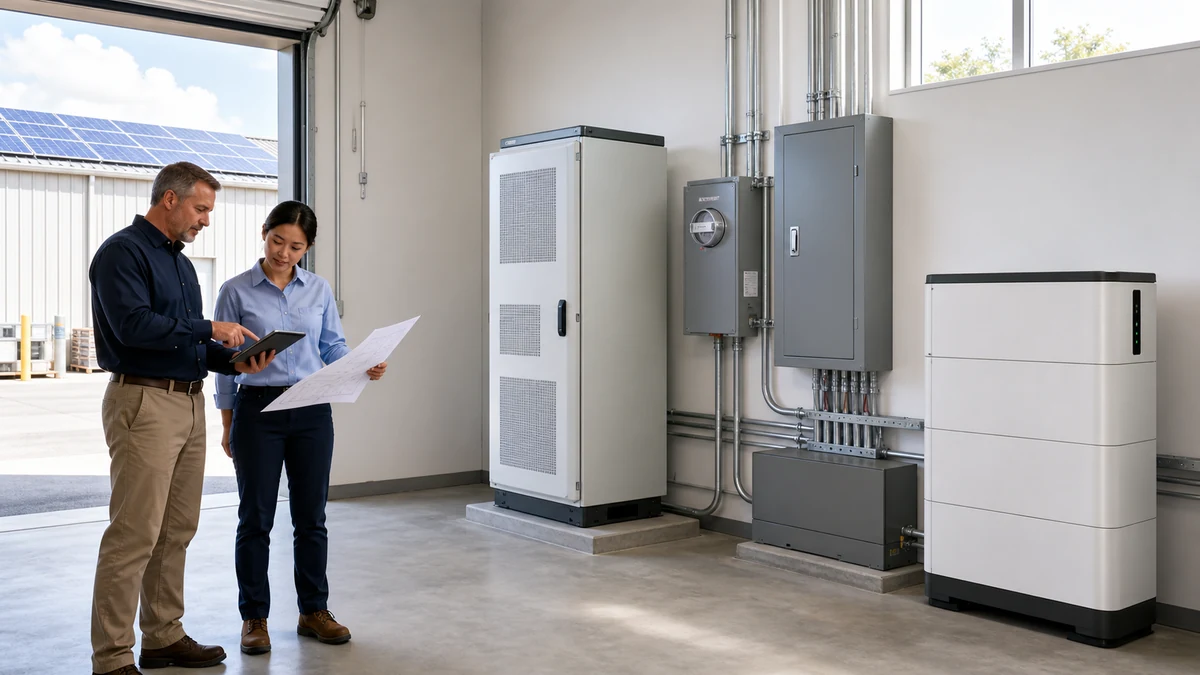
A BESS decommissioning checklist helps an owner, EPC team, service contractor or site operator retire a battery energy storage system in a controlled way. Decommissioning is more than switching off an inverter and removing cabinets. The work may involve stored electrical energy, damaged cells, refrigerant or fire-system interfaces, lifting equipment, transport rules, data records and a formal handover.
This guide is a project-planning checklist, not a substitute for the equipment manual, the site electrical safety procedure, the authority having jurisdiction or local waste and transport rules. The responsible engineer should confirm the actual battery chemistry, system voltage, isolation points, residual-energy behavior, lifting limits and approved downstream route before work starts.
What BESS decommissioning should achieve
A complete retirement plan should leave the site in a known safe state, preserve evidence about what happened to the equipment, and prevent an isolated battery or control system from being mistaken for an operating asset. It should also define whether the project is a temporary removal, a full relocation, a component replacement, refurbishment, recycling or disposal.
- Make the system electrically and mechanically safe for the next activity.
- Identify every cabinet, rack, module, inverter, transformer, HVAC unit and fire-system interface.
- Protect workers, transporters, the public and the receiving facility.
- Maintain serial-number, test, incident, chain-of-custody and final-destination records.
- Close the site handover with clear exclusions, photographs and responsible signatures.
Hold a short pre-job meeting with the owner, electrical responsible person, removal contractor, lifting supervisor, fire-safety contact and receiving-party representative where applicable. Confirm who can stop the job, who controls the keys and permits, who verifies the isolation, who calls the emergency service and who accepts the equipment at the next destination. Record weather limits, access restrictions, working hours, communications method and the location of the latest drawings. A written role list prevents a common failure mode in which everyone assumes another party has checked an auxiliary supply or transport condition.
Use one equipment register throughout the project. Give each cabinet, rack, module, inverter and package a stable identifier, and keep the identifier on photographs, test sheets, lifting notes and receiving documents. If a serial number cannot be read, record that fact and use a temporary traceable ID rather than inventing a replacement number.

Define the decommissioning boundary
Write the boundary in plain language before anyone opens a cabinet. A “system” may include battery racks, DC combiners, PCS equipment, medium-voltage equipment, auxiliary power, HVAC, fire detection and suppression, network gateways, meters and foundations. A supplier may be responsible only for the battery enclosure, while the owner or EPC team retains responsibility for the switchgear, civil works and permits.
Use the actual asset list as the starting point. A containerized BESS may have a different removal boundary from an outdoor cabinet; the battery cabinet versus container checklist helps identify the affected layout and auxiliary interfaces.
| Boundary item | Question to answer | Evidence to retain |
|---|---|---|
| Battery DC equipment | Which racks, modules, fuses and busbars are included? | Single-line diagram, serial list and isolation record. |
| PCS and AC equipment | Will the inverter, transformer and switchgear remain in place? | Marked drawings, test status and ownership note. |
| Auxiliary systems | Who disconnects HVAC, lighting, fire detection and communications? | Interface checklist and contractor sign-off. |
| Building and civil works | Will anchors, cable trays, bunds or foundations be removed? | Close-out photographs and reinstatement scope. |
Review the records before isolation
Collect the latest drawings and operating evidence before the system is made unavailable. The record set should include the approved single-line diagram, battery and PCS manuals, commissioning results, alarm history, maintenance logs, firmware versions, incident reports, warranty terms, transport documents and any previous modification notices. Compare the drawings with the installed equipment; an old drawing must not be treated as proof that a conductor or auxiliary supply is absent.
For a broader operating record, compare the C&I ESS maintenance checklist and the commissioning and handover checklist.
Plan the isolation and lockout sequence
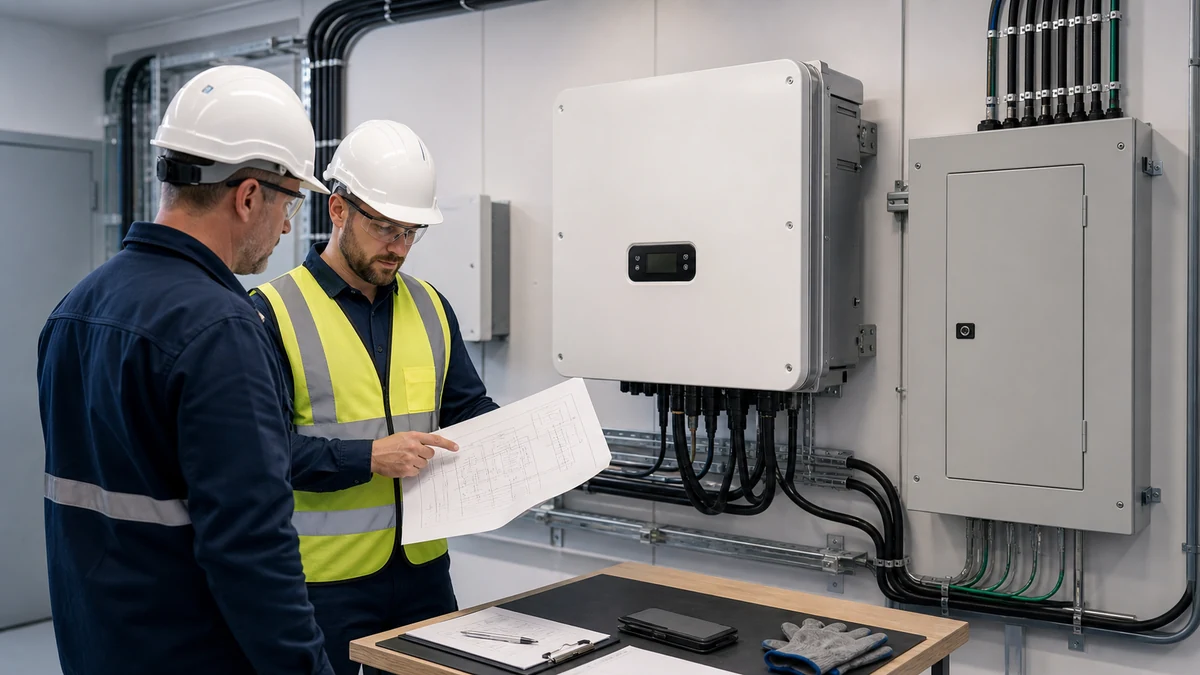
Isolation should be written as a step-by-step sequence by a qualified person who understands the site. It normally addresses grid-side isolation, auxiliary supplies, PCS DC and AC disconnects, battery rack contactors, control power, emergency-stop circuits and any external source that can backfeed the equipment. Do not assume that an open AC breaker makes the battery safe: DC energy, capacitors, control circuits and parallel cabinets may remain energized.
Use the site’s approved lockout/tagout method, identify the person who applies each lock, and record verification of absence of voltage or other hazardous energy using equipment suitable for the measured category. The OSHA control-of-hazardous-energy reference is useful background, but local requirements and the site procedure govern the work.
Control residual energy and battery condition
Record the state of charge, alarms, temperature, insulation status and visible damage before disconnecting modules. The target state of charge for transport or storage depends on the battery manufacturer, carrier and local rules; it must not be guessed from a generic percentage. If a rack is hot, swollen, leaking, smoking, mechanically damaged or showing an unexplained alarm, stop routine removal and escalate to the site emergency and battery-safety process.
- Confirm the battery management system status and last known event log.
- Identify damaged, quarantined or suspect modules separately from normal equipment.
- Protect exposed terminals and prevent accidental reconnection.
- Use a documented decision for discharge, transport, refurbishment or recycling.
Inspect the cabinet and work area
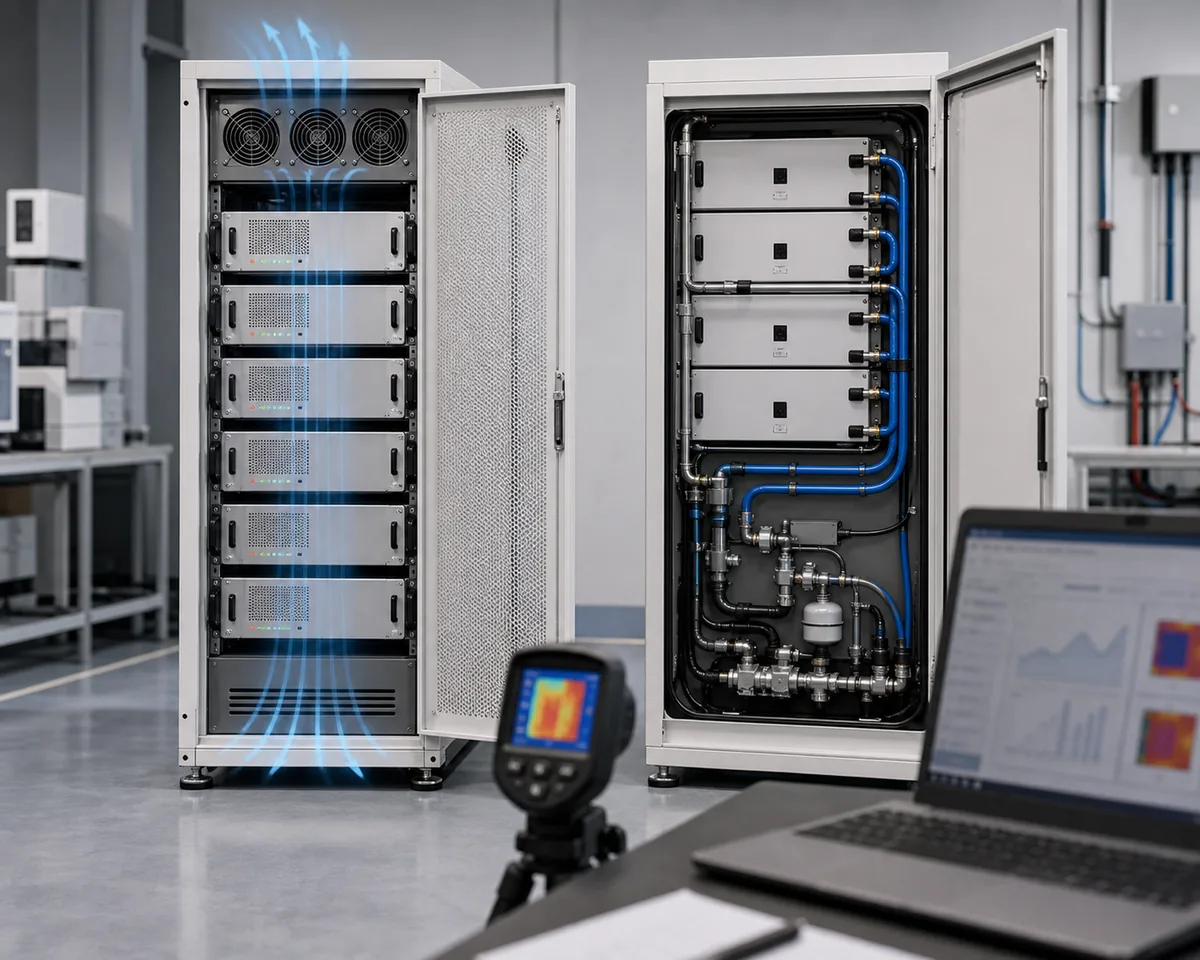
Before lifting or opening equipment, inspect doors, hinges, racking, busbars, glands, cable trays, floor loading, drainage, ventilation, fire detection and access routes. Photograph the condition and mark hazards such as water ingress, corrosion, loose panels, damaged lifting eyes or blocked egress. A cabinet that looks intact from outside may still contain a damaged module or a trapped auxiliary source.
Prepare lifting, packing and transport
Confirm the actual mass, center of gravity, lifting points, pallet or frame, route width, door height, floor loading and vehicle requirements. The removal plan should assign a lifting supervisor, define exclusion zones and state what happens if the equipment cannot be moved as planned. Keep battery modules secured against movement, protect terminals, prevent water ingress and label each package with the information required by the carrier and receiving facility.
Transport classification, packaging, labeling and documentation vary by jurisdiction, battery condition and carrier. If equipment is damaged or suspected of being unsafe, use the approved dangerous-goods and emergency route rather than treating it as ordinary freight.
Separate reuse, refurbishment and waste decisions
Do not mix assets that have different safety or commercial destinations. A healthy cabinet for redeployment needs an engineering assessment and traceable test evidence. A module for recycling needs an approved receiving route. A damaged module needs a quarantine and emergency plan. Keep the decision record with the serial number, condition, measured data, photographs and responsible approval.
Review the applicable environmental, waste and battery-transport framework with the owner, carrier and downstream facility. Classification depends on the equipment condition, jurisdiction and approved receiving route; do not apply one country’s waste category as a universal rule.
| Disposition | Minimum decision evidence | Common mistake to avoid |
|---|---|---|
| Redeploy | Condition assessment, insulation and functional test plan, ownership approval. | Assuming a quiet alarm history proves fitness for a new site. |
| Refurbish | Failed-part list, repair boundary, retest criteria and warranty responsibility. | Removing modules before recording the original fault state. |
| Recycle | Approved downstream facility, packaging and chain-of-custody records. | Sending batteries to a general scrap route without confirmation. |
| Quarantine | Location, access control, monitoring and escalation owner. | Storing a suspect battery beside normal inventory. |
Close out fire, HVAC and control interfaces
Removing a cabinet can leave an alarm loop, suppression pipe, smoke detector, HVAC circuit, network switch or emergency-stop circuit in an incomplete state. The responsible specialists should isolate, cap, remove or reconfigure each interface as defined by the boundary. Do not disable a site-wide fire or safety system simply because one battery cabinet is being removed.
Use the C&I ESS fire-safety checklist to identify affected detection, suppression, ventilation and handover records.
Preserve data and cybersecurity access
Export required BMS, PCS, EMS, meter and alarm records before deleting accounts or wiping controllers. Confirm which records are retained for warranty, incident review, environmental reporting or legal reasons. Then disable remote accounts, revoke temporary contractor access, return keys and tokens, and remove the retired asset from monitoring dashboards. Keep an approved archive rather than leaving credentials active on a disconnected gateway.
Use the BESS cybersecurity checklist for account and network close-out, and retain the supporting evidence with the project records.
Inspect the site after removal
After the equipment leaves, inspect exposed conductors, cable ends, penetrations, floors, anchors, bunds, drainage, signage, fire interfaces and weather seals. Cap or terminate cables according to the electrical design, remove trip hazards and repair the enclosure or building where the scope requires it. The site should not be described as “safe” until the responsible person has verified the final state against the boundary.
Build the final handover pack
The handover pack should make the project understandable to someone who was not present during removal. Include the final marked-up drawings, isolation and test records, photographs, serial-number disposition, damage report, transport documents, downstream receipt, open-item list, access-control record and responsible signatures. If a component remains energized, operational or under another owner’s control, state that clearly.
For a new or replacement project, the installer resources guide can be used to structure the next site survey and commissioning package.
For broader procurement and lifecycle records, keep the completed pack with the Battery Storage Buyer Resources Hub and the relevant C&I ESS factory audit record.
Questions to ask before approving the work
Can a BESS be removed while the site is operating?
Sometimes, but only when the approved method separates the operating equipment, confirms backfeed controls and defines the impact on fire, HVAC, communications and protection systems. A live-site plan needs a named responsible engineer and a clear emergency response.
Is opening the battery cabinet enough to prove it is safe?
No. The cabinet may contain DC energy, capacitors, control power or parallel sources. Follow the approved isolation, test and verification sequence for the actual system.
Should every removed module be recycled?
Not necessarily. Reuse, refurbishment, quarantine and recycling are different decisions. Each path needs evidence about condition, ownership, testing and the approved receiving party.
What should be photographed?
Photograph nameplates, serial numbers, alarms, cable ends, isolation points, lifting condition, damage, packaging, transport seals and the final site condition. Keep the file names linked to the equipment record.
Who signs the final handover?
The project should name the owner representative, electrical responsible person, removal contractor and receiving or waste representative as applicable. Signatures should identify what was checked and what remains open.
A disciplined BESS decommissioning checklist turns a high-risk removal into a traceable project. Define the boundary, isolate the real energy sources, separate damaged equipment, protect transport and close the site with evidence that explains exactly what was removed, what remains and who accepted the final condition.
Related SolarStorageHub Resources
If you are turning this article into a buying decision, compare the relevant product families and send your inverter model, target capacity, installation country, and quantity plan for confirmation.