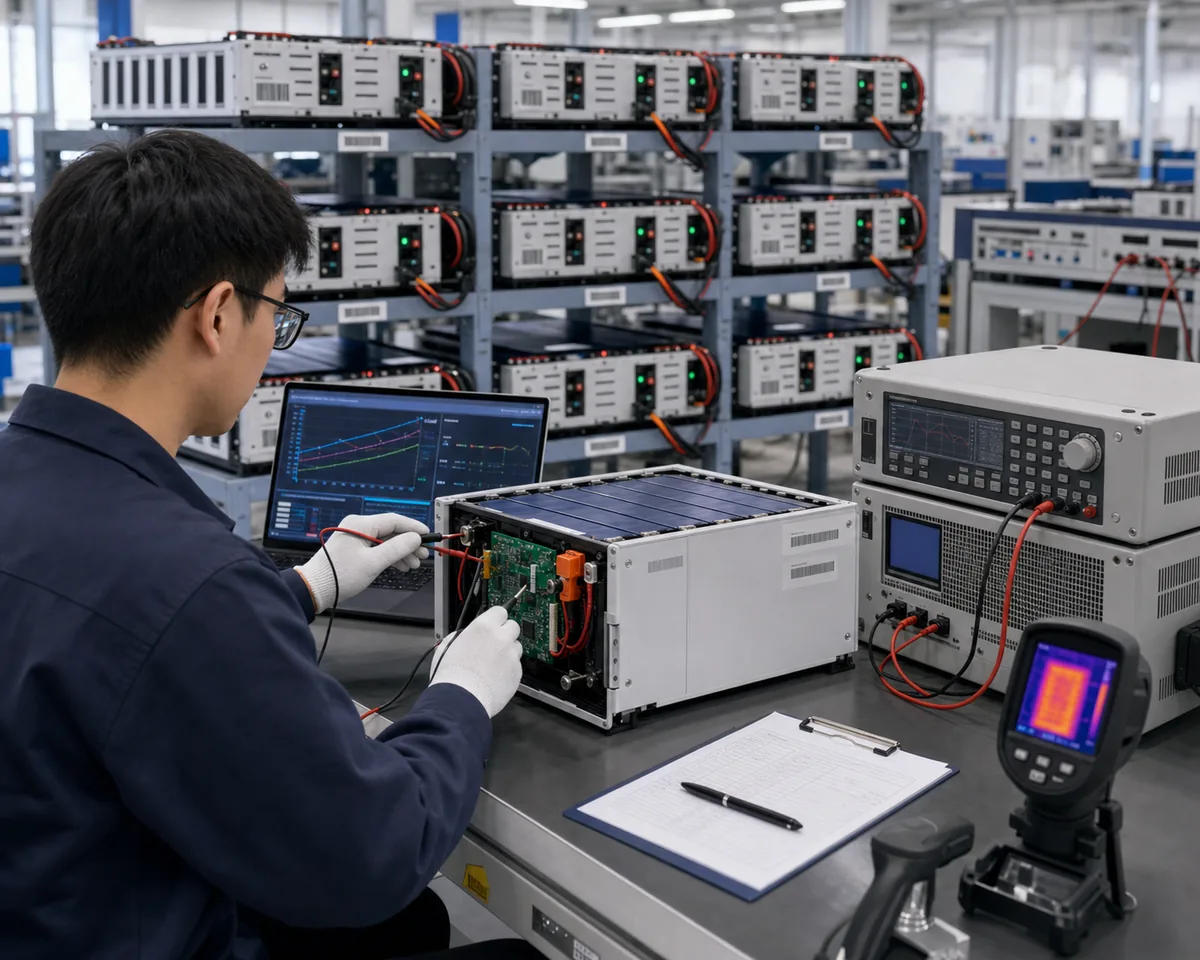

How to Choose an OEM LiFePO4 Battery Supplier for Private-Label Home Storage
Procurement note: Choosing an OEM LiFePO4 battery supplier is not only a price comparison. Private-label buyers also need stable engineering support, inverter compatibility, documentation, packaging control, warranty clarity, and a supplier that can repeat the same quality over multiple batches.
Home energy storage distributors often start with a simple request: a wall-mounted battery or floor-mounted battery with their logo. The visible enclosure matters, but the business risk sits deeper. If the BMS does not match local inverter brands, if certification documents do not match the model, or if after-sales records are weak, the private-label program can become difficult to scale.
1. Define the product range before asking for branding
Start by deciding which customer segment the battery serves. A 5kWh wall battery, a 10kWh stackable system, and a 30kWh floor-mounted battery do not solve the same problem. The supplier should help connect voltage, capacity, current, communication, enclosure, and installation method to the target market.
| Decision | Why it matters | Buyer question |
|---|---|---|
| Voltage platform | Controls inverter compatibility | 48V/51.2V or high-voltage? |
| Capacity range | Defines customer segment | 5kWh, 10kWh, 15kWh, 30kWh? |
| BMS protocol | Affects commissioning | Which inverter brands are tested? |
| Enclosure design | Affects installation and branding | Wall, rack, floor, stackable? |
| Documentation | Affects sales and compliance | Which model is covered? |
2. Ask for proof of inverter compatibility
Private-label buyers should not rely on a generic claim that a battery supports CAN or RS485. Ask for tested inverter models, protocol settings, screenshots, cable pinouts, and firmware notes. If your market uses specific inverter brands, test those combinations before placing a large order.
For low-voltage larger home systems, a product such as Elecno's 51.2V 600Ah 30kWh floor-mounted LiFePO4 battery can be part of a private-label discussion, but the inverter and installation scenario still need to be checked.
3. Review documents before artwork
Logo design is easy to discuss. Documentation is easier to neglect. Before confirming a private-label order, request datasheet, user manual, warranty terms, SDS/MSDS, UN38.3, available IEC or market documents, and a model list that shows exactly which products are covered.
IEC 62619 is one common safety reference for industrial lithium cells and batteries. The official IEC page for IEC 62619:2022 describes safety requirements and tests for industrial lithium batteries. Buyers should confirm whether the supplier's report, certificate, or declaration is accepted in the destination market.
4. Check packaging and batch consistency
Private-label quality is visible in the packaging, manual, carton, label, accessories, and batch records. Ask how the supplier controls enclosure color, silk-screen printing, serial numbers, barcode labels, firmware versions, and accessory kits. One attractive sample is not enough if the next batch changes without notice.
For a deeper supplier review, see our OEM solar battery manufacturer checklist.
5. Clarify warranty and after-sales roles
Private-label programs need a written after-sales process. Decide who receives customer claims, who checks BMS logs, who approves replacement parts, who pays freight, and which documents are required for a claim. If the buyer sells under its own brand, the customer may never know the original manufacturer. That makes support roles important.
Before ordering, ask for sample claim forms, troubleshooting steps, and the supplier's response-time expectation. For larger distributor programs, agree on spare parts and replacement stock.
Related buyer resources
Use this article alongside SolarStorageHub's buyer resource hub when reviewing private-label supplier review, documentation quality, warranty terms, and support. For product matching, compare Home Energy Storage, C&I ESS, Solar Inverter, and Solar Panel, or contact SolarStorageHub with the inverter model, load profile, battery quantity, and destination market.
- Battery Storage Buyer Resources for linked checklists on LiFePO4 batteries, inverter compatibility, certification, shipping, installation, and warranty review.
- Home Energy Storage for residential and light commercial battery configurations.
- C&I ESS for commercial and industrial storage project planning.
- Solar Inverter and Solar Panel product paths for system-level matching.
- External reference: U.S. Department of Energy battery storage basics.
Editorial note: SolarStorageHub checks battery specifications, inverter communication, certification documents, installation assumptions, and buyer support questions before turning a topic into a procurement checklist.
Related buyer resources: For private-label buyers, the buyer hub and company capability guide help connect branding requests with quality checks, documents, warranty, and shipment planning. Start with the Battery Storage Buyer Resources Hub, compare options in the Battery Storage Product Selection Guide, review trust and document checks in the Warranty, Certification, Shipping and OEM Buyer Guide, and confirm supplier support in the SolarStorageHub Company Capability and Service Support Guide. For project details, use the Solar Battery RFQ Checklist before contacting the team through Contact.
Related sample order guide: For OEM supplier selection, the sample order checklist is a practical next step after shortlisting a private-label LiFePO4 battery supplier. Read LiFePO4 Battery Sample Order Checklist: What Distributors Should Test Before a Batch Purchase.
Related buyer guide: For private-label supplier selection, this documentation checklist shows which files should be approved before batch production. Read OEM LiFePO4 Battery Documentation Checklist for Private-Label Buyers.
FAQ
What is the first thing to check when choosing an OEM LiFePO4 battery supplier?
Start with product fit and inverter compatibility. Branding only helps if the battery works reliably in the target market.
Can any battery be sold under a private label?
Not automatically. The buyer must confirm branding rights, documentation scope, packaging design, warranty wording, and destination-market requirements.
Why is BMS protocol support important?
BMS communication affects SOC accuracy, current limits, alarm reporting, and commissioning. Poor protocol support creates after-sales problems.
Should buyers request samples before a bulk order?
Yes. Samples should be tested with local inverter brands, installation accessories, monitoring setup, and packaging requirements.
What documents should an OEM supplier provide?
At minimum, request datasheet, manual, warranty terms, SDS/MSDS, transport documents, available safety reports, and model-matching statements.
How can distributors reduce private-label risk?
Use a written product specification, approved artwork files, batch inspection records, tested inverter list, and clear warranty claim process.
Conclusion
A good OEM LiFePO4 battery supplier should make private-label sales easier, not only cheaper. Buyers should verify product fit, BMS communication, documentation, packaging, batch consistency, and after-sales roles before committing to volume orders. For OEM battery projects, share target capacity, inverter brands, branding needs, and destination market through the SolarStorageHub contact page.
Related SolarStorageHub Resources
If you are turning this article into a buying decision, compare the relevant product families and send your inverter model, target capacity, installation country, and quantity plan for confirmation.