
OEM Solar Battery Manufacturer Checklist: How Distributors Can Choose a Reliable LiFePO4 Partner
Choosing an OEM solar battery manufacturer is not the same as buying a standard product from a catalog. Distributors and brand owners need a partner that can deliver consistent quality, stable documentation, private-label support, technical customization and long-term after-sales service.
The wrong supplier can create hidden costs: delayed certifications, inverter compatibility problems, unclear warranty responsibilities, unstable packaging quality or slow technical response. The right supplier becomes part of your growth engine.
Use this checklist before selecting a LiFePO4 solar battery OEM partner.
1. Confirm real manufacturing capability
A reliable manufacturer should be able to explain how products are built, tested and traced. Look beyond claims such as high quality or advanced technology. Ask for specific evidence.
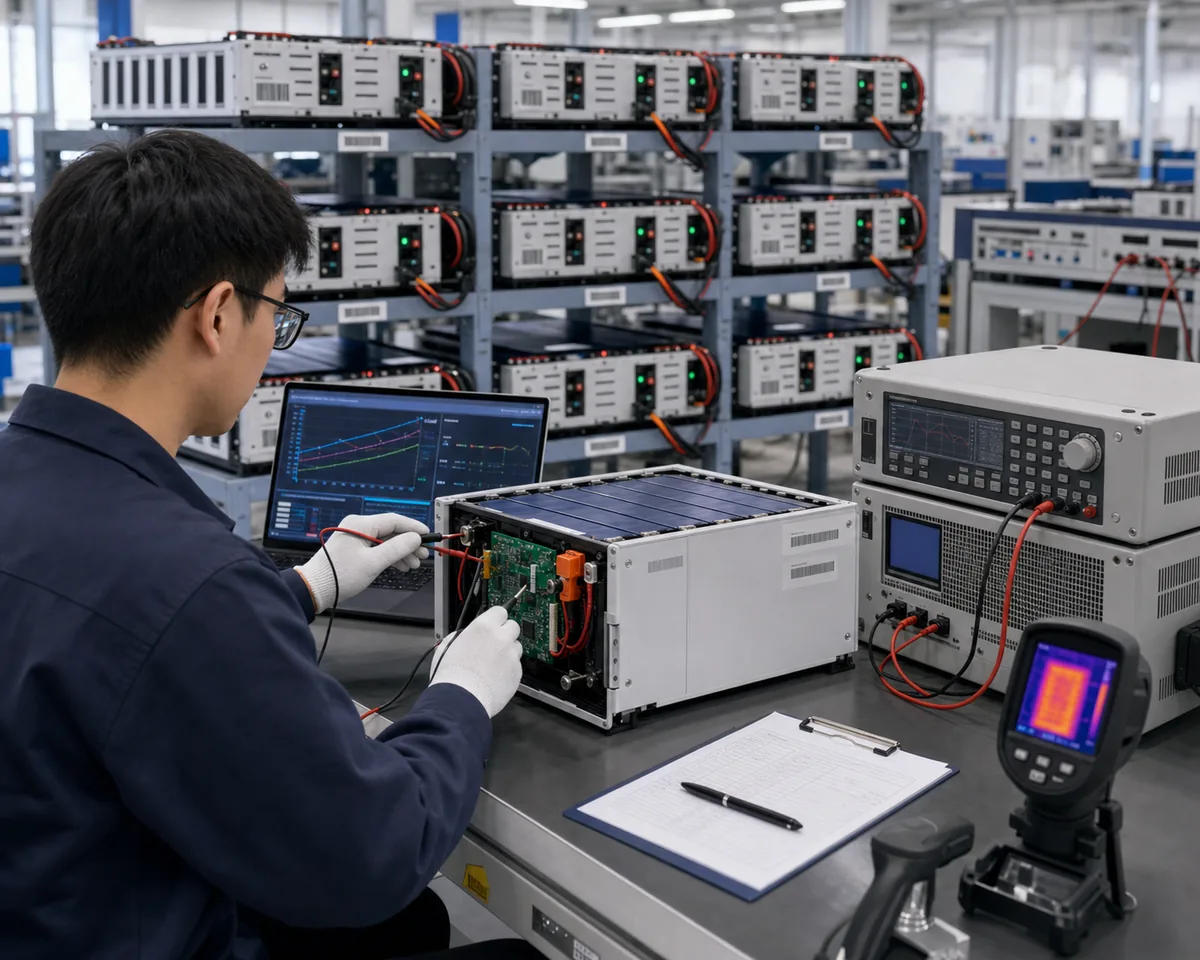
Request factory photos or video tour, production process overview, cell incoming inspection process, BMS testing process, aging test procedure, quality control checkpoints, production capacity and traceability system.
2. Check certification alignment
Solar battery projects often cross borders. Certification needs vary by market and application. A battery that is acceptable in one country may need extra documentation in another.
Ask which models have or can support CE, IEC documentation, UN38.3, MSDS, RoHS, ISO quality management documentation and UL-related documentation where required by the target market. Make sure certification documents match the exact product model, voltage, capacity and brand arrangement.
3. Evaluate BMS and inverter compatibility
For solar storage, the BMS is central to safety and user experience. It protects the battery and communicates with the inverter. Poor communication can cause SOC errors, unexpected shutdowns or limited charging.
Ask your manufacturer for supported inverter brands, CAN/RS485 protocol list, firmware update process, parallel operation rules, alarm code documentation and remote troubleshooting method.
4. Review customization options
OEM projects may require more than a logo. You may need product appearance, capacity, communication protocol, packaging, manuals, labels, app branding or warranty documents customized for your market.
Clarify MOQ for private label, sample lead time, mass production lead time, logo and enclosure customization, packaging design, manual and datasheet support, warranty document format and spare parts policy.
5. Compare total project value, not just unit price
The cheapest battery is rarely the best OEM choice. A low price can hide weaker cells, thinner enclosures, limited BMS functions, poor packaging, incomplete documentation or slow support.
Compare suppliers by cost per usable kWh, cycle life condition, warranty terms, failure response process, certification readiness, sample quality, delivery reliability and communication speed.
6. Ask for a pilot order process
Before scaling, run a pilot order. Test installation, inverter communication, packaging, manuals, monitoring and after-sales response. A pilot order reveals problems before they reach your customers.
A practical pilot process includes technical requirement confirmation, sample production, factory test report, shipping and packaging review, local inverter test, installer feedback and final changes before mass production.
7. Build long-term support into the agreement
OEM battery cooperation does not end when products ship. Your manufacturer should support troubleshooting, documentation updates, firmware questions and warranty claims.
Agree on response time, warranty claim evidence, replacement parts process, technical contact person, documentation update schedule and product change notification.
Conclusion
A strong OEM solar battery manufacturer should provide more than LiFePO4 cells in a box. The right partner brings manufacturing discipline, certification support, BMS knowledge, customization capability and reliable after-sales service.
Before choosing a supplier, verify factory capability, certifications, inverter compatibility, sample quality and warranty process. For distributors and brand owners, these factors determine whether a product line can scale profitably.
Elecno supports OEM/ODM LiFePO4 solar battery solutions for home energy storage, commercial backup and project-based applications. For your next battery program, request a datasheet, certification package, inverter compatibility list and sample plan.
Buyer review notes
A good OEM partner should make quality visible before production starts. For private-label programs, ask for battery photos, cell traceability, BMS settings, inverter compatibility notes, carton artwork, and warranty wording before approving the first batch.
For system matching, start with Home Energy Storage, then compare Solar Inverter, Solar Panel, and Battery Storage Buyer Resources. For project-specific checks, use the Contact page.
Related technical checklists: choose oem lifepo4 battery supplier private label home storage and lifepo4 battery factory acceptance test oem buyers. External reference: UL Solutions energy storage system testing and certification.
Procurement checks to confirm before ordering
- Review factory test records and sample inspection results.
- Confirm supported inverter brands and communication protocols.
- Check whether private-label manuals, labels, and packaging match the destination market.
- Define response time for warranty cases, replacement parts, and firmware support.
SolarStorageHub editorial note: This guide is reviewed from a distributor and EPC buyer perspective, with attention to battery configuration, inverter compatibility, certification scope, shipment evidence, installation assumptions, and warranty support.
Related buyer guide: For OEM manufacturer review, this documentation checklist adds label, manual, certificate and warranty file requirements. Read OEM LiFePO4 Battery Documentation Checklist for Private-Label Buyers.
FAQ
What is the most important factor when choosing an OEM battery manufacturer?
Safety and consistency come first. Certifications, BMS design, testing process and traceability are more important than the lowest unit price.
Can an OEM battery use my own brand?
Yes, if the manufacturer supports private-label production. Confirm MOQ, labeling, packaging and documentation requirements before ordering.
How should I test a sample battery?
Test inverter communication, charge/discharge performance, monitoring, packaging, documentation and installer experience before placing a mass order.
Related Buyer Resources
For broader product matching, compare home energy storage, C&I ESS, solar inverter, and solar panel options, or use the Battery Storage Buyer Resources hub.
Related SolarStorageHub Resources
If you are turning this article into a buying decision, compare the relevant product families and send your inverter model, target capacity, installation country, and quantity plan for confirmation.