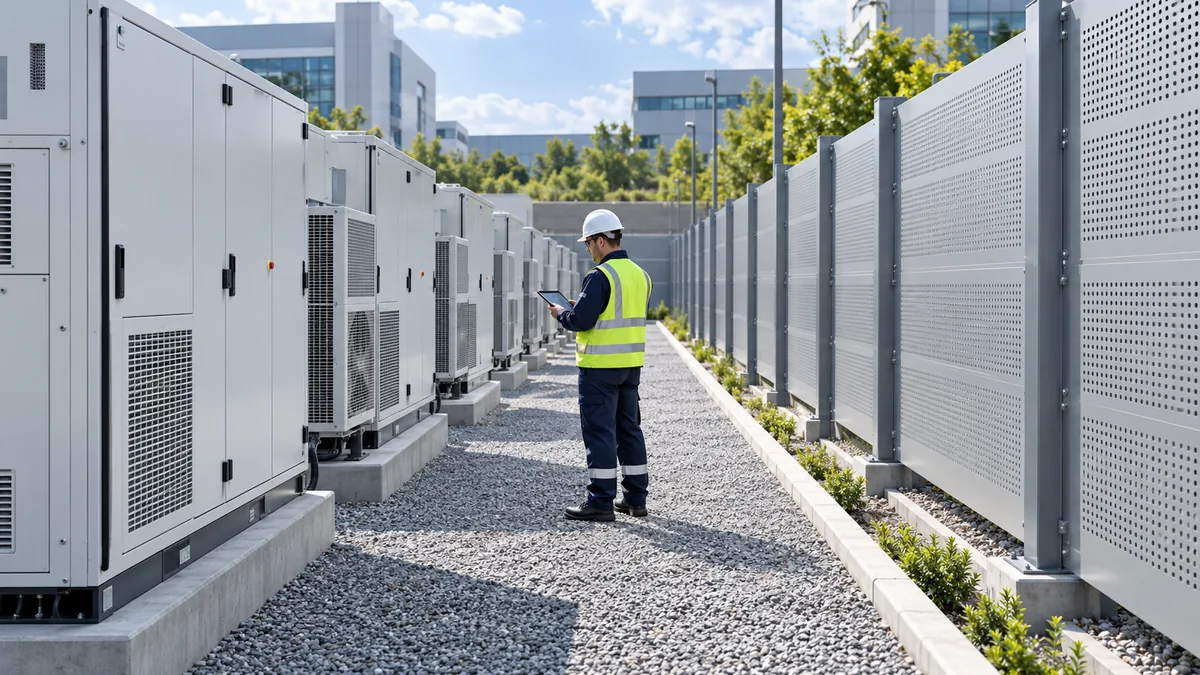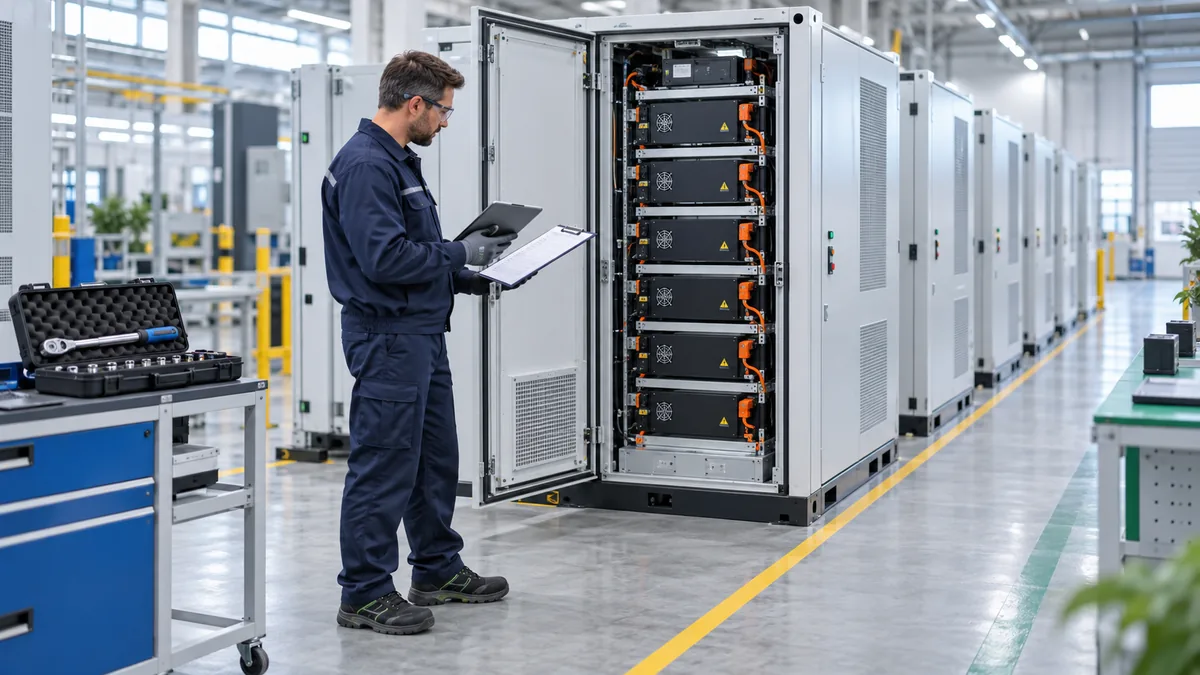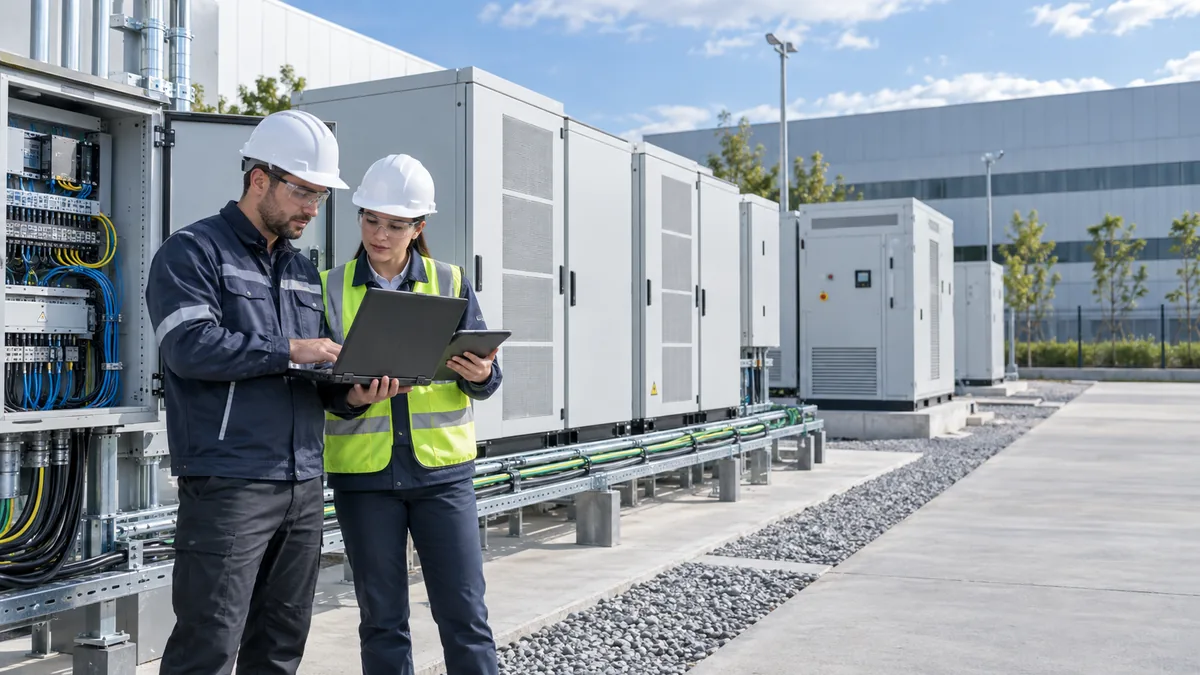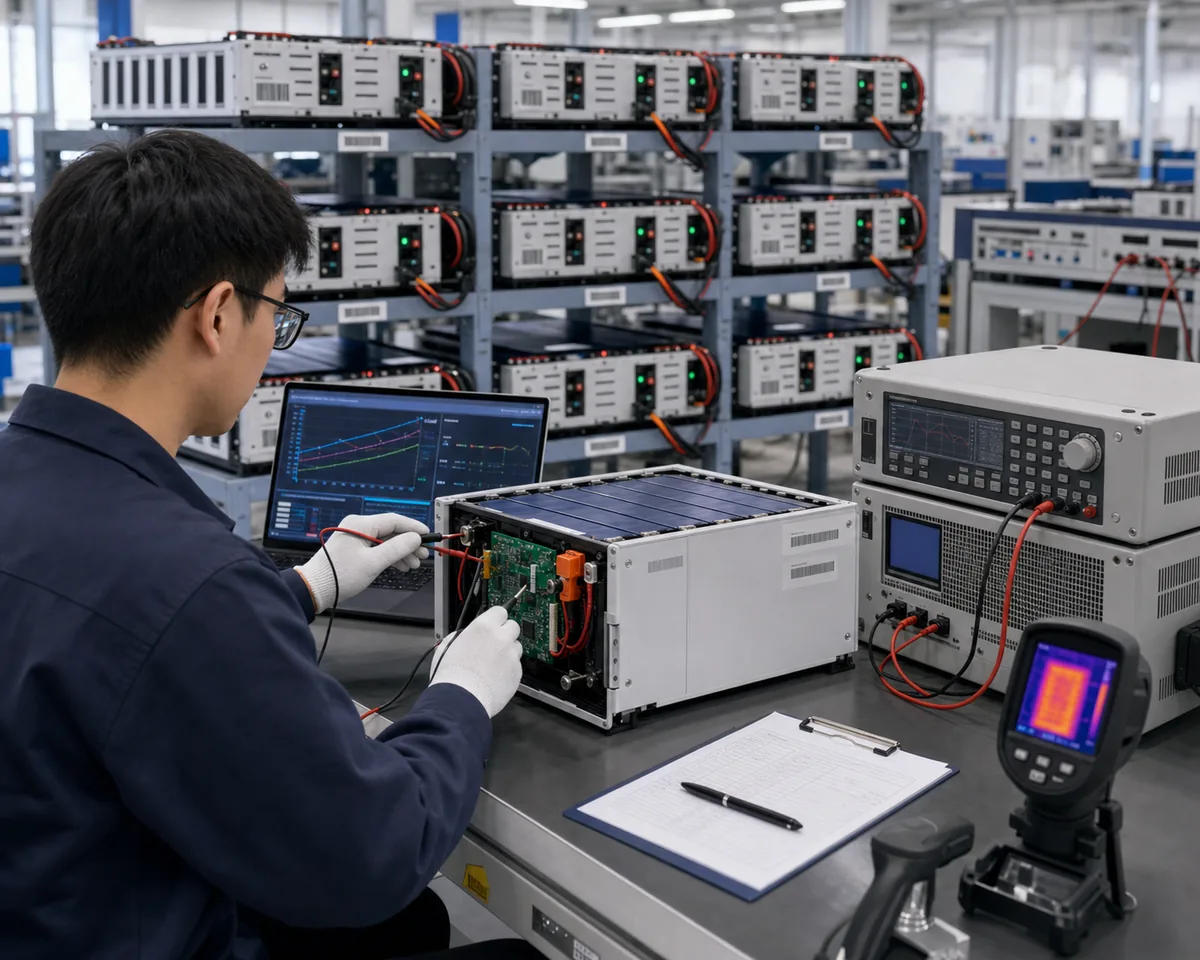

How to Size a LiFePO4 Battery Bank for a Small Commercial Solar Project
Technical note: This guide is written for distributors, EPC teams, and installers who need a practical first-pass method for sizing a LiFePO4 battery bank. Final values should always be checked against the inverter manual, battery datasheet, local electrical code, and the actual site load profile.
Small commercial solar projects often look simple from a distance. A shop owner wants backup power for lighting, refrigeration, point-of-sale equipment, a router, and a few office loads. A farm office wants to reduce diesel generator runtime. A small warehouse wants to shift part of its evening consumption into stored solar energy. The project size may be modest, but a poor battery sizing decision can still create expensive callbacks.
The safest way to discuss a LiFePO4 battery bank is to separate three questions: how much energy the site needs, how much power it needs at one time, and how the system should behave during grid failure or peak-tariff periods. If those questions are mixed together, the battery may look correctly sized on paper while still failing in operation.
Before turning those three questions into a supplier RFQ, use the small commercial and industrial energy storage system checklist to define operating priorities, equipment boundaries, site inputs and responsibility hand-offs.
1. Start with a load profile, not a battery model
A battery model is not a sizing method. Before choosing a cabinet, rack module, or floor-mounted unit, collect a simple daily load profile. For each load, record running power, expected operating hours, and whether it is essential during backup.
| Load type | Typical sizing question | Project risk |
|---|---|---|
| Refrigeration | Average energy over several hours | Compressor starting current and temperature sensitivity |
| Lighting | Continuous evening demand | Usually predictable, but often underestimated |
| POS and network | Low power but mission critical | Needs clean backup and reliable inverter transfer |
| Pumps and motors | Running power plus start surge | Can trip inverter or BMS protection |
| Air conditioning | High variable demand | Can consume the usable battery capacity quickly |
For early quotations, use conservative numbers. If the buyer only gives a monthly electricity bill, ask for the equipment list before promising battery runtime. A monthly bill helps estimate energy consumption, but it does not show peak power, motor surge, or which loads must run during an outage.
2. Convert the load profile into usable battery energy
The common first calculation is simple:
Required battery energy = daily essential load energy / usable depth of discharge / inverter efficiency allowance.
For example, if the essential load needs 18kWh during the backup period, a buyer should not select an 18kWh nominal battery bank. A realistic design may allow for depth of discharge limits, inverter conversion loss, temperature derating, battery aging, and a reserve margin. In many commercial backup projects, that can push the required nominal capacity into the 25-30kWh range or higher.
This is why Elecno's 51.2V 600Ah 30kWh floor-mounted LiFePO4 battery is often discussed as a middle-size option rather than a universal answer. It may be suitable for a shop, farm office, telecom room, or light commercial backup profile, but only after the load table is checked.
3. Check inverter power before adding battery capacity
Adding more kWh does not fix an undersized inverter. A small commercial site may have enough battery energy but still overload the inverter when refrigeration, pumps, and air conditioning start at the same time.
Ask these questions before quoting:
- What is the inverter's continuous AC output?
- What is its surge rating and surge duration?
- Does it support single-phase or three-phase output as required?
- Can the battery BMS provide the required continuous discharge current?
- Does the inverter support the battery's CAN or RS485 communication protocol?
If several loads have high starting current, consider load scheduling, soft starters, or a larger inverter. This decision should be made before the system is shipped, not during commissioning.
4. Decide the backup target clearly
Some buyers say they want backup power, but they mean different things. One customer expects two hours of emergency operation. Another expects the site to run through the night. A third wants to reduce demand charges, not survive long outages.
| Project goal | Battery sizing priority | Common mistake |
|---|---|---|
| Short backup | Power capacity and transfer reliability | Ignoring motor surge |
| Overnight operation | Usable energy and reserve margin | Assuming all nominal kWh is usable |
| Peak shaving | Cycle life and control strategy | Oversizing energy but undersizing controls |
| Solar self-consumption | Daily cycling and PV generation match | Buying storage without checking daytime surplus |
For solar production estimates, tools such as the official NREL PVWatts Calculator can help create a first estimate of PV output in the United States. It does not replace engineering design, but it is a useful reference when discussing whether there is enough solar generation to charge the battery consistently.
5. Plan expansion before the first installation
Small commercial systems often grow. A buyer may start with one battery bank and add another cabinet after seeing the first electricity bill. That expansion is easier when the first system is designed with parallel battery support, correct breaker sizing, enough wall or floor space, and an inverter that can handle the future current limit.
For rack systems, confirm the maximum number of modules per stack. For floor-mounted batteries, confirm parallel unit limits, communication addressing, cable length, and current-sharing rules. If the supplier cannot provide a parallel connection guide, treat that as a support risk.
6. Buyer checklist before quotation
- Collect a real load table with running power and operating hours.
- Separate essential loads from comfort or non-critical loads.
- Check inverter continuous power and surge rating.
- Confirm battery discharge current and communication compatibility.
- Choose a backup target in hours, not just a battery size.
- Confirm PV generation is enough to recharge the battery in the intended season.
- Leave space and electrical capacity for future expansion.
Buyer review notes
The most reliable first-pass sizing starts with a load table, not a catalog size. Refrigeration, pumps, routers, lighting, and point-of-sale equipment should be separated into essential and non-essential loads before the battery bank is quoted.
For system matching, start with C&I ESS, then compare Solar Inverter, Solar Panel, and Battery Storage Buyer Resources. For project-specific checks, use the Contact page.
Related technical checklists: what can a 30kwh lifepo4 battery run and ci ess site survey checklist before battery storage quote. External reference: NREL PVWatts Calculator.
Procurement checks to confirm before ordering
- List running power and operating hours for each essential load.
- Check inverter continuous output, surge rating, and BMS discharge current.
- Set a backup target in hours and leave reserve for battery aging.
- Use solar production estimates to confirm the battery can recharge in the intended season.
SolarStorageHub editorial note: This guide is reviewed from a distributor and EPC buyer perspective, with attention to battery configuration, inverter compatibility, certification scope, shipment evidence, installation assumptions, and warranty support.
Related runtime guide: For small commercial projects, the runtime guide adds a practical way to turn a load list into backup-hour expectations. Read How to Estimate Battery Storage Runtime: Usable kWh, Load Profile and Solar Recharge for Buyers.
Related buyer guide: For small commercial sizing, this quote checklist helps buyers provide cleaner load data before choosing battery capacity. Read C&I ESS Quote Checklist: Site Data, Load Profile and Warranty Evidence Before Pricing.
Related buyer guide: Use interval peak duration and demand targets from this guide before selecting commercial battery power and usable energy. Read C&I ESS Peak Shaving Data Checklist: 15-Minute Loads, Demand Charges and Dispatch Limits.
Related buyer guide: Battery energy sizing should be checked separately from PCS continuous power and overload requirements. Read C&I ESS PCS Sizing Checklist: kW/kWh Ratio, Overload, Reactive Power and Transformer Limits.
FAQ
How much usable energy should I expect from a LiFePO4 battery bank?
Usable energy depends on depth of discharge settings, inverter efficiency, temperature, reserve margin, and warranty conditions. For early sizing, many projects use a conservative usable range rather than assuming 100% of nominal capacity.
Can one 30kWh battery run a small commercial site?
It can support many small commercial backup profiles, but only if essential loads, inverter power, and starting current are within limits. A 30kWh battery is not a guarantee that all site equipment can run normally during an outage.
Should I size by monthly electricity bill?
A monthly bill is useful for energy context, but it is not enough for battery sizing. You still need load timing, peak demand, motor surge, and backup priority.
What is the most common sizing mistake?
The most common mistake is sizing only by kWh and ignoring inverter output, BMS current limits, and high starting current loads.
How much reserve should a buyer keep?
The reserve depends on the application, but commercial backup systems should leave enough margin for battery aging, cloudy days, load growth, and unexpected operating conditions.
When should I choose multiple battery units?
Use multiple units when the site needs more usable energy, higher discharge current, redundancy, or planned future expansion. Confirm parallel support before ordering.
Conclusion
LiFePO4 battery bank sizing should begin with the site, not the product catalog. A good quotation connects the load table, inverter capacity, usable battery energy, communication protocol, and expansion plan. For project checks, send the load list and inverter model through the SolarStorageHub contact page before finalizing the battery configuration.
Related Buyer Resources
For broader product matching, compare home energy storage, C&I ESS, solar inverter, and solar panel options, or use the Battery Storage Buyer Resources hub.
Related SolarStorageHub Resources
If you are turning this article into a buying decision, compare the relevant product families and send your inverter model, target capacity, installation country, and quantity plan for confirmation.