
LiFePO4 vs Lead Acid Battery: Which is Right for Your Solar System in 2026?
Quick Answer: LiFePO4 Wins in 2026
If you're looking for the short answer: LiFePO4 batteries are the better choice for 95% of solar installations in 2026.
While lead acid batteries have a lower upfront cost, LiFePO4 batteries offer:
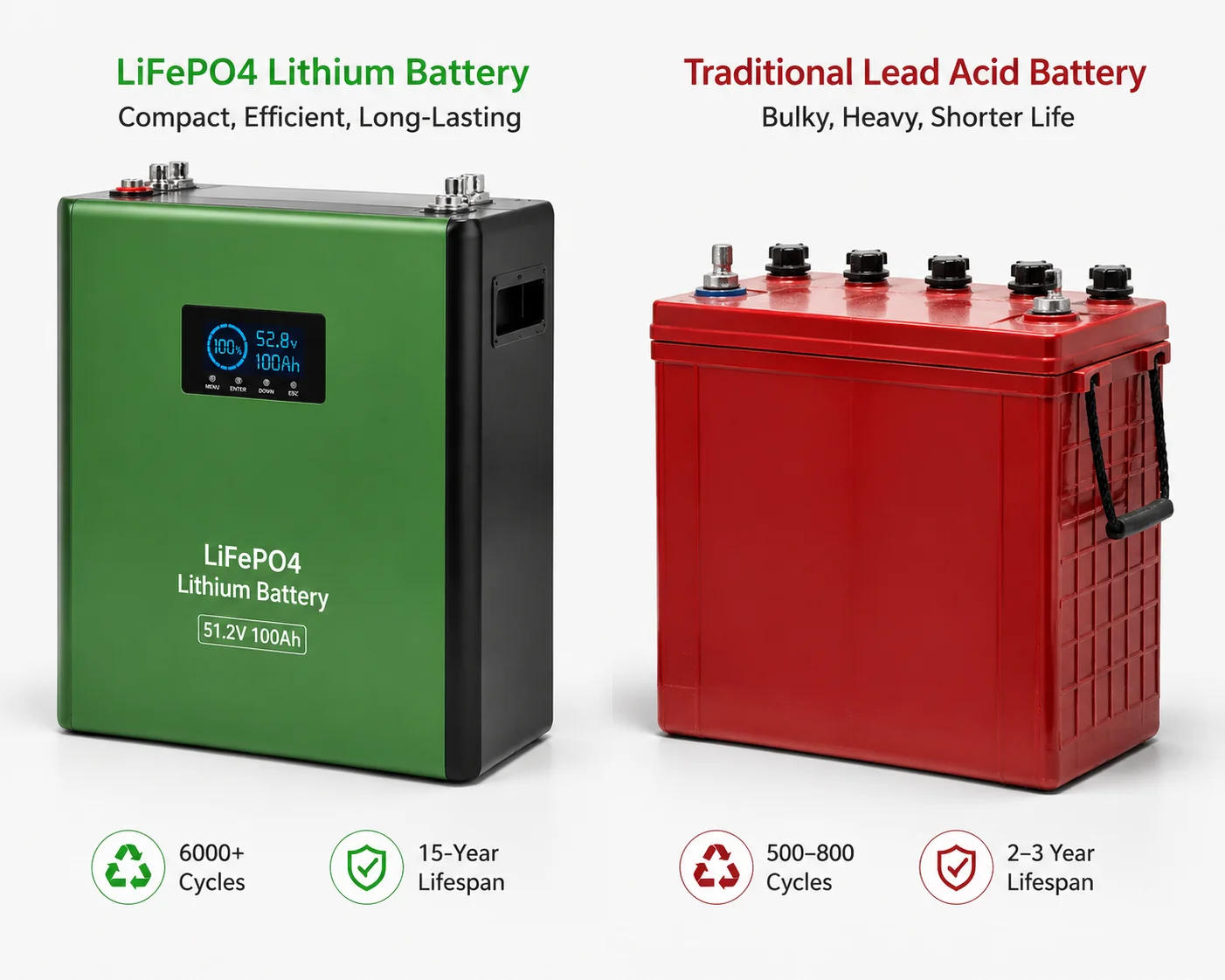
- 6x longer lifespan (10-15 years vs. 2-3 years)
- 2x usable capacity (100% DoD vs. 50% DoD)
- 3x more charge cycles (6,000 vs. 1,500)
- Zero maintenance vs. regular watering and equalization
- Better efficiency (95-98% vs. 80-85%)
The catch? LiFePO4 costs 2-3x more upfront. But over a 10-year period, LiFePO4 is actually 40-60% cheaper when you factor in replacements and efficiency losses.
Let's dive into the details so you can make an informed decision for your specific situation.
Understanding the Battery Types
What is a LiFePO4 Battery?
LiFePO4 (Lithium Iron Phosphate) is a type of lithium-ion battery that uses lithium iron phosphate as the cathode material.
Key Characteristics:
- Chemistry: LiFePO4 (LFP)
- Nominal Voltage: 3.2V per cell (12.8V for 12V battery)
- Energy Density: 90-160 Wh/kg
- Operating Temperature: -10C to 50C
- Cycle Life: 4,000-6,000 cycles at 80% DoD
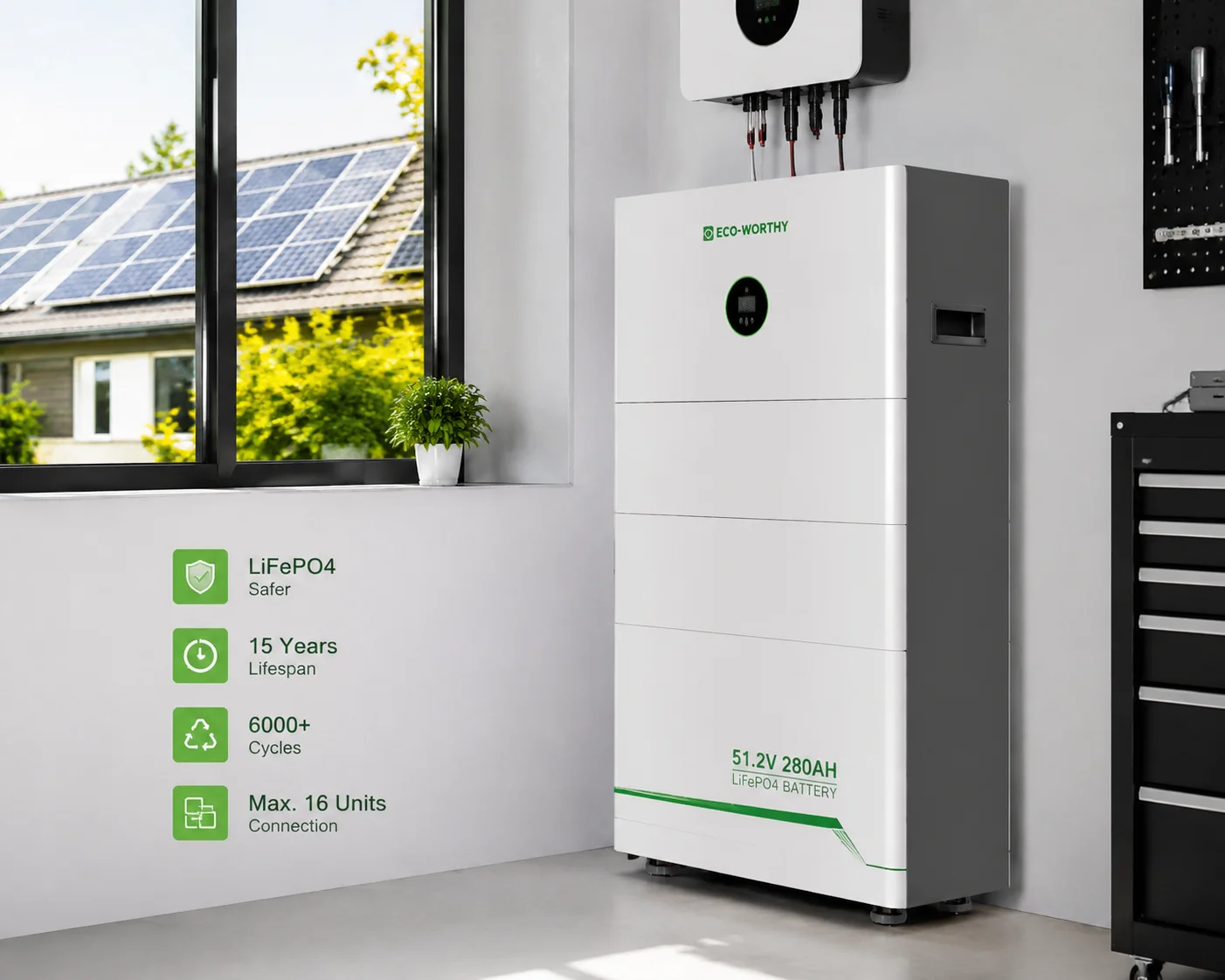
Why It Matters for Solar: LiFePO4 batteries were specifically designed for stationary energy storage applications. They prioritize safety, longevity, and stability over maximum energy density, making them ideal for home solar systems.
What is a Lead Acid Battery?
Lead acid batteries are the oldest rechargeable battery technology, invented in 1859. They use lead plates submerged in sulfuric acid electrolyte.
Types for Solar:
- Flooded Lead Acid (FLA): Requires regular maintenance, ventilation
- AGM (Absorbent Glass Mat): Sealed, maintenance-free, better performance
- Gel: Sealed, excellent deep discharge recovery, sensitive to overcharging
Key Characteristics:
- Chemistry: Pb + PbO2 + H2SO4
- Nominal Voltage: 2V per cell (12V for 12V battery)
- Energy Density: 30-50 Wh/kg
- Operating Temperature: 0C to 40C
- Cycle Life: 500-1,500 cycles at 50% DoD
Head-to-Head Comparison
1. Upfront Cost
| Battery Type | Cost per kWh | 10 kWh System Cost |
|---|---|---|
| Flooded Lead Acid | $100-150 | $1,000-$1,500 |
| AGM Lead Acid | $150-200 | $1,500-$2,000 |
| LiFePO4 | $300-500 | $3,000-$5,000 |
Winner: Lead Acid (for initial purchase only)
Reality Check: A "10 kWh" lead acid battery only gives you 5 kWh of usable power (50% depth of discharge limit). To get 10 kWh usable, you need a 20 kWh lead acid bank, costing $2,000-$4,000.
2. Usable Capacity (Depth of Discharge)
| Battery Type | Recommended DoD | Usable Capacity (10 kWh nominal) |
|---|---|---|
| Flooded Lead Acid | 50% | 5 kWh |
| AGM Lead Acid | 50-60% | 5-6 kWh |
| Gel Lead Acid | 60-70% | 6-7 kWh |
| LiFePO4 | 80-100% | 8-10 kWh |
Winner: LiFePO4
3. Cycle Life and Lifespan
| Battery Type | Cycles at Rated DoD | Expected Lifespan |
|---|---|---|
| Flooded Lead Acid | 500-800 | 2-3 years |
| AGM Lead Acid | 800-1,200 | 3-5 years |
| Gel Lead Acid | 1,000-1,500 | 4-6 years |
| LiFePO4 | 4,000-6,000 | 10-15 years |
Winner: LiFePO4
4. Total Cost of Ownership: 10-Year Analysis
| Metric | Lead Acid | LiFePO4 | Advantage |
|---|---|---|---|
| Upfront cost | $3,000 | $4,000 | Lead Acid saves $1,000 |
| 10-year cost | $12,500 | $4,500 | LiFePO4 saves $8,000 |
| Cost per usable kWh | $1.25 | $0.45 | LiFePO4 64% cheaper |
| Replacements needed | 2-3 | 0 | LiFePO4 |
| Maintenance hours | 50+ | 0 | LiFePO4 |
Our 2026 Recommendation
After 12 years in the energy storage industry and analyzing thousands of installations, here's our verdict:
For Most Homeowners: LiFePO4
Recommended Product: Elecno 5kWh Stacked LiFePO4 System
Why:
- Scalable from 5-20 kWh
- 10-year warranty / 6,000 cycles
- CE, ISO9001, RoHS certified
- Best value in the LiFePO4 category
Expected ROI: 5-7 years with solar, 7-10 years backup-only
Frequently Asked Questions
Q: Can I mix LiFePO4 and lead acid batteries?
A: No. Different charging profiles and voltage characteristics make mixing dangerous and will damage both battery types.
Q: Do I need a special inverter for LiFePO4?
A: Most modern inverters support LiFePO4, but you need to configure the charging voltage correctly (14.2-14.6V for 12V LiFePO4 vs. 14.4-14.8V for lead acid).
Q: Can I replace my lead acid battery with LiFePO4?
A: Yes, in most cases. Ensure your inverter supports LiFePO4 charging profiles and that the BMS communication is compatible.
Q: Are LiFePO4 batteries safe indoors?
A: Yes. LiFePO4 batteries don't emit gases and have very low thermal runaway risk. They can be safely installed in garages, basements, or utility rooms.
About the Author
This comparison was written by the engineering team at Guangdong Elecno Technology Development Co., Ltd. With over 12 years of experience designing and manufacturing LiFePO4 batteries, we've helped thousands of customers choose the right energy storage solution for their needs.
Our 27,000+ sqm factory in Dongguan, China is ISO9001, CE, and RoHS certified, producing residential and commercial energy storage systems for global markets.
Need help choosing? Contact our technical team for personalized recommendations based on your specific solar system.