
1500W Electric Kettle vs 800W Portable Power Station: What Overload Tests Teach Buyers
As portable power stations become more popular for outdoor use, many users ask the same question:
Can an 800W portable power station really run a 1500W electric kettle?
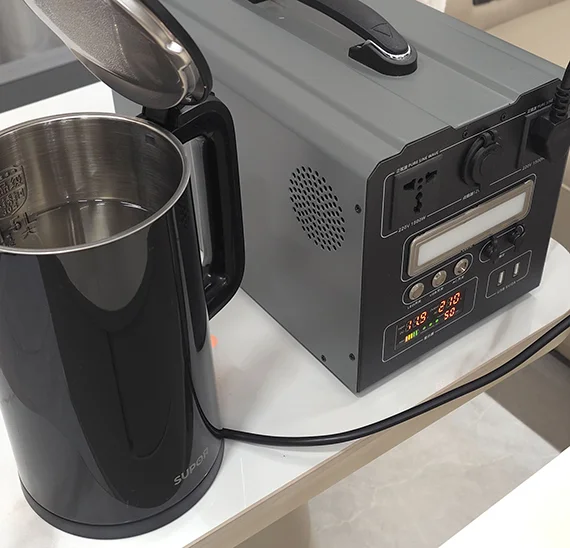
To answer this, we conducted a real-world overload test using a standard 1500W electric kettle and an 800W portable outdoor power station. The goal was simple: push the system beyond its rated limit and observe how it behaves under extreme conditions.
This article shares the test process, results, and practical insights for users who rely on portable power in camping, RV, or emergency scenarios.
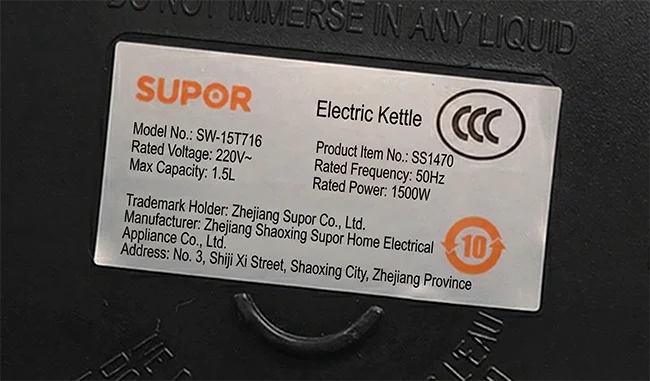
Test Setup: Real Devices 800W Portable Power Station, Real Load
Before starting the test, we confirmed the specifications of both devices.
- Electric kettle:
- Rated power: 1500W
- Typical startup surge: 1600–1800W
- Resistive load (no motor, no induction)
- Portable power station:
- Rated AC output: 800W
- Peak surge power: 1200W (short duration)
- Pure sine wave inverter
- Lithium battery system with BMS protection
This setup represents a common mismatch scenario that many users face in real life.
What Happens When You Exceed the 800W Portable Power Station Rated Power?
Initial Startup Behavior
When the kettle was switched on, the portable power station attempted to supply power. For a brief moment, the inverter detected a load far above its rated output.
Within less than one second, the system triggered its overload protection.
- No water heating started
- No visible voltage instability
- No abnormal noise or heat buildup
The power station immediately shut down the AC output to protect internal components.
This behavior confirms that the inverter and BMS worked as designed.
Why an 800W Portable Power Station Cannot Run a 1500W Kettle
The limitation is not the battery, but the inverter capacity.
A 1500W electric kettle is a high-power resistive load. Unlike small appliances, it draws full power continuously once activated. Even if the power station advertises “peak power,” that peak only supports short surge events, not sustained heating loads.
In simple terms:
- 800W inverter = suitable for small appliances
- 1500W kettle = requires a higher-capacity inverter
This mismatch leads to automatic shutdown, not partial operation.
Is “Overpower Running” Ever Possible?
Some users report that certain devices can briefly run higher-power appliances. This usually happens when:
- The load has a short startup surge only
- The inverter allows temporary overload
- The appliance power fluctuates
However, an electric kettle draws constant high wattage, making overpower operation unrealistic and unsafe.
In our test, the portable power station correctly refused the load.
What This Test Means for Real Users
For Camping and Outdoor Use
An 800W portable power station works well for:
- LED lighting
- Phone and laptop charging
- Small rice cookers
- Coffee machines under 700W
It does not support electric kettles, induction cookers, or electric heaters.
For Emergency Backup
If boiling water is a priority during outages, users should consider:
- A 1500W–2000W power station
- Or a gas-based alternative for heating
Choosing the right power rating avoids frustration and protects equipment.
Key Takeaways from the Hardcore Test
- An 800W portable power station cannot run a 1500W electric kettle
- Overload protection works instantly and safely
- Peak power does not equal continuous power
- High-wattage heating devices need high-capacity inverters
This test highlights the importance of matching appliance power with inverter ratings, not just battery size.
Final Thoughts
Hardcore testing under real conditions is the best way to understand portable power limits. Instead of relying on marketing numbers, users should focus on continuous output power, load type, and real usage scenarios.
An 800W portable power station remains a reliable and efficient solution for most outdoor and emergency needs — just not for boiling water with a 1500W kettle.
Buyer review update
A kettle overload test is useful because it shows the difference between energy capacity and inverter output. A battery may still have energy available, but the inverter can shut down if the connected load asks for more power than the AC output stage can safely provide.
Use this guide together with Home Energy Storage, Solar Inverter, Solar Panel, and the Buyer Resources hub. For project-specific checks, send the load profile, inverter model, destination market, and backup target through the Contact page.
Related SolarStorageHub checklists: what can a 30kwh lifepo4 battery run and solar battery installation step by step guide. External reference: U.S. Department of Energy energy storage basics.
Procurement checks
- Compare appliance rated watts with the power station's continuous AC output.
- Check surge rating separately from continuous rating.
- Avoid repeated overload trips because heat and protection cycling shorten service life.
- For home backup, move from portable units to a properly matched battery and inverter system.
SolarStorageHub editorial note: This article was refreshed for buyer usefulness with practical checks for load behavior, inverter matching, battery configuration, documentation, installation assumptions, and after-sales support.
FAQ
Can an 800W power station run a 1500W kettle?
Usually no. A 1500W resistive load is above the continuous rating of an 800W unit, so overload protection is expected.
Does battery capacity decide what appliances can run?
Capacity decides how long a load may run; inverter output decides whether the load can start and operate at all.
What should buyers check before using high-power appliances?
Check continuous watts, surge watts, AC voltage, plug rating, ventilation, and the manufacturer's prohibited-load guidance.
Related SolarStorageHub Resources
If you are turning this article into a buying decision, compare the relevant product families and send your inverter model, target capacity, installation country, and quantity plan for confirmation.